Learn what every symbol on the card means.Full credits and sources at beakbrain.com/symbols
 ForestCavity nestSmall · 16 g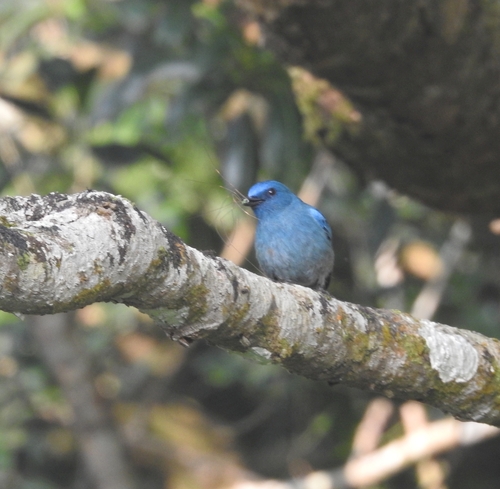
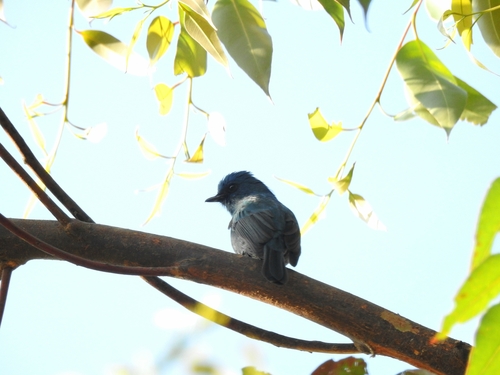


ID tip
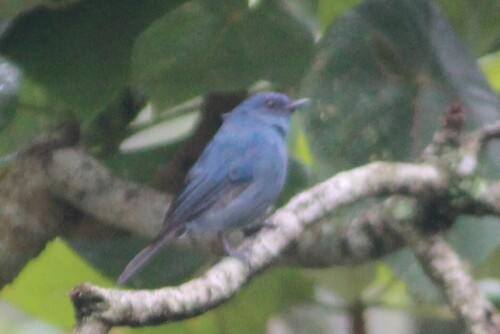
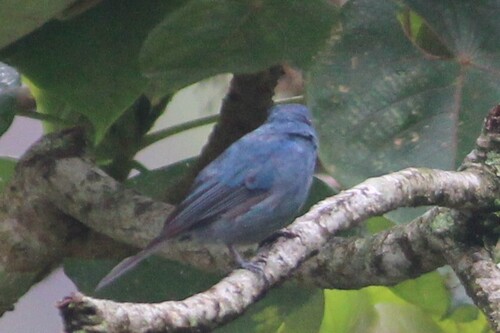
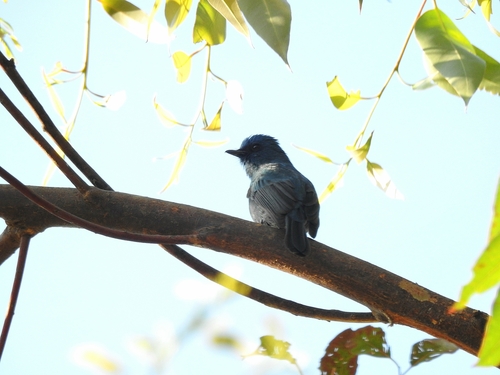
This small and somewhat long-tailed flycatcher is about 13 cm (5.1 in). It is dark steely indigo blue with some violet-blue on the forehead and darker lores. It is much darker than the verditer flycatcher and does not have as strong a contrast in the pale face and black lores. The female is duller with dark brown on the upperparts and dark grey below. The two central tail feathers are blue and the lateral feathers are dark brown and edged with indigo. The bases of the outer tail feathers are white but this is not easily visible when the bird is sitting.
Text from Wikipedia, licensed CC BY-SA 4.0.
When to see the Nilgiri Flycatcher
One bar for each month. Filled bars are the 9 months with records; pale bars are months with none. The wide bar is February, the month with the most records.
Where to see the Nilgiri Flycatcher
The map shades 1 country with regular records. Everything unshaded has no records. Countries are listed below the map.
About the Nilgiri Flycatcher
The Nilgiri flycatcher is an Old World flycatcher with a very restricted range in the hills of southern India. It was formerly referred to as the Nilgiri verditer flycatcher because of its similarity to the verditer flycatcher, a winter migrant to the Nilgiris, which, however, has distinct dark lores and a lighter shade of blue. There are two small white patches at the base of the tail. It is found mainly in the higher altitude shola forests of the Western Ghats and the Nilgiris.
Text adapted from Wikipedia, licensed CC BY-SA 4.0.
Easily confused with
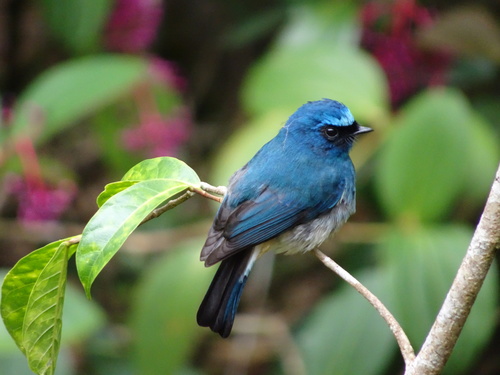 Indigo FlycatcherEumyias indigoThe indigo flycatcher is a species of bird in the Old World flycatcher family, Muscicapidae.
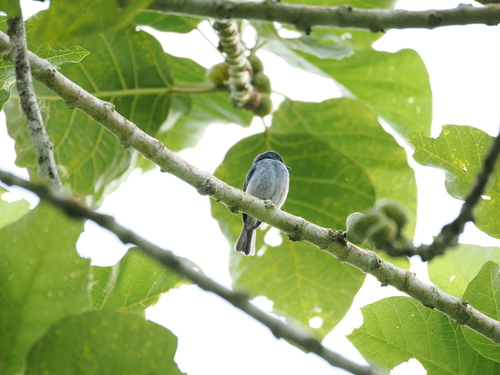 Turquoise FlycatcherEumyias panayensisThe turquoise flycatcher, also known as the island flycatcher, is a species of bird in the family Muscicapidae.
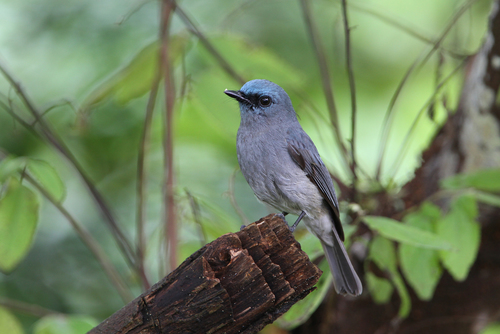 Dull-blue FlycatcherEumyias sordidusThis species is 15 cm (5.9 in) long.
Learn the Nilgiri Flycatcher in the BeakBrain App
Photo and call practice. Coming soon to iPhone and Android.
Play today's Daily BirdEvery photo and recording on this page is credited to its author under the licence shown. Spotted a problem with this page, or have a better photo? Contribute.