Learn what every symbol on the card means.Full credits and sources at beakbrain.com/symbols
 ForestPlatform nestLarge · 653 g


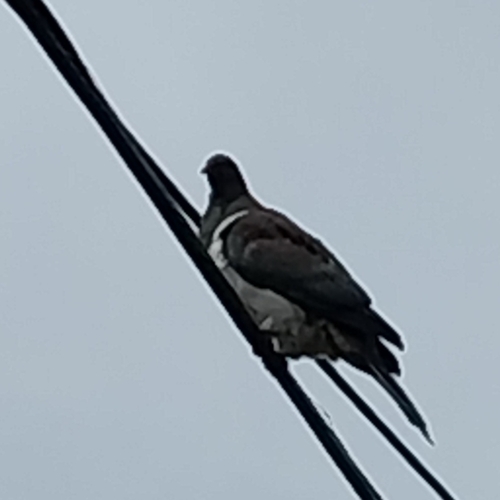
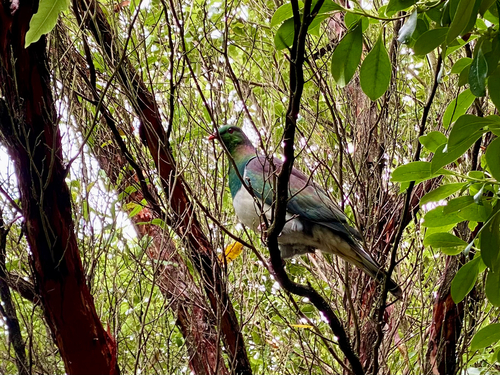
ID tip
The kererū is a large arboreal pigeon weighing 550–850 g (19–30 oz), and is up to 50 cm (20 in) in length, with a wingspan of around 75 cm (30 in). Its appearance is that of a typical pigeon, in that it has a relatively small head, a straight soft-based bill and loosely attached feathers. The sexes have similar plumage. The head, neck and upper breast are dark green with a gold-bronze highlights, while the nape, upper back and secondary coverts are a copper-sheened purple, lightening to a more grey-green on the lower back, rump and the rest of upper surface of the wings.
Text from Wikipedia, licensed CC BY-SA 4.0.
When to see the New Zealand Pigeon
One bar for each month, and every month is filled: this bird is recorded here in all twelve. The wide bar is January, the month with the most records.
Where to see the New Zealand Pigeon
The map shades 1 country with regular records. Everything unshaded has no records. Countries are listed below the map.
About the New Zealand Pigeon
The kererū, also known as kūkupa, New Zealand pigeon or wood pigeon, is a species of pigeon native to New Zealand. Johann Friedrich Gmelin described the bird in 1789 as a large, conspicuous pigeon up to 50 cm (20 in) in length and 550–850 g (19–30 oz) in weight, with a white breast and iridescent green–blue plumage. Two subspecies have been recognised; the second—the Norfolk pigeon of Norfolk Island—became extinct in the early 20th century. Kererū pairs are monogamous, breeding over successive seasons and remaining together when not breeding. They construct nests with twigs in trees, with a single egg clutch.
Text adapted from Wikipedia, licensed CC BY-SA 4.0.
Easily confused with

Learn the New Zealand Pigeon in the BeakBrain App
Photo and call practice. Coming soon to iPhone and Android.
Play today's Daily BirdEvery photo and recording on this page is credited to its author under the licence shown. Spotted a problem with this page, or have a better photo? Contribute.