Learn what every symbol on the card means.Full credits and sources at beakbrain.com/symbols
 RockyCup nestSmall · 40 g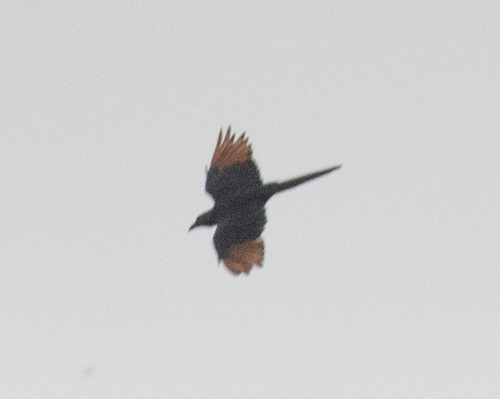

ID tip
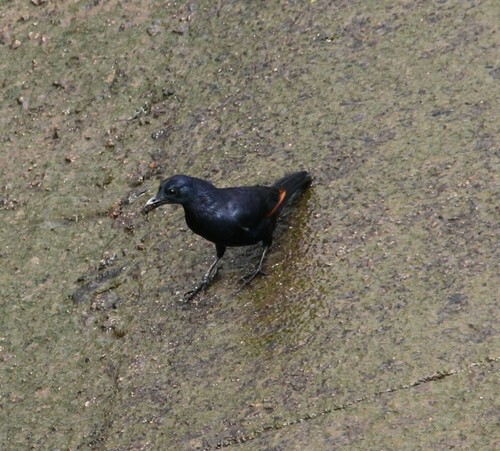
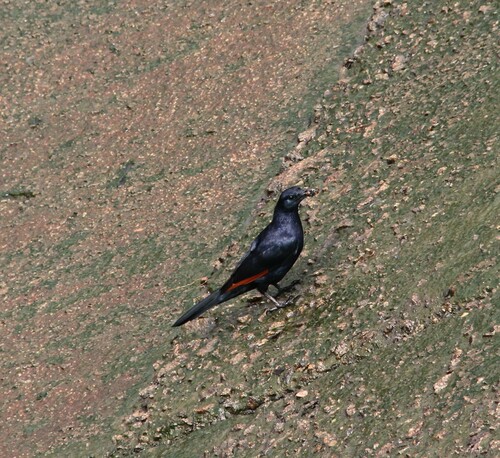
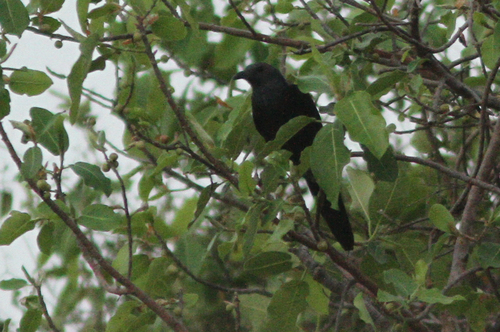
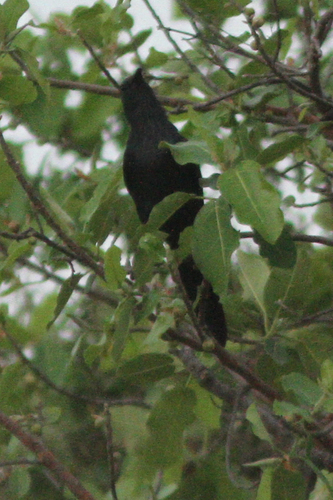
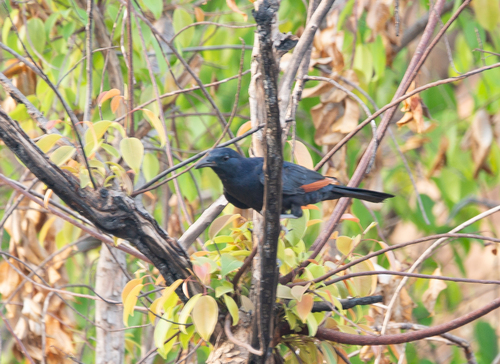
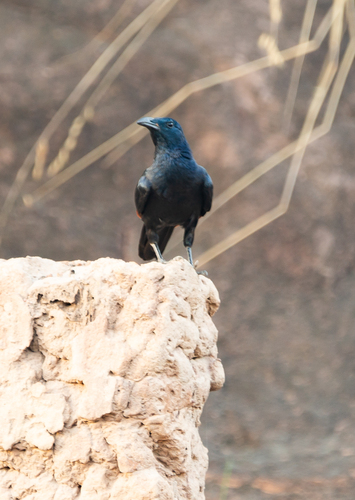
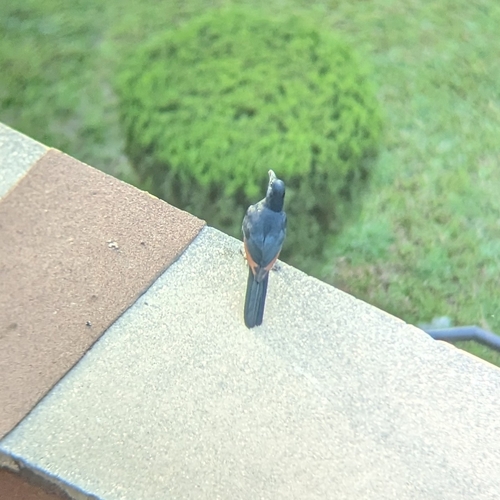
This 25 cm long species is similar to other Onychognathus starlings, showing the characteristic rufous primary wing feathers, very obvious in flight. The iris is dark red, and the bill and legs are black. The male plumage is otherwise mainly glossy black, and the female is ash grey with darker streaking. The juvenile resembles the male, but is less glossy than the adult, and has brown rather than dark red eyes. The song is a too-whee-oo, and the alarm call is a harsh air, air. Western populations from western Mali and the Ivory Coast are smaller and shorter-tailed than the nominate form, O. n.
Text from Wikipedia, licensed CC BY-SA 4.0.
When to see the Neumann's Starling
One bar for each month. Filled bars are the 11 months with records; pale bars are months with none. The wide bar is April, the month with the most records.
Where to see the Neumann's Starling
The map shades 6 countries with regular records, and 2 more in a lighter tone where the bird turns up only as a stray. Everything unshaded has no records. Countries are listed below the map.
About the Neumann's Starling
Neumann's starling or Neumann's red-winged starling, is a bird native to Africa. This starling breeds on rocky cliffs, outcrops and gorges mainly in the Sahel from Mauritania and Guinea to western Sudan. Its English and binomial names commemorate German ornithologist Oscar Rudolph Neumann.
Text adapted from Wikipedia, licensed CC BY-SA 4.0.
Easily confused with
 White-billed StarlingOnychognathus albirostrisThe white-billed starling is a species of starling in the family Sturnidae.
 Somali StarlingOnychognathus blythiiThe Somali starling is a species of starling in the family Sturnidae.
 Socotra StarlingOnychognathus fraterThe Socotra starling is a species of starling in the family Sturnidae.
Learn the Neumann's Starling in the BeakBrain App
Photo and call practice. Coming soon to iPhone and Android.
Play today's Daily BirdEvery photo and recording on this page is credited to its author under the licence shown. Spotted a problem with this page, or have a better photo? Contribute.