Learn what every symbol on the card means.Full credits and sources at beakbrain.com/symbols
 ShrublandCavity nestMedium · 290 g


ID tip
It is a medium-sized bird, 54–58 cm (21–23 in) in length. With a body mass of 210 to 400 g (7.4 to 14.1 oz), it appears to be the largest hornbill of the relatively diminutive Tockus genus. The species is characterized by a white belly, black back, with white spots on the wings and white secondary flight feathers. The outer feathers of the long tail are also white. Females are smaller than males and can be recognized by their turquoise facial skin. The eyes are black and the beak is red.
Text from Wikipedia, licensed CC BY-SA 4.0.
When to see the Monteiro's Hornbill
One bar for each month, and every month is filled: this bird is recorded here in all twelve. The wide bar is July, the month with the most records.
Where to see the Monteiro's Hornbill
The map shades 2 countries with regular records. Everything unshaded has no records. Countries are listed below the map.
About the Monteiro's Hornbill
Monteiro's hornbill is a species of hornbill that is native to the dry woodlands of southwestern Africa. It is a common, near-endemic species in Namibia, with a total population estimated at 340,000 individuals.
Text adapted from Wikipedia, licensed CC BY-SA 4.0.
Easily confused with
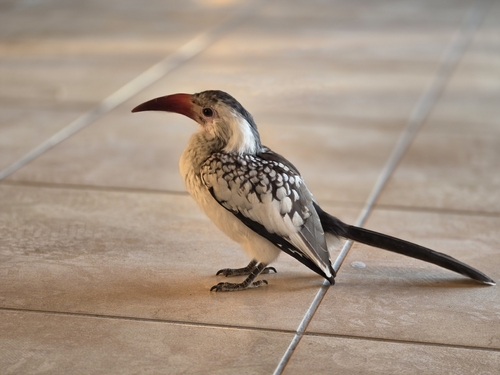 Damara Red-billed HornbillTockus damarensisDamara red-billed hornbills are small species of African hornbills.
 Eastern Yellow-billed HornbillTockus flavirostrisThe Eastern yellow-billed hornbill, also known as the northern yellow-billed hornbill, is a species of hornbill in the family Bucerotidae.
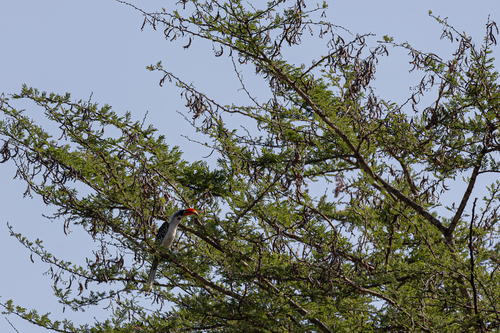 Jackson's HornbillTockus jacksoniJackson's hornbill is a species of hornbill in the family Bucerotidae.
Side by side: Monteiro's Hornbill vs Von der Decken's Hornbill · Monteiro's Hornbill vs Western Red-billed Hornbill · Monteiro's Hornbill vs Rufous-necked Hornbill · Damara Red-billed Hornbill vs Monteiro's Hornbill
Learn the Monteiro's Hornbill in the BeakBrain App
Photo and call practice. Coming soon to iPhone and Android.
Play today's Daily BirdEvery photo and recording on this page is credited to its author under the licence shown. Spotted a problem with this page, or have a better photo? Contribute.