Learn what every symbol on the card means.Full credits and sources at beakbrain.com/symbols
 ForestCavity nestHuge · 1.6 kg


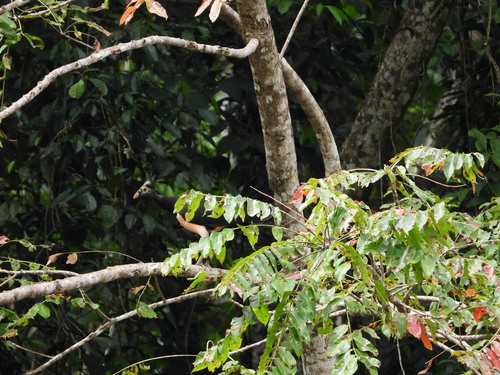
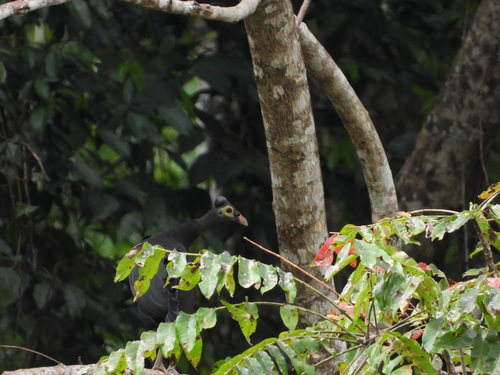
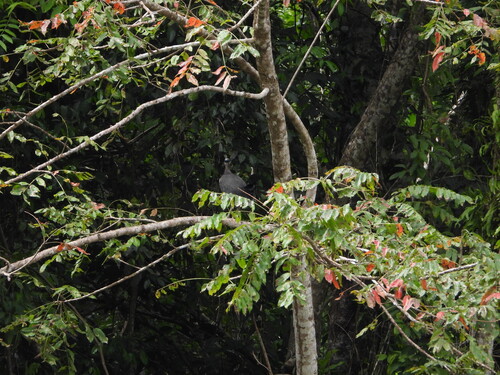
ID tip
The maleo ranges from 55–60 cm (22–24 in) long with blackish plumage, bare yellow facial skin, reddish-brown iris, reddish-orange beak, and rosy salmon underparts. The crown is ornamented with a prominent, bony, dark casque - which is the origin of its genus name Macrocephalon (from the Greek makros meaning "large" and kephalon meaning "head"). The greyish blue feet have four long sharp claws, separated by a membranous web. The sexes are almost identical with a slightly smaller and duller female.
Text from Wikipedia, licensed CC BY-SA 4.0.
When to see the Maleo
One bar for each month. Filled bars are the 7 months with records; pale bars are months with none. The wide bar is August, the month with the most records.
Where to see the Maleo
The map shades 1 country with regular records. Everything unshaded has no records. Countries are listed below the map.
About the Maleo
The maleo is a large megapode and the only member of the monotypic genus Macrocephalon. The maleo is endemic to Sulawesi and the nearby smaller island of Buton in Indonesia. It is found in the tropical lowland and hill forests, but nests in the open sandy areas, volcanic soils, or beaches that are heated by the sun or geothermal energy for incubation.
Text adapted from Wikipedia, licensed CC BY-SA 4.0.
Easily confused with
 Moluccan MegapodeEulipoa wallaceiThe Moluccan megapode, also known as Wallace's scrubfowl, Moluccan scrubfowl or painted megapode, is a small, approximately 31 cm long, olive-brown megapode.
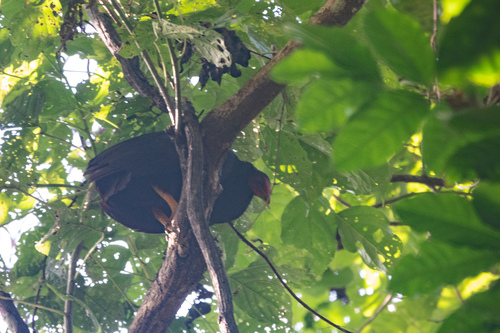 Vanuatu MegapodeMegapodius layardiThe Vanuatu megapode or Vanuatu scrubfowl is a species of bird in the family Megapodiidae.
Learn the Maleo in the BeakBrain App
Photo and call practice. Coming soon to iPhone and Android.
Play today's Daily BirdEvery photo and recording on this page is credited to its author under the licence shown. Spotted a problem with this page, or have a better photo? Contribute.