Learn what every symbol on the card means.Full credits and sources at beakbrain.com/symbols
 GrasslandCup nestMedium · 83 g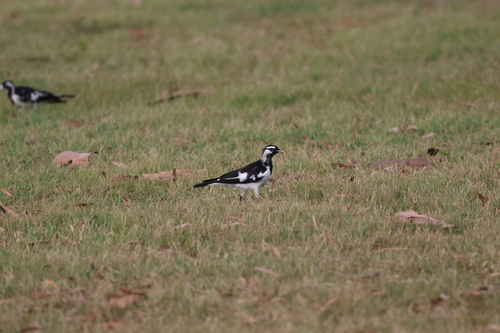
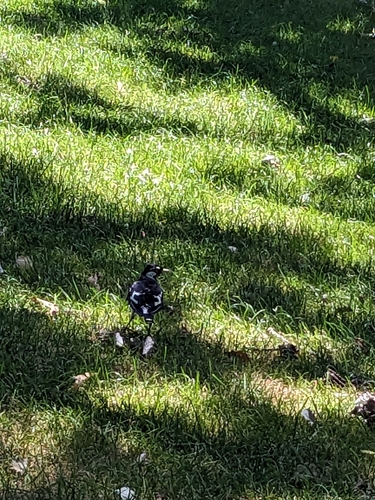
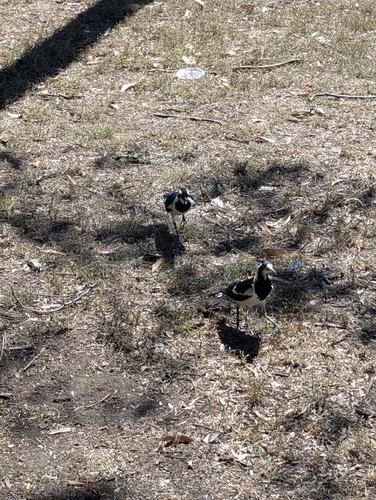
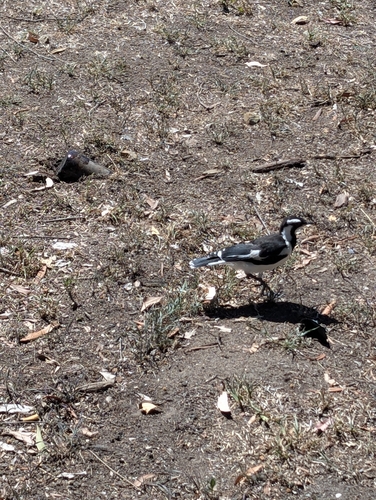


ID tip
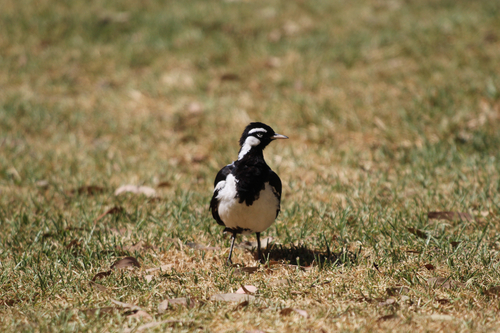
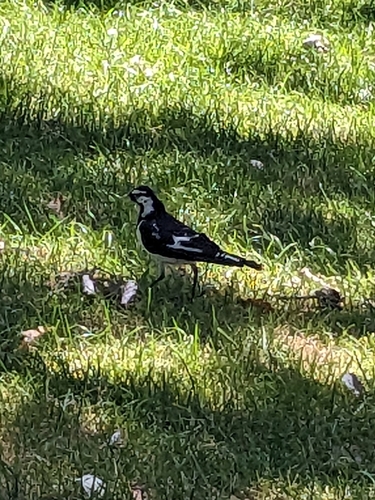
The magpie-lark is a small to medium size bird, reaching 25 to 30 cm (9.8 to 11.8 in) long when fully grown, or about the same size as a European common blackbird, and boldly pied in black and white; the weight range is 63.9 to 118 g (2.25 to 4.16 oz) for males, and 70 to 94.5 g (2.47 to 3.33 oz) for females. The sexes are similar from a distance but easy to tell apart: the female has a white throat, the male a black throat and a white "eyebrow". Juveniles and immatures of either sex have the white throat of the female and the black eyestripe of the male, and a white belly.
Text from Wikipedia, licensed CC BY-SA 4.0.
When to see the Magpie-lark
One bar for each month, and every month is filled: this bird is recorded here in all twelve. The wide bar is October, the month with the most records.
Where to see the Magpie-lark
The map shades 4 countries with regular records, and 1 more in a lighter tone where the bird turns up only as a stray. Everything unshaded has no records. Countries are listed below the map.
Recorded as a rare visitor in Japan.
About the Magpie-lark
The magpie-lark, also known as wee magpie, peewee, peewit, mudlark or Murray magpie, is a passerine bird native to Australia, Timor, and southern New Guinea. The male and female both have black and white plumage, though with different patterns. John Latham described the species in 1801. Long thought to be a member of the mudnest builder family Corcoracidae, it has been reclassified in the family Monarchidae. Two subspecies are recognized.
Text adapted from Wikipedia, licensed CC BY-SA 4.0.
Easily confused with
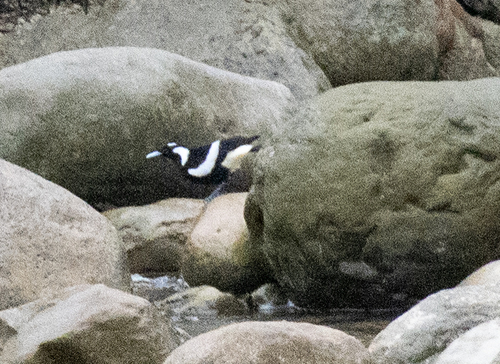
Learn the Magpie-lark in the BeakBrain App
Photo and call practice. Coming soon to iPhone and Android.
Play today's Daily BirdEvery photo and recording on this page is credited to its author under the licence shown. Spotted a problem with this page, or have a better photo? Contribute.