Learn what every symbol on the card means.Full credits and sources at beakbrain.com/symbols
 Wetland109 g
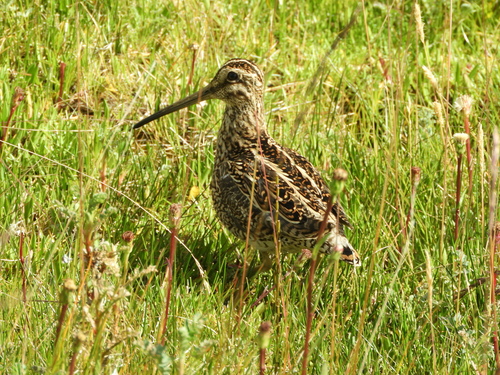
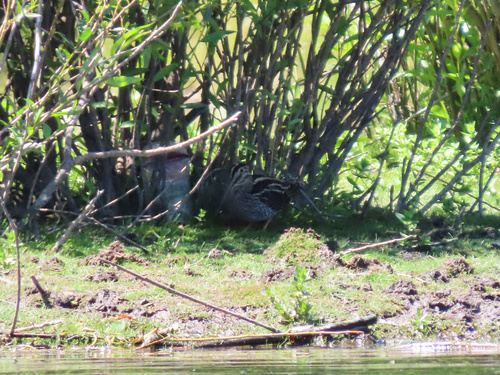
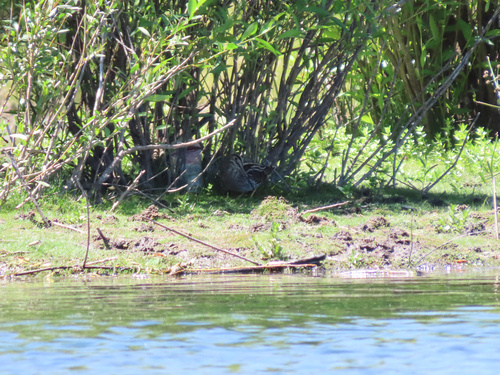
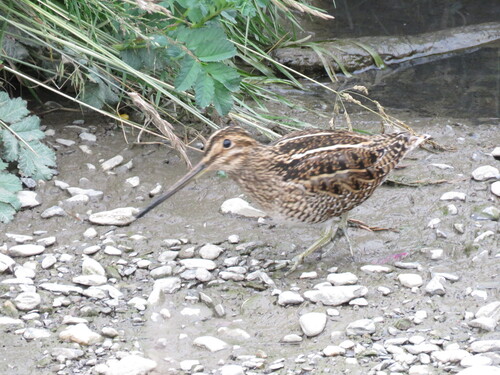
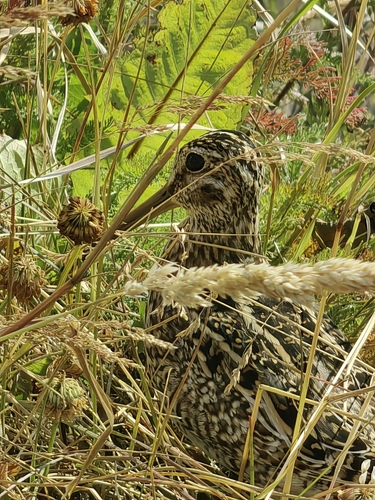
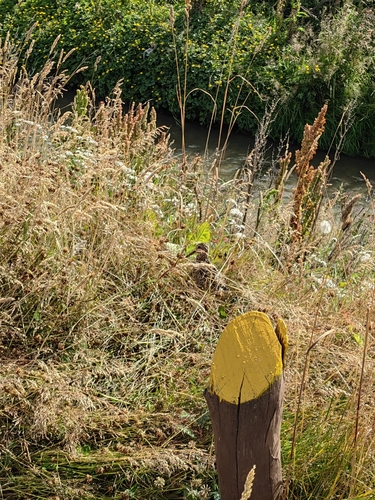
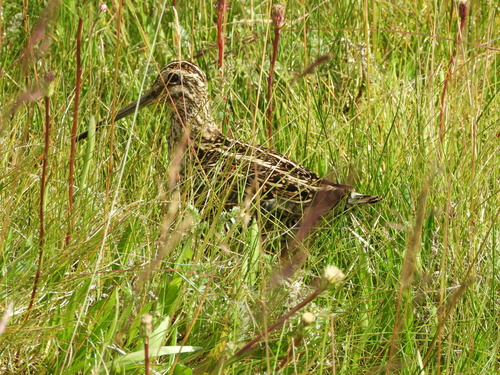
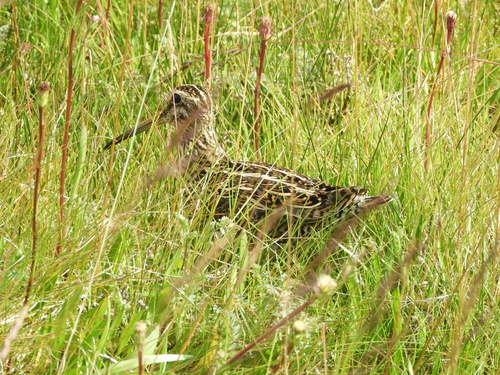
ID tip
The Magellanic snipe's face has distinct tan and darker brown stripes. Its upperparts have a complex pattern of muted whitish, buffy, rufous, and black on a brown background. Its breast has fine vermiculation and its flanks have dark and light barring. The upper surface of its tail is rufescent with irregular bars and white tips. It has a long, thick, dull pinkish bill with a black tip. Its legs are yellowish.
Text from Wikipedia, licensed CC BY-SA 4.0.
When to see the Magellanic Snipe
One bar for each month. Filled bars are the 9 months with records; pale bars are months with none. The wide bar is November, the month with the most records.
Where to see the Magellanic Snipe
The map shades 4 countries with regular records. Everything unshaded has no records. Countries are listed below the map.
About the Magellanic Snipe
The Magellanic snipe is a bird in tribe Scolopancinai and subfamily Scolopacinae of family Scolopacidae, the sandpipers and relatives. It is found in Argentina, Chile, Uruguay, and the Falkland Islands.
Text adapted from Wikipedia, licensed CC BY-SA 4.0.
Easily confused with
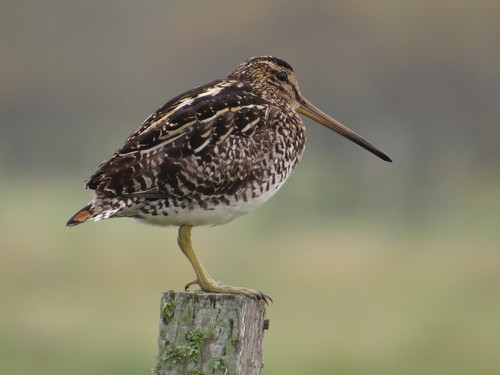 Pantanal SnipeGallinago paraguaiaeThe adult Pantanal snipe is 26 to 30 cm (10 to 12 in) long.
 Pin-tailed SnipeGallinago stenuraThis 25–27 cm long bird is similar to the longer-billed and longer-tailed common snipe.
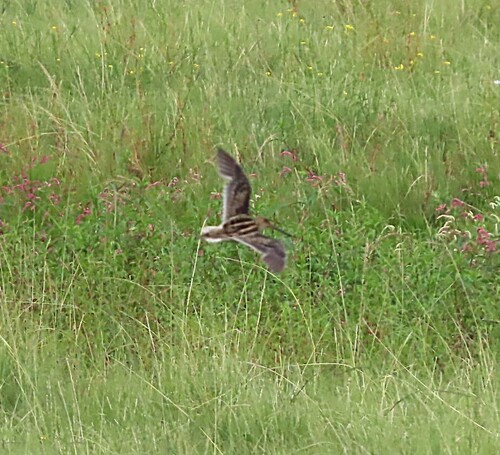 African SnipeGallinago nigripennisThis 30–32 cm (12–13 in) long snipe has a stocky body and relatively short legs for a wader.
Side by side: Magellanic Snipe vs Pantanal Snipe · Magellanic Snipe vs Pin-tailed Snipe · African Snipe vs Magellanic Snipe
Learn the Magellanic Snipe in the BeakBrain App
Photo and call practice. Coming soon to iPhone and Android.
Play today's Daily BirdEvery photo and recording on this page is credited to its author under the licence shown. Spotted a problem with this page, or have a better photo? Contribute.