Learn what every symbol on the card means.Full credits and sources at beakbrain.com/symbols
 CoastalScrapeMedium · 84 g


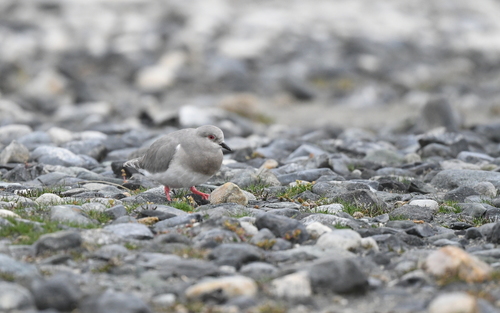
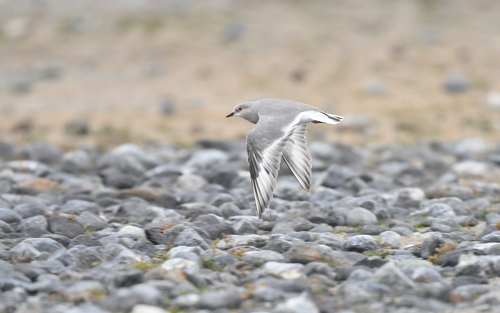
ID tip
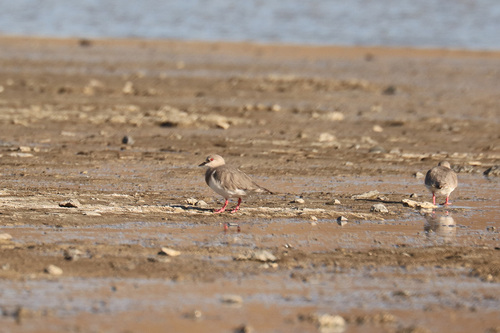
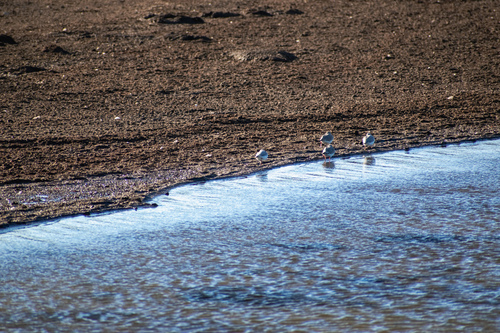
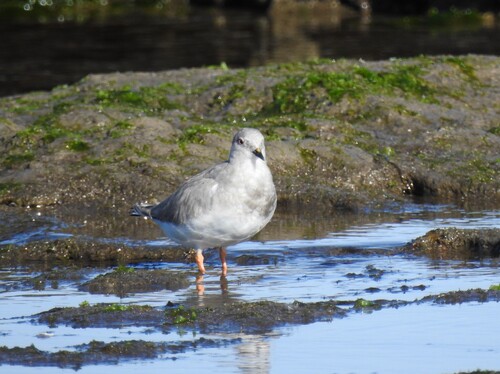
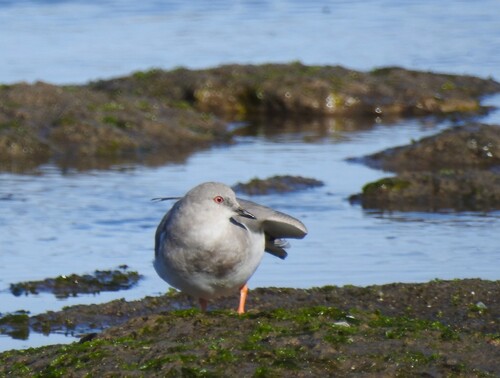
This species is in its structure and habits much like a turnstone, but it cannot be confused with any other wader species. Its upperparts and breast are pale grey, and the rest of the underparts are white. It has short red legs, a black bill and red eyes. In young birds, the eyes and legs are yellowish in colour, and the plumage is grey overall with scaling. The call is a dovelike coo.
Text from Wikipedia, licensed CC BY-SA 4.0.
When to see the Magellanic Plover
One bar for each month. Filled bars are the 7 months with records; pale bars are months with none. The wide bar is November, the month with the most records.
Where to see the Magellanic Plover
The map shades 3 countries with regular records. Everything unshaded has no records. Countries are listed below the map.
About the Magellanic Plover
The Magellanic plover is a rare wader endemic to southernmost South America.
Text adapted from Wikipedia, licensed CC BY-SA 4.0.
Learn the Magellanic Plover in the BeakBrain App
Photo and call practice. Coming soon to iPhone and Android.
Play today's Daily BirdEvery photo and recording on this page is credited to its author under the licence shown. Spotted a problem with this page, or have a better photo? Contribute.