Learn what every symbol on the card means.Full credits and sources at beakbrain.com/symbols
 RiverineCavity nestSmall · 23 g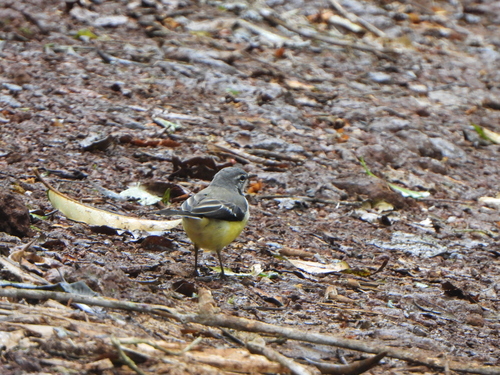


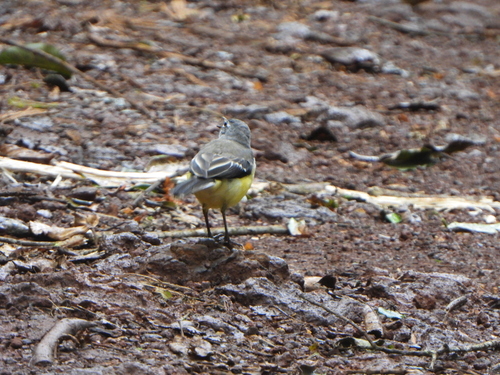
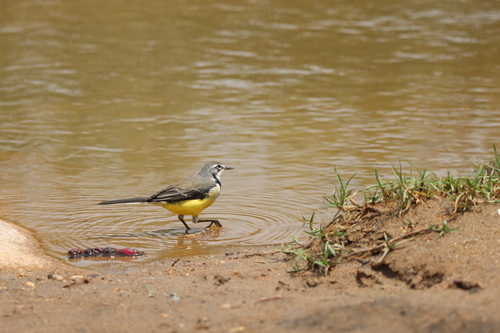
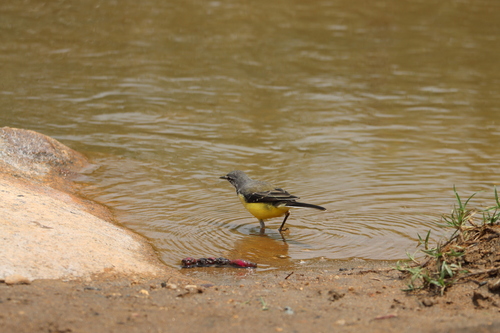
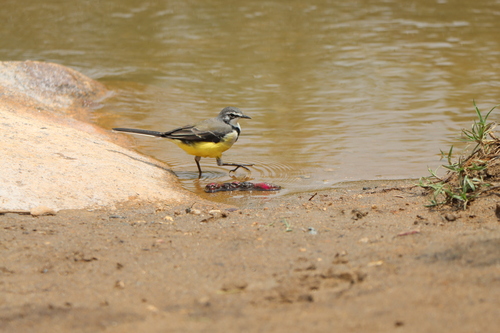
ID tip
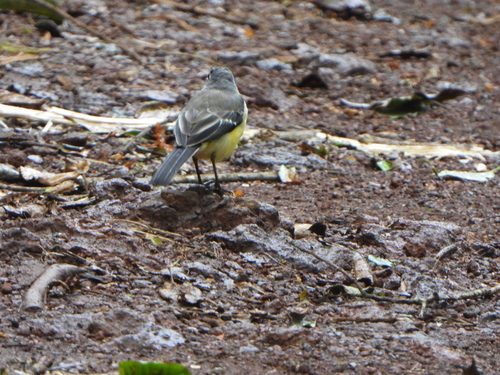
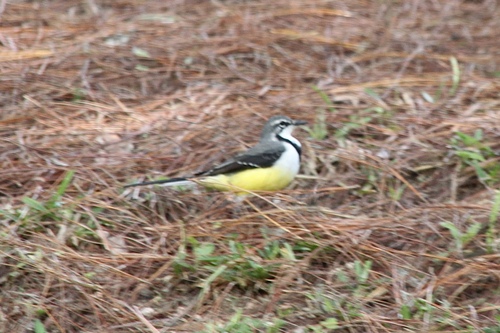
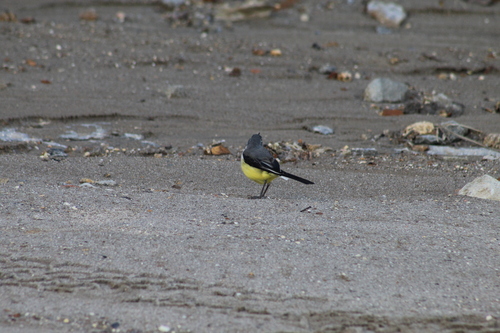
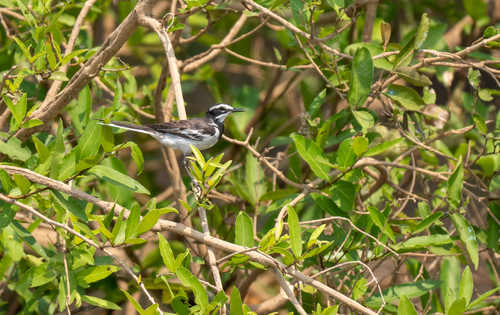
The Madagascar wagtail is a large, elegant and slender wagtail which has grey upperparts, a white breast and a yellow belly. There is a black band across the breast and the long tail has a dark centre and white outer tail feathers. There is short white supercilium. Juveniles have a less conspicuous breast band and a fainter supercilium. The body length is 19 cm (7.5 in).
Text from Wikipedia, licensed CC BY-SA 4.0.
When to see the Madagascar Wagtail
One bar for each month. Filled bars are the 6 months with records; pale bars are months with none. The wide bar is November, the month with the most records.
Where to see the Madagascar Wagtail
The map shades 2 countries with regular records. Everything unshaded has no records. Countries are listed below the map.
About the Madagascar Wagtail
The Madagascar wagtail is a species of wagtail in the family Motacillidae. It is endemic to Madagascar.
Text adapted from Wikipedia, licensed CC BY-SA 4.0.
Easily confused with
 Mekong WagtailMotacilla samveasnaeThe Mekong wagtail most closely resembles African pied wagtail M. aguimp, although two species ranges are far apart.
 Sao Tome ShorttailMotacilla bocagiiThe São Tomé shorttail, also known as Bocage's longbill, is a species of passerine bird in the family Motacillidae.
 Mountain WagtailMotacilla claraA slender, long tailed wagtail with light bluish grey upperparts and white underparts with a narrow black breast band.
Side by side: Japanese Wagtail vs Madagascar Wagtail · Madagascar Wagtail vs Mountain Wagtail
Learn the Madagascar Wagtail in the BeakBrain App
Photo and call practice. Coming soon to iPhone and Android.
Play today's Daily BirdEvery photo and recording on this page is credited to its author under the licence shown. Spotted a problem with this page, or have a better photo? Contribute.