Learn what every symbol on the card means.Full credits and sources at beakbrain.com/symbols
 ForestDomed nestSmall · 21 g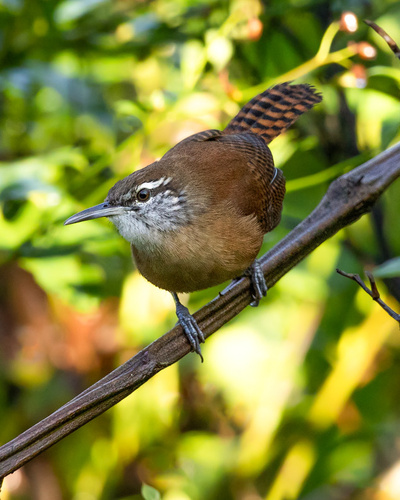

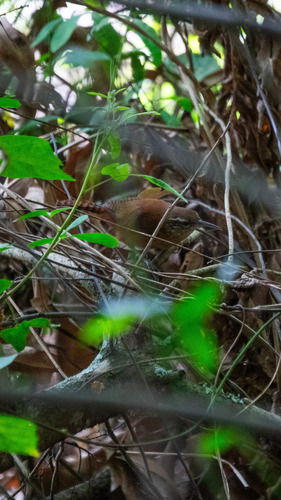
ID tip
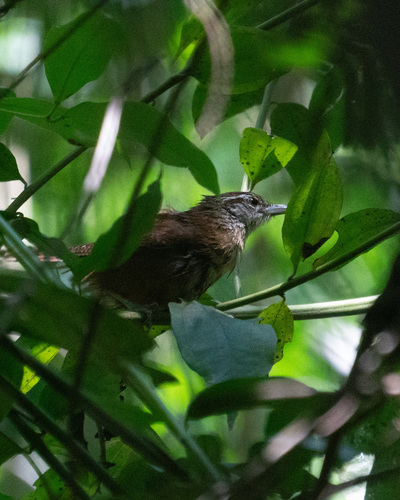
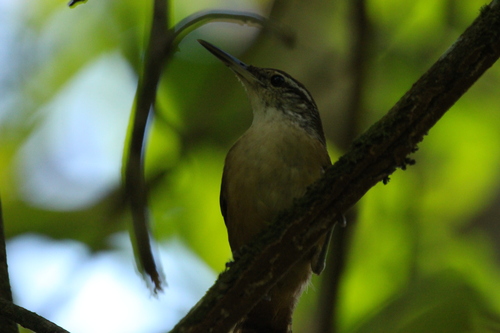
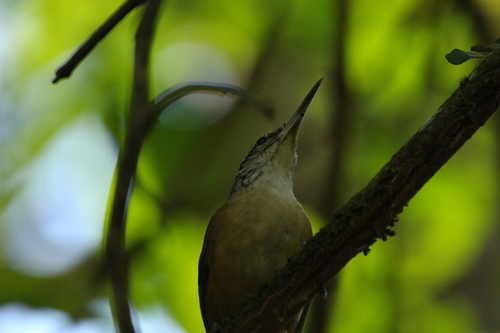
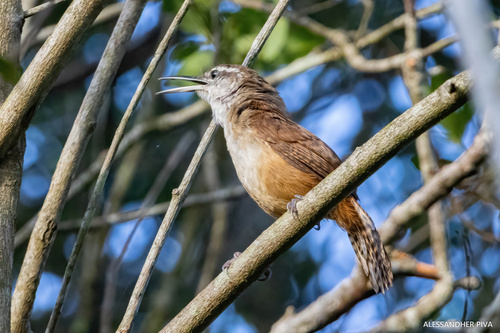
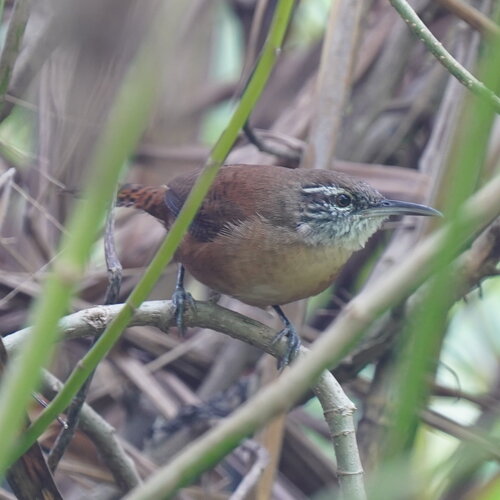
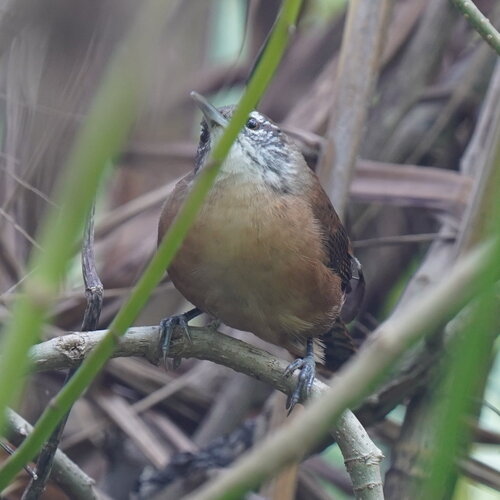
The long-billed wren is 19 to 21.5 cm (7.5 to 8.5 in) long and weighs 20 to 21 g (0.71 to 0.74 oz). The crown and nape of adults of the nominate subspecies are rich dark brown that becomes progressively more reddish to the rump; the lower back has obscure bars. Their tail is reddish brown with darker bars. They have an off-white supercilium, a darkish brown eyestripe, cheeks mottled off-white and dark gray, and a blackish malar stripe. Their throat color ranges from whitish to pale buff; their chest is reddish buff and the belly a deep rich buff. Voice: Both sexes of the long-billed wren sing, sometimes alone and sometimes in duet. The songs are "loud and varied".
Text from Wikipedia, licensed CC BY-SA 4.0.
When to see the Long-billed Wren
One bar for each month, and every month is filled: this bird is recorded here in all twelve. The wide bar is October, the month with the most records.
Where to see the Long-billed Wren
The map shades 1 country with regular records. Everything unshaded has no records. Countries are listed below the map.
About the Long-billed Wren
The long-billed wren is a species of bird in the family Troglodytidae. It is endemic to Brazil.
Text adapted from Wikipedia, licensed CC BY-SA 4.0.
Easily confused with
 Superciliated WrenCantorchilus superciliarisThe superciliated wren is 14.5 cm (5.7 in) long.
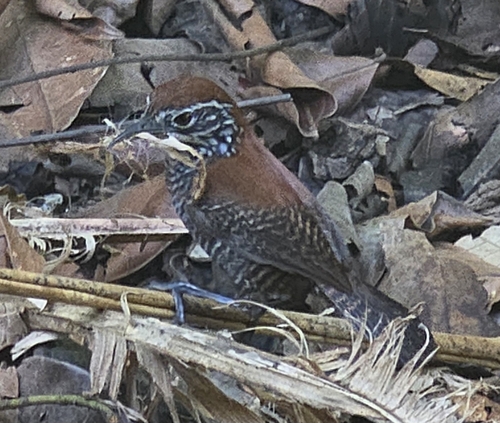 Riverside WrenCantorchilus semibadiusThe riverside wren is 13 to 14 cm (5.1 to 5.5 in) long and weighs 17 g (0.60 oz).
 Fawn-breasted WrenCantorchilus guarayanusThe fawn-breasted wren is 13.5 cm (5.3 in) long and weighs 13 to 14 g (0.46 to 0.49 oz).
Side by side: Long-billed Wren vs Stripe-breasted Wren · Long-billed Wren vs Riverside Wren · Long-billed Wren vs Superciliated Wren · Fawn-breasted Wren vs Long-billed Wren
Learn the Long-billed Wren in the BeakBrain App
Photo and call practice. Coming soon to iPhone and Android.
Play today's Daily BirdEvery photo and recording on this page is credited to its author under the licence shown. Spotted a problem with this page, or have a better photo? Contribute.