Learn what every symbol on the card means.Full credits and sources at beakbrain.com/symbols
 ForestCup nestTiny · 9 g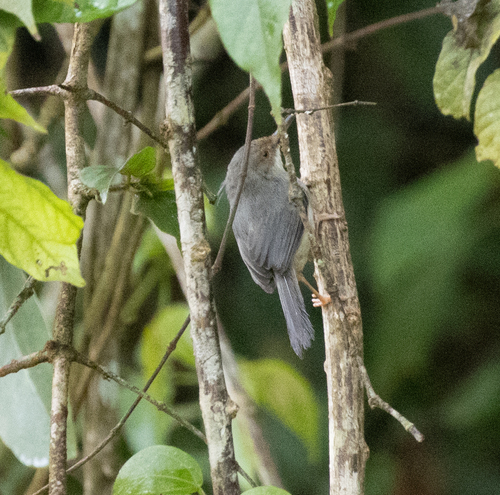


What the Long-billed Forest Warbler sounds like


ID tip
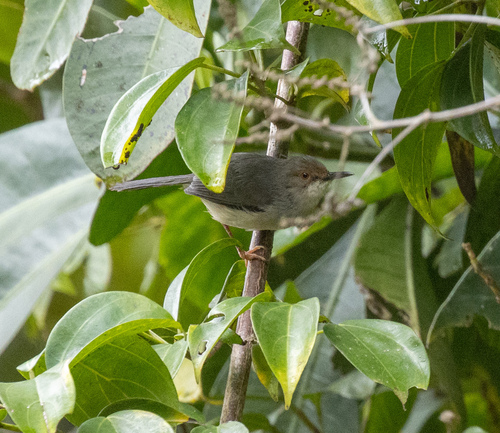
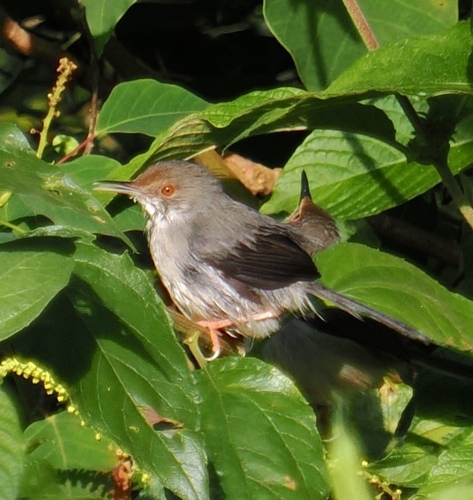
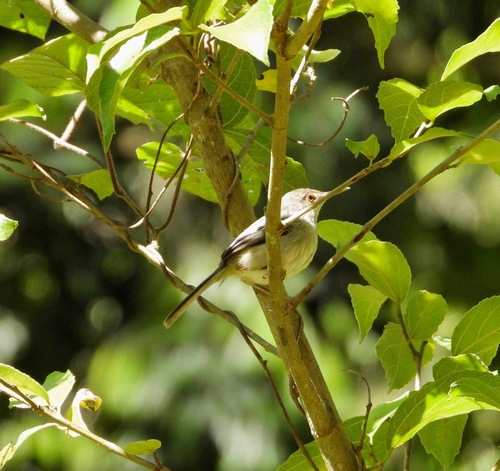
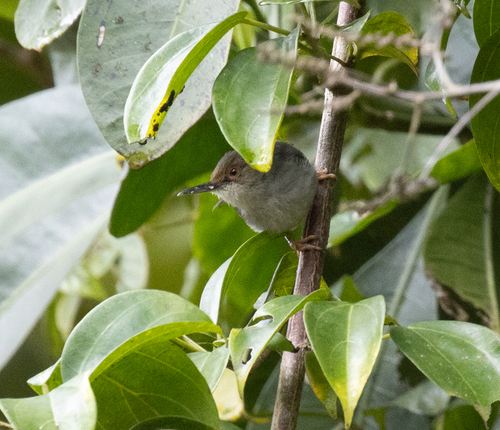
The long-billed forest warbler is a small, plump, inconspicuous warbler, growing to a length of about 10 cm (4 in). The upper parts are greyish and the underparts a rather paler grey. The head sometimes has a brownish tinge, and bears filoplumes. The beak is long and slender, and the tail is long and is frequently cocked when the bird is excited. The call is a distinctive metallic "peedoo peedoo"; this bird is easier to detect by hearing its call than by sight.
Text from Wikipedia, licensed CC BY-SA 4.0.
When to see the Long-billed Forest Warbler
One bar for each month. Filled bars are the 11 months with records; pale bars are months with none. The wide bar is November, the month with the most records.
Where to see the Long-billed Forest Warbler
The map shades 2 countries with regular records. Everything unshaded has no records. Countries are listed below the map.
About the Long-billed Forest Warbler
The long-billed forest warbler, also known as the long-billed tailorbird, is a songbird of the family Cisticolidae, formerly part of the "Old World warbler" assemblage. It is found in Tanzania and Mozambique. Its natural habitat is subtropical or tropical moist montane forests. It is threatened by habitat destruction.
Text adapted from Wikipedia, licensed CC BY-SA 4.0.
Easily confused with

Learn the Long-billed Forest Warbler in the BeakBrain App
Photo and call practice. Coming soon to iPhone and Android.
Play today's Daily BirdEvery photo and recording on this page is credited to its author under the licence shown. Spotted a problem with this page, or have a better photo? Contribute.