Learn what every symbol on the card means.Full credits and sources at beakbrain.com/symbols
 ForestScrapeSmall · 37 g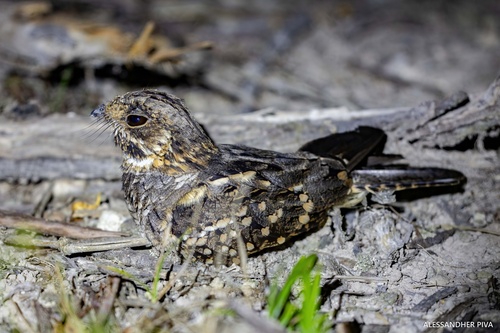
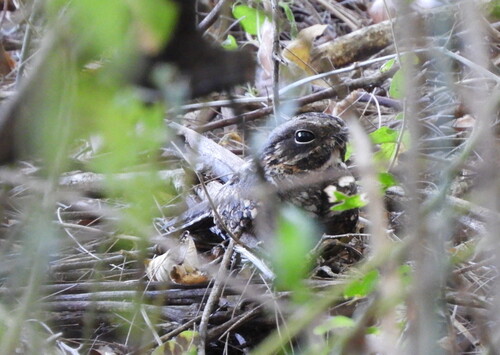
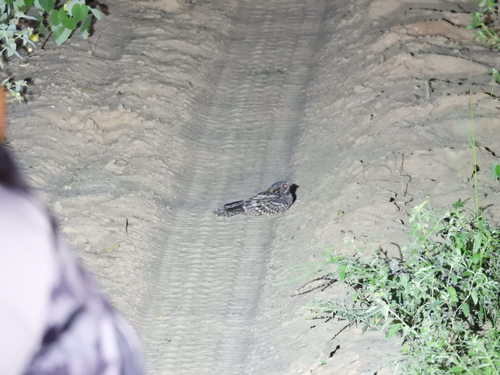
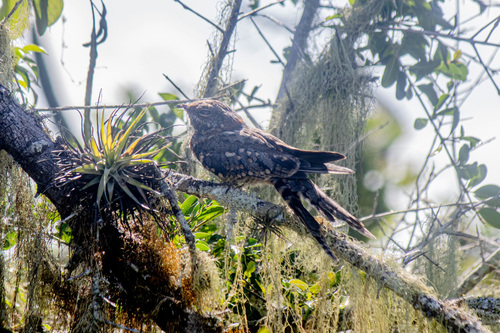
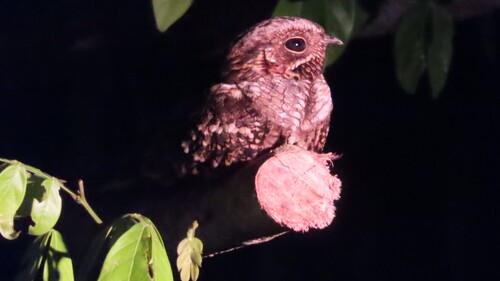

What the Little Nightjar sounds like

ID tip
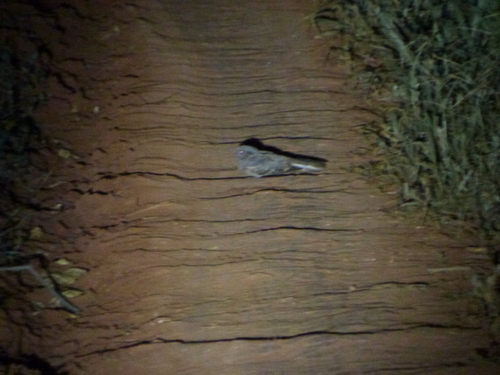
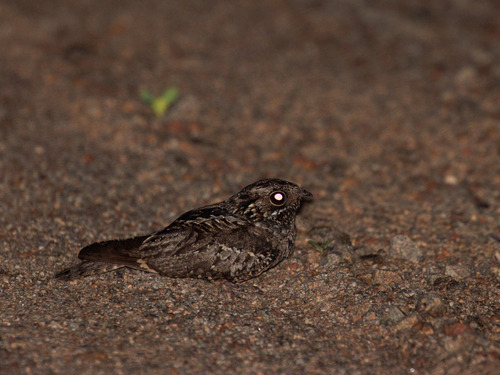
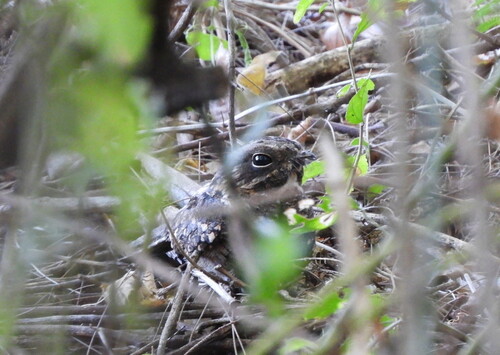
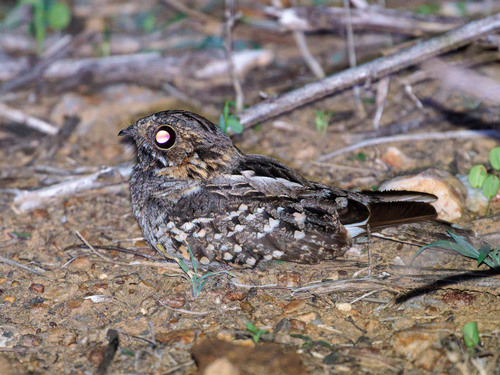
The little nightjar is 19 to 21 cm (7.5 to 8.3 in) long and weighs 25 to 46.5 g (0.88 to 1.6 oz). The male is generally grayish brown with buff, brown, and blackish brown spots and streaks. The belly is buff with brown bars. Its hindneck has a broad but indistinct buff collar, the chin is buffy, and the throat is white. Its wing has a broad white band and the outer tail feathers have white tips. The female is similar but its throat is buff and it does not have white on the wing and tail. Voice: The little nightjar's song is "a rattling, clacking, flat, unbirdlike sound in pattern of hurr-ee quick quick quick quick quick quick".
Text from Wikipedia, licensed CC BY-SA 4.0.
When to see the Little Nightjar
One bar for each month. Filled bars are the 7 months with records; pale bars are months with none. The wide bar is October, the month with the most records.
Where to see the Little Nightjar
The map shades 6 countries with regular records. Everything unshaded has no records. Countries are listed below the map.
About the Little Nightjar
The little nightjar is a species of nightjar in the family Caprimulgidae. It is found in Argentina, Bolivia, Brazil, Paraguay, Peru, and Uruguay.
Text adapted from Wikipedia, licensed CC BY-SA 4.0.
Easily confused with
Learn the Little Nightjar in the BeakBrain App
Photo and call practice. Coming soon to iPhone and Android.
Play today's Daily BirdEvery photo and recording on this page is credited to its author under the licence shown. Spotted a problem with this page, or have a better photo? Contribute.