Learn what every symbol on the card means.Full credits and sources at beakbrain.com/symbols
 ForestDomed nestSmall · 17 g

What the Line-cheeked Spinetail sounds like


ID tip
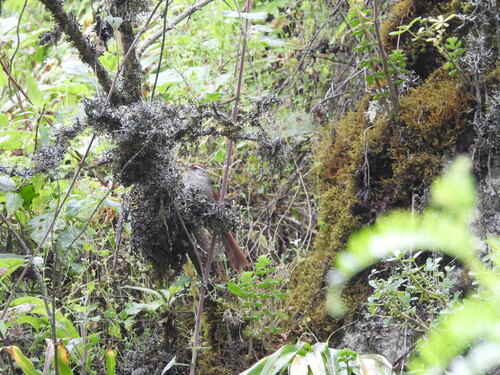
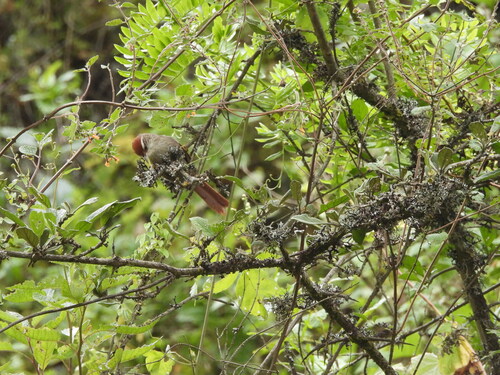
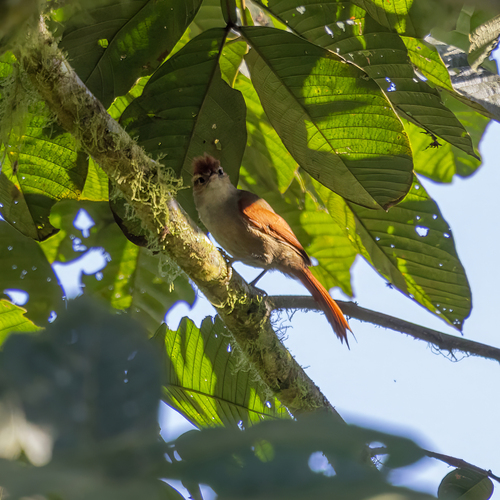
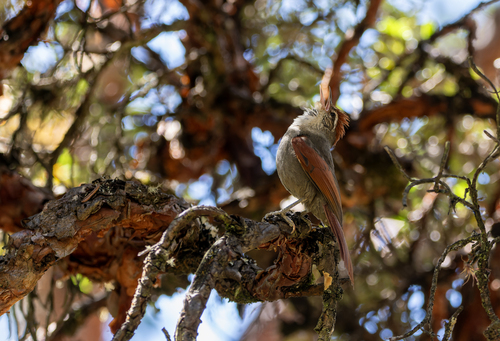
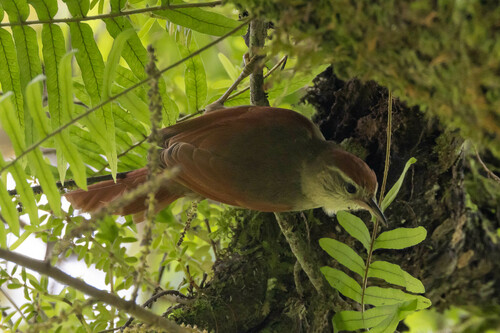
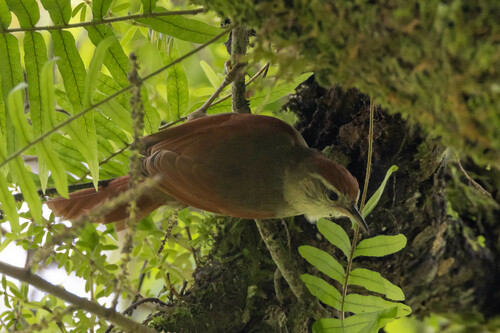
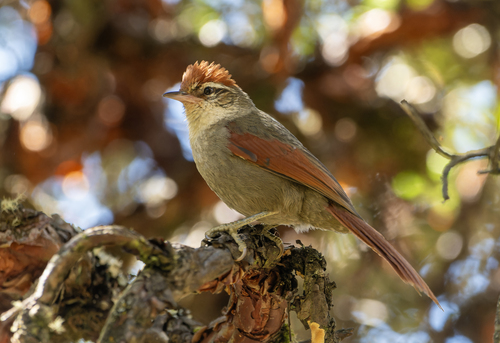
The line-cheeked spinetail is a mid-sized spinetail, weighing 15–18 g and reaching 14.5 cm long. Like other spinetails in the genus Cranioleuca, it has a long graduated tail and a relatively long bill that curves downward slightly. It has a rufous crown; with a well-defined white supercilium; a pale throat; and some streaking on its ear coverts. It is brown to olive-grey above; with a greyish brown breast and belly; and rufous tail and wings. The line-cheeked spinetail is a diurnal species and vocalizes most actively at dawn and dusk to maintain their breeding territory boundaries.
Text from Wikipedia, licensed CC BY-SA 4.0.
When to see the Line-cheeked Spinetail
One bar for each month, and every month is filled: this bird is recorded here in all twelve. The wide bar is October, the month with the most records.
Where to see the Line-cheeked Spinetail
The map shades 2 countries with regular records. Everything unshaded has no records. Countries are listed below the map.
About the Line-cheeked Spinetail
The line-cheeked spinetail is an arboreal species of bird in the ovenbird family Furnariidae. It is a common species in the Andes in Ecuador and Peru. Its natural habitat is subtropical or tropical moist montane forests, woodland and scrub. It is distinguished from other species by its distribution, behaviour and white supercilium. There are two recognized subspecies, which are in reality a gradient in morphology and plumage from one extreme to the other.
Text adapted from Wikipedia, licensed CC BY-SA 4.0.
Easily confused with
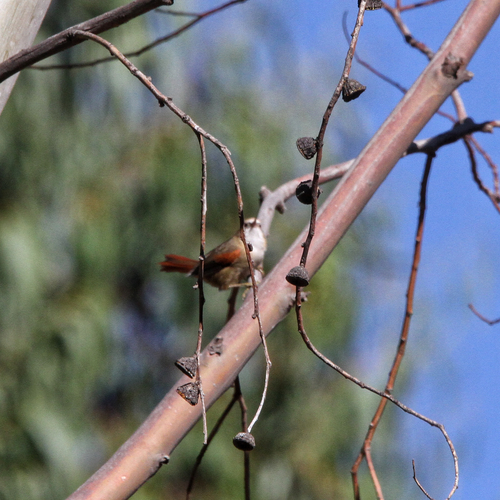 Creamy-crested SpinetailCranioleuca albicapillaThe creamy-crested spinetail is 16 to 17 cm (6.3 to 6.7 in) long and weighs 18 to 24 g (0.63 to 0.85 oz).
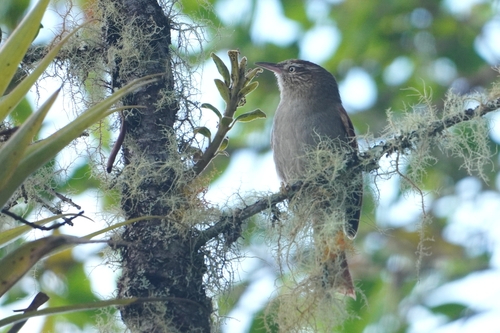 Streak-capped SpinetailCranioleuca hellmayriThe streak-capped spinetail is 14 to 15 cm (5.5 to 5.9 in) long and weighs 14 to 16 g (0.49 to 0.56 oz).
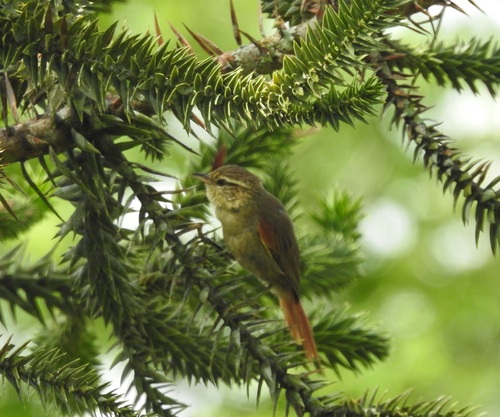 Olive SpinetailCranioleuca obsoletaThe olive spinetail is 12.5 to 15 cm (4.9 to 5.9 in) long and weighs 12 to 16 g (0.42 to 0.56 oz).
Side by side: Line-cheeked Spinetail vs Olive Spinetail · Creamy-crested Spinetail vs Line-cheeked Spinetail · Line-cheeked Spinetail vs White-browed Spinetail · Line-cheeked Spinetail vs Streak-capped Spinetail
Learn the Line-cheeked Spinetail in the BeakBrain App
Photo and call practice. Coming soon to iPhone and Android.
Play today's Daily BirdEvery photo and recording on this page is credited to its author under the licence shown. Spotted a problem with this page, or have a better photo? Contribute.