Learn what every symbol on the card means.Full credits and sources at beakbrain.com/symbols
 MarinePlatform nestHuge · 3.1 kg



What the Light-mantled Albatross sounds like

ID tip
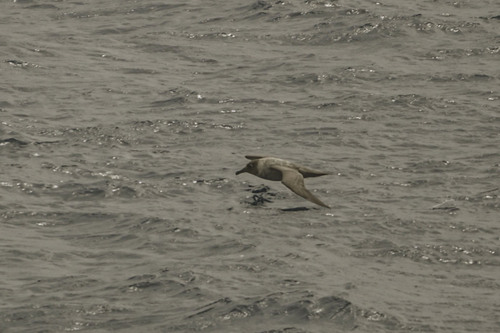
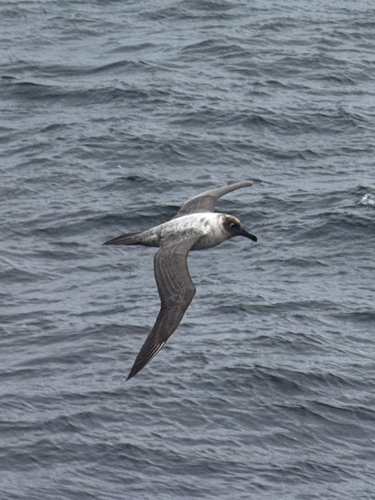
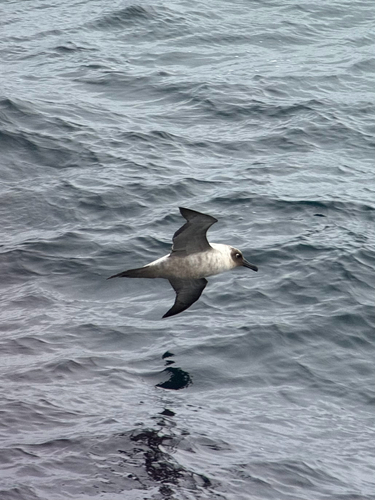
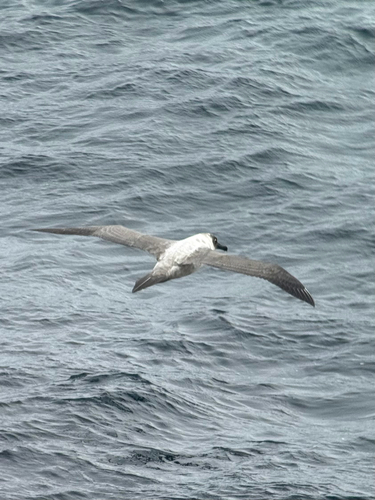
The light-mantled albatross is largely sooty-brown or blackish, darker on the head, with paler upperparts from the nape to the upper tail-coverts which are grey to light grey, the palest on the mantle and back. The plumage has been described as being similar in appearance to the colouring of a Siamese cat. The eyes are partly encircled with thin post-orbital crescents of very short grey feathers. The bill is black with a blue sulcus and a greyish-yellow line along the lower mandible, and is about 105 mm (4.1 in).
Text from Wikipedia, licensed CC BY-SA 4.0.
When to see the Light-mantled Albatross
One bar for each month. Filled bars are the 8 months with records; pale bars are months with none. The wide bar is January, the month with the most records.
Where to see the Light-mantled Albatross
The map shades 6 countries with regular records, and 1 more in a lighter tone where the bird turns up only as a stray. Everything unshaded has no records. Countries are listed below the map.
Recorded as a rare visitor in United States.
About the Light-mantled Albatross
The light-mantled albatross, also known as the grey-mantled albatross or the light-mantled sooty albatross, is a small albatross in the genus Phoebetria, which it shares with the sooty albatross. The light-mantled albatross was first described as Phoebetria palpebrata by Johann Reinhold Forster, in 1785, based on a specimen from south of the Cape of Good Hope.
Text adapted from Wikipedia, licensed CC BY-SA 4.0.
Easily confused with

Side by side: Light-mantled Albatross vs Sooty Albatross
Learn the Light-mantled Albatross in the BeakBrain App
Photo and call practice. Coming soon to iPhone and Android.
Play today's Daily BirdEvery photo and recording on this page is credited to its author under the licence shown. Spotted a problem with this page, or have a better photo? Contribute.