Learn what every symbol on the card means.Full credits and sources at beakbrain.com/symbols
 GrasslandMedium · 122 g


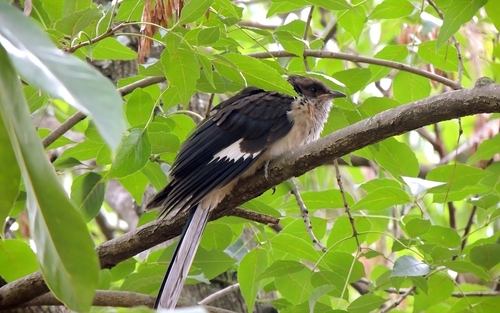
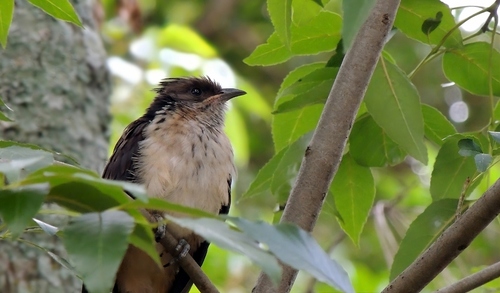
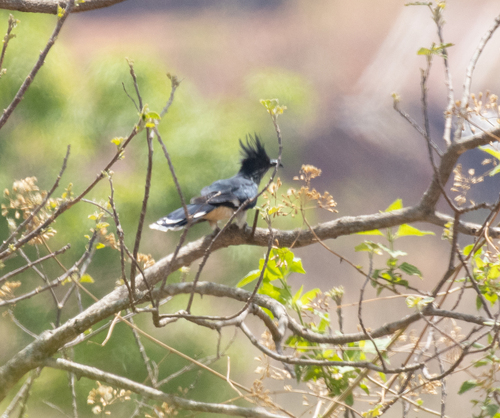
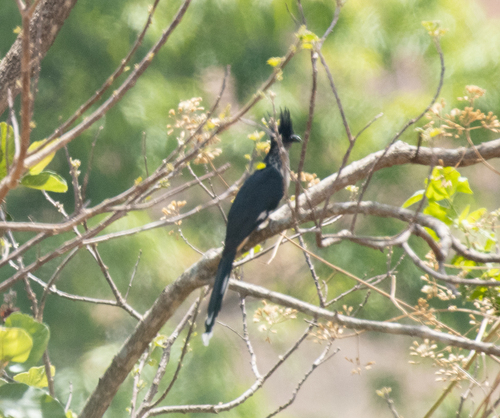
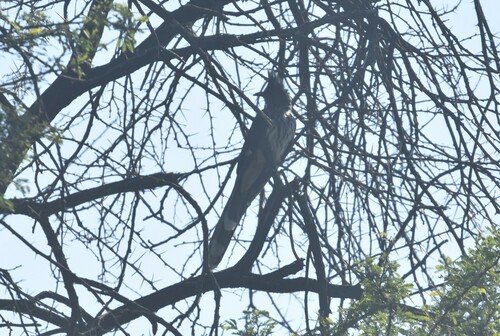
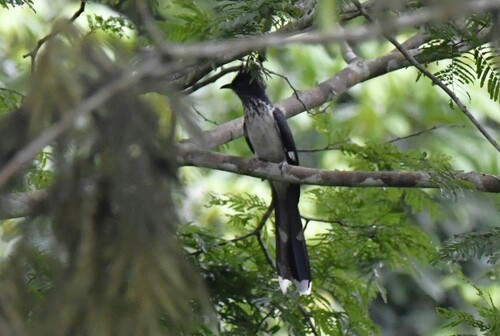
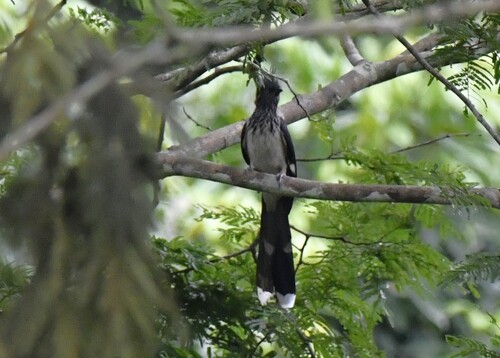
ID tip
The cuckoo is 37.5 cm (15 in) long, longer tailed than pied cuckoo, and with a more heavily streaked throat. There are two colour morphs. The light morph is black above, faintly glossed bluish or greenish. The throat streaking may extend on to the sides. The primaries and rectrix tips are white. The dark morph is black except for the white primary patch and white spots on the outer tail feathers (these are absent in dark pied cuckoo.
Text from Wikipedia, licensed CC BY-SA 4.0.
When to see the Levaillant's Cuckoo
One bar for each month. Filled bars are the 7 months with records; pale bars are months with none. The wide bar is November, the month with the most records.
Where to see the Levaillant's Cuckoo
The map shades 35 countries with regular records, and 2 more in a lighter tone where the bird turns up only as a stray. Everything unshaded has no records. Countries are listed below the map.
About the Levaillant's Cuckoo
Levaillant's cuckoo is a cuckoo which is a resident breeding species in Africa south of the Sahara. It is found in bushy habitats. It is a brood parasite, using the nests of bulbuls and babblers. It was named in honour of the French explorer, collector and ornithologist, François Le Vaillant.
Text adapted from Wikipedia, licensed CC BY-SA 4.0.
Easily confused with
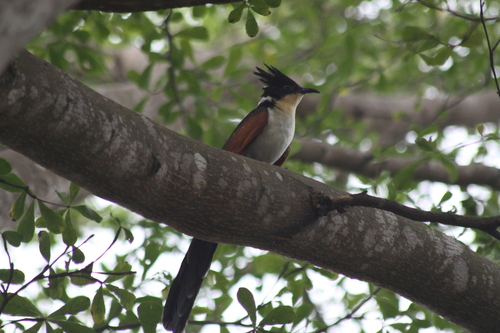 Chestnut-winged CuckooClamator coromandusThis dark and crested cuckoo has chestnut wings, a glossy black crest and a graduated tail (the feathers shortening in steps from the center outwards) whose terminal edges are white and inconspicuous unlike the white tips of the Jacobin cuckoo which is found in parts of its range.
 Great Spotted CuckooClamator glandariusThis species is slightly larger than the common cuckoo at 35–39 cm (14–15 in) in length, but looks much larger with its broad wings and long narrow tail.
 Jacobin CuckooClamator jacobinusThis medium-sized, slim black and white cuckoo with a crest is distinctive.
Side by side: Jacobin Cuckoo vs Levaillant's Cuckoo · Great Spotted Cuckoo vs Levaillant's Cuckoo · Lesser Ground Cuckoo vs Levaillant's Cuckoo · Chestnut-winged Cuckoo vs Levaillant's Cuckoo
Learn the Levaillant's Cuckoo in the BeakBrain App
Photo and call practice. Coming soon to iPhone and Android.
Play today's Daily BirdEvery photo and recording on this page is credited to its author under the licence shown. Spotted a problem with this page, or have a better photo? Contribute.