Learn what every symbol on the card means.Full credits and sources at beakbrain.com/symbols
 ForestDomed nestSmall · 19 g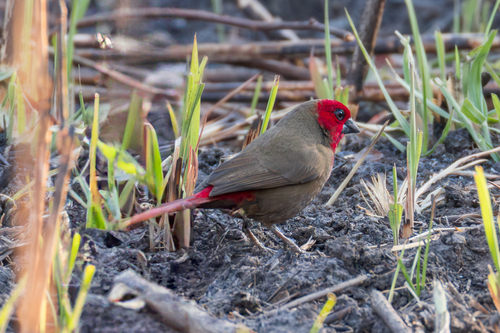

What the Lesser Seedcracker sounds like

ID tip
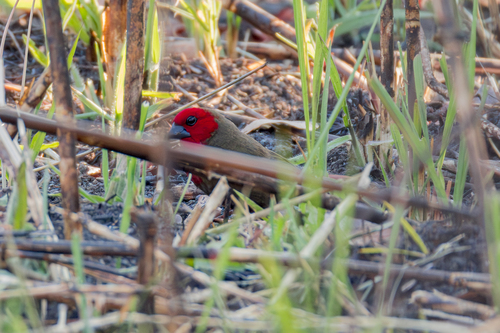
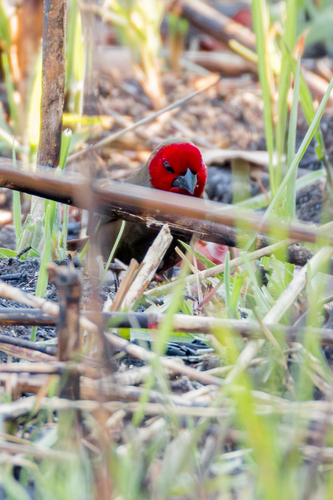
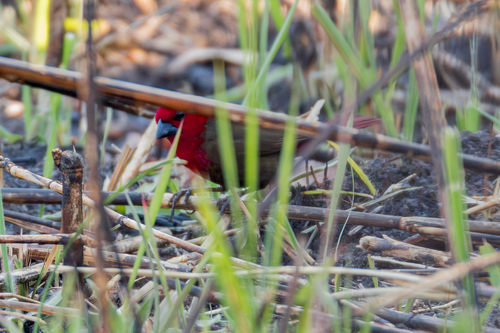
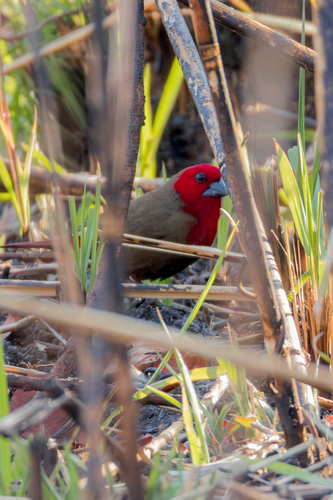
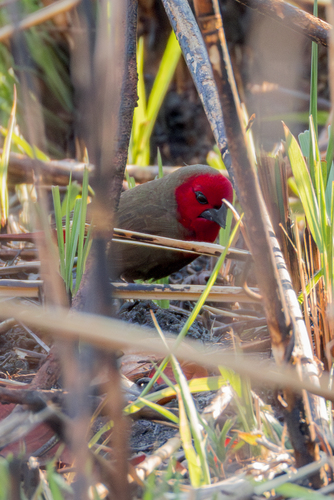
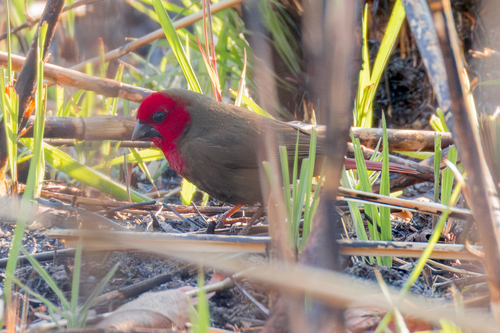
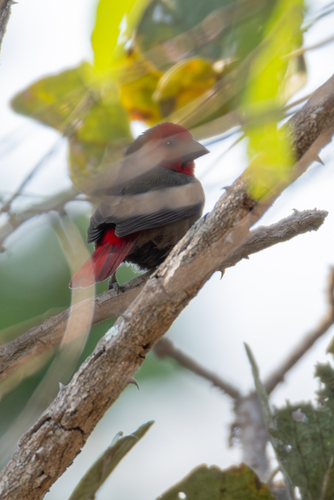
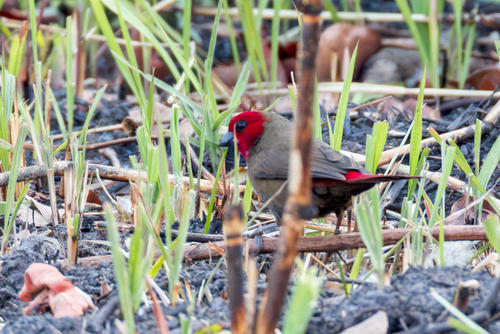
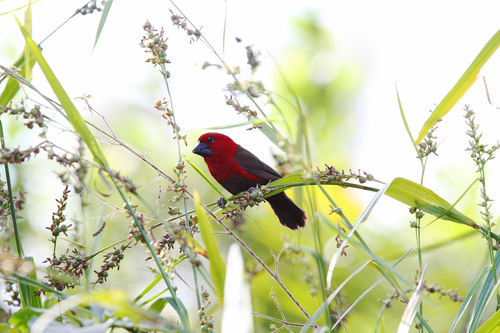
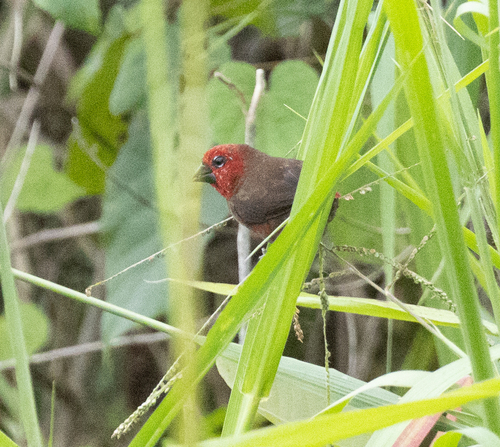
The lesser seedcracker grows to a length of about 14 cm (5.5 in). The male plumage is brown tinged with olive, apart from the forehead, crown, side of face, chin, throat and upper breast which are bright red, and the rump and central tail feathers which are deep blood red. The underparts are paler than the upper parts. The female is similar but has a smaller area of red on the face and crown. The short, broad beak is black, the brown eye is surrounded by a white eye ring, and the legs are greyish-brown or dark grey. The juvenile is similar to the adults but the colours are more muted.
Text from Wikipedia, licensed CC BY-SA 4.0.
When to see the Lesser Seedcracker
One bar for each month. Filled bars are the 8 months with records; pale bars are months with none. The wide bar is October, the month with the most records.
Where to see the Lesser Seedcracker
The map shades 4 countries with regular records, and 1 more in a lighter tone where the bird turns up only as a stray. Everything unshaded has no records. Countries are listed below the map.
Recorded as a rare visitor in South Africa.
About the Lesser Seedcracker
The lesser seedcracker or Nyasa seedcracker is a fairly common species of estrildid finch found in eastern Africa. It has an estimated global extent of occurrence of 925,000 km2 (357,000 mi2) and is found in Malawi, Mozambique, Tanzania and Zimbabwe. The International Union for Conservation of Nature has classified the species as being of least concern.
Text adapted from Wikipedia, licensed CC BY-SA 4.0.
Easily confused with
Learn the Lesser Seedcracker in the BeakBrain App
Photo and call practice. Coming soon to iPhone and Android.
Play today's Daily BirdEvery photo and recording on this page is credited to its author under the licence shown. Spotted a problem with this page, or have a better photo? Contribute.