Learn what every symbol on the card means.Full credits and sources at beakbrain.com/symbols
 GrasslandScrapeSmall · 53 g


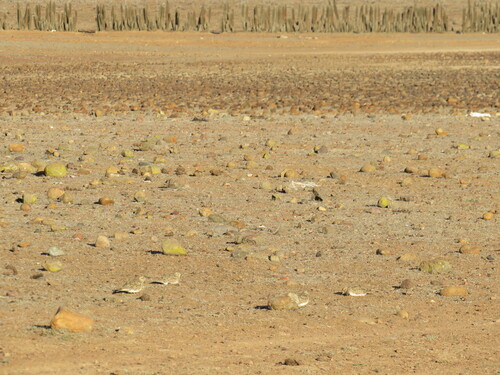

ID tip
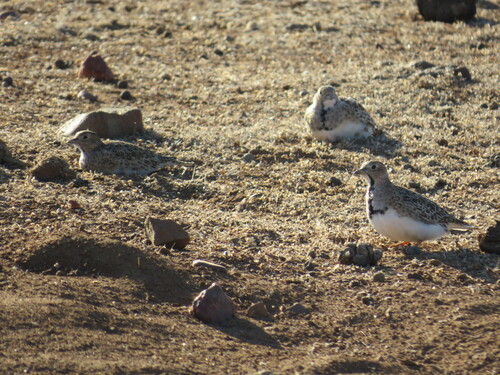
The least seedsnipe is the smallest member of the Thinocoridae family. They have short tails and long pointed wings. Their legs and toes are a dull greenish yellow. The beak of the least seedsnipe is an ashy color and is conical like that of a finch or a sand grouse. Adult males have a gray face, neck, and breast, and have black lines at the center of the throat that form an inverted "T" shape. The eyes are a dark gray color.
Text from Wikipedia, licensed CC BY-SA 4.0.
When to see the Least Seedsnipe
One bar for each month. Filled bars are the 10 months with records; pale bars are months with none. The wide bar is November, the month with the most records.
Where to see the Least Seedsnipe
The map shades 6 countries with regular records, and 1 more in a lighter tone where the bird turns up only as a stray. Everything unshaded has no records. Countries are listed below the map.
Recorded as a rare visitor in Brazil.
About the Least Seedsnipe
The least seedsnipe is a xerophilic species of bird in the Thinocoridae family.
Text adapted from Wikipedia, licensed CC BY-SA 4.0.
Easily confused with
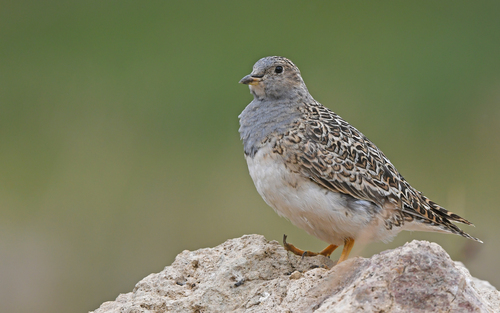
Side by side: Grey-breasted Seedsnipe vs Least Seedsnipe
Learn the Least Seedsnipe in the BeakBrain App
Photo and call practice. Coming soon to iPhone and Android.
Play today's Daily BirdEvery photo and recording on this page is credited to its author under the licence shown. Spotted a problem with this page, or have a better photo? Contribute.