Learn what every symbol on the card means.Full credits and sources at beakbrain.com/symbols
 ForestSmall · 18 g
ID tip
The least honeyguide (Indicator exilis) is a small member of the family Indicatoridae. The plumage of the adult least honeyguide is an olive brown, with dark grey colouration on its underside and face. Pale spots are visible above the bill as well as on the tail when in flight. A narrow white line from the front of the eye to near the nostril can be seen on adult birds and a malar stripe can be seen stretching from the mandible to the birds ear-coverts. A small bird, the least honey guide measures about 14 cm and weighs anywhere between 12 and 23 g.
Text from Wikipedia, licensed CC BY-SA 4.0.
When to see the Least Honeyguide
One bar for each month, and every month is filled: this bird is recorded here in all twelve. The wide bar is July, the month with the most records.
Where to see the Least Honeyguide
The map shades 13 countries with regular records, and 1 more in a lighter tone where the bird turns up only as a stray. Everything unshaded has no records. Countries are listed below the map.
Recorded as a rare visitor in Central African Republic.
About the Least Honeyguide
The least honeyguide is a small species of bird in the family Indicatoridae. It is found in sub-Saharan Africa.
Text adapted from Wikipedia, licensed CC BY-SA 4.0.
Easily confused with
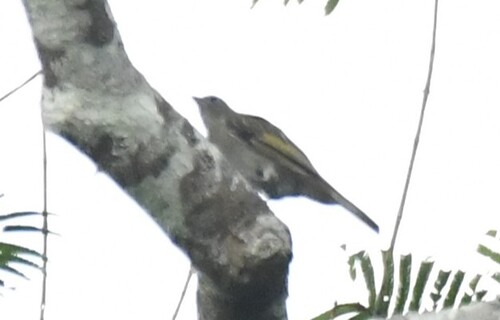 Willcocks's HoneyguideIndicator willcocksiWillcocks's honeyguide is a species of bird in the family Indicatoridae.
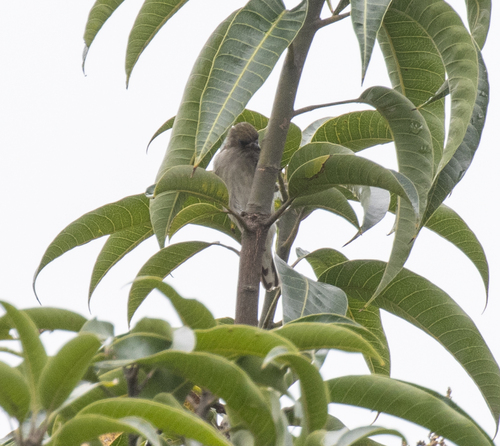 Pallid HoneyguideIndicator meliphilusThe pallid honeyguide is a species of bird in the family Indicatoridae.
 Spotted HoneyguideIndicator maculatusThe spotted honeyguide is a species of bird in the family Indicatoridae.
Learn the Least Honeyguide in the BeakBrain App
Photo and call practice. Coming soon to iPhone and Android.
Play today's Daily BirdEvery photo and recording on this page is credited to its author under the licence shown. Spotted a problem with this page, or have a better photo? Contribute.