Learn what every symbol on the card means.Full credits and sources at beakbrain.com/symbols
 ForestDomed nestTiny · 10 g


ID tip
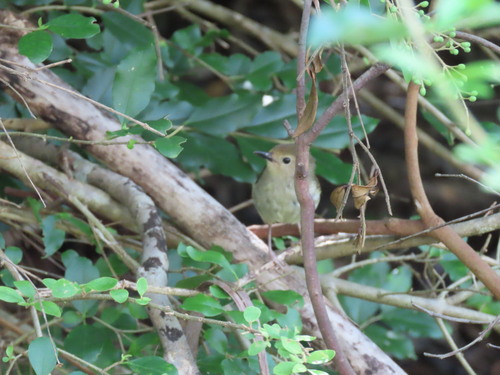
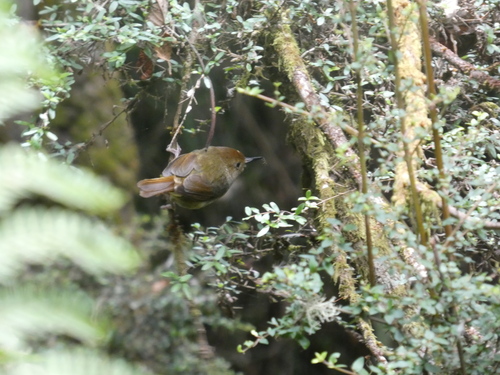
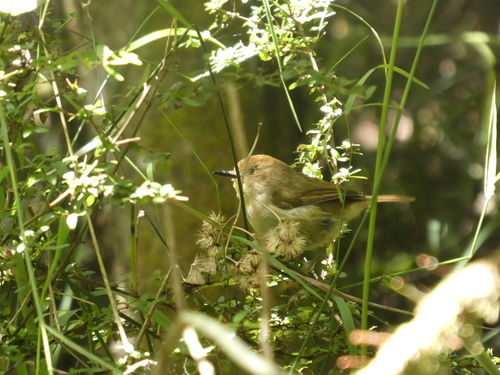
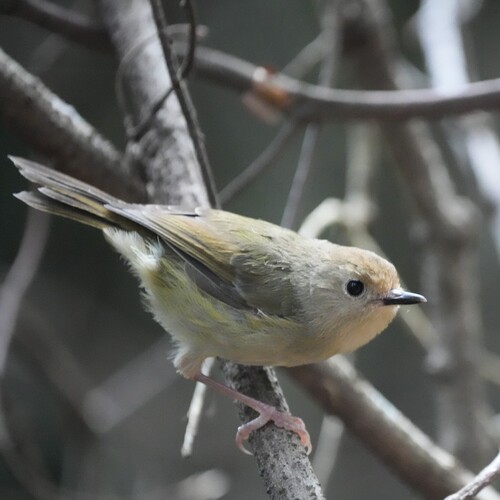
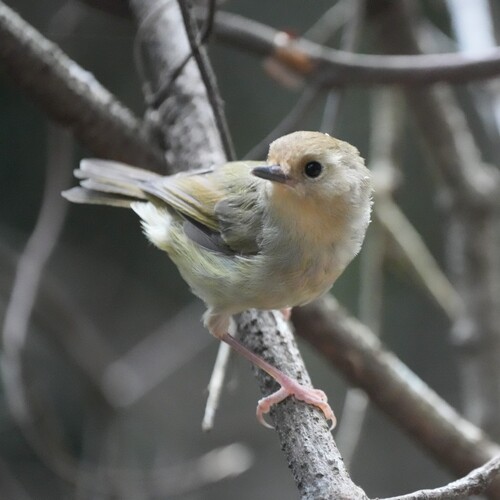
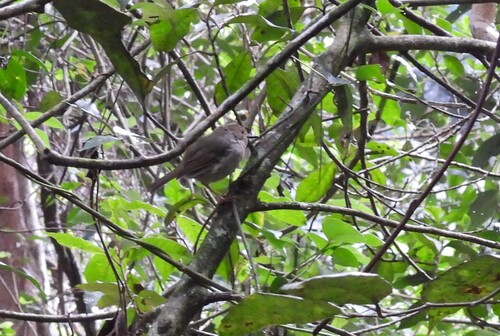
The large-billed scrubwren is 11.5 to 13 cm (4.5 to 5.1 in) in length and weighs 10 g (0.35 oz). It has a dark reddish-brown eye in a pale buff face, with a longish, black bill inclined slightly upwards. The upperparts are light grey-brown with an olive tint, the throat is a pale buffy-white, the belly greyish, and the rump and tail light rufous-brown. Voice: The large-billed scrubwren is mostly silent, but occasionally makes a penetrating territorial call "s-cheer s-cheer", a sharp, loud "chwip-chwip" or a chattering "sip-sip" while feeding.
Text from Wikipedia, licensed CC BY-SA 4.0.
When to see the Large-billed Scrubwren
One bar for each month, and every month is filled: this bird is recorded here in all twelve. The wide bar is October, the month with the most records.
Where to see the Large-billed Scrubwren
The map shades 1 country with regular records. Everything unshaded has no records. Countries are listed below the map.
About the Large-billed Scrubwren
The large-billed scrubwren is a passerine bird in the family Acanthizidae, endemic to eastern Australia. It is found in denser undergrowth in temperate forest, subtropical or tropical moist lowland forest, and subtropical or tropical moist montane forest.
Text adapted from Wikipedia, licensed CC BY-SA 4.0.
Easily confused with
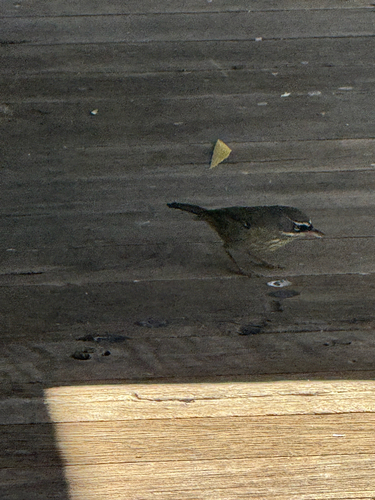 Spotted ScrubwrenSericornis maculatusThe spotted scrubwren is a bird species native to coastal southern Australia, from Adelaide westwards to Shark Bay in Western Australia.
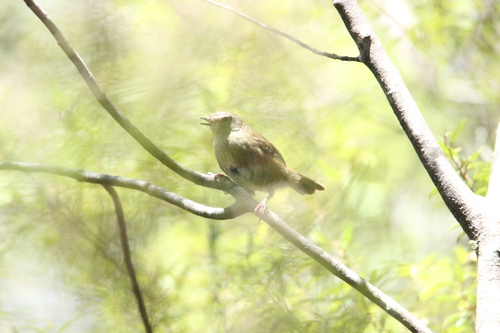 Tasmanian ScrubwrenSericornis humilisThe Tasmanian scrubwren or brown scrubwren is a bird species endemic to the temperate forests of Tasmania and nearby King Island.
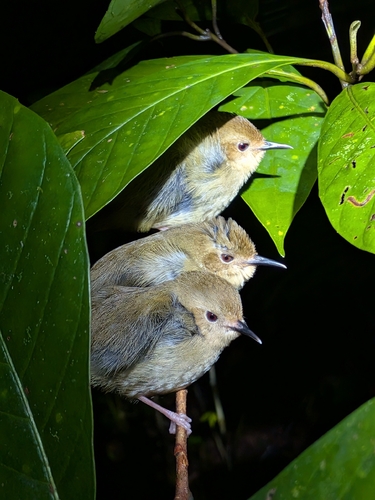 Atherton ScrubwrenSericornis keriThe Atherton scrubwren is a bird species.
Side by side: Large-billed Scrubwren vs White-browed Scrubwren
Learn the Large-billed Scrubwren in the BeakBrain App
Photo and call practice. Coming soon to iPhone and Android.
Play today's Daily BirdEvery photo and recording on this page is credited to its author under the licence shown. Spotted a problem with this page, or have a better photo? Contribute.