Learn what every symbol on the card means.Full credits and sources at beakbrain.com/symbols
 WetlandCavity nestHuge · 2.6 kg

ID tip
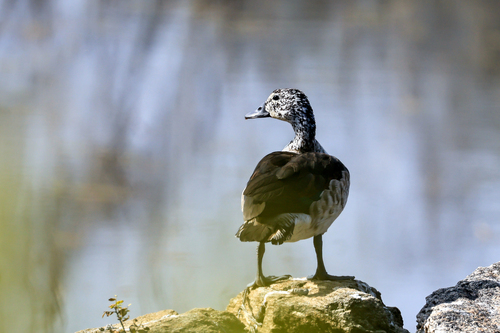
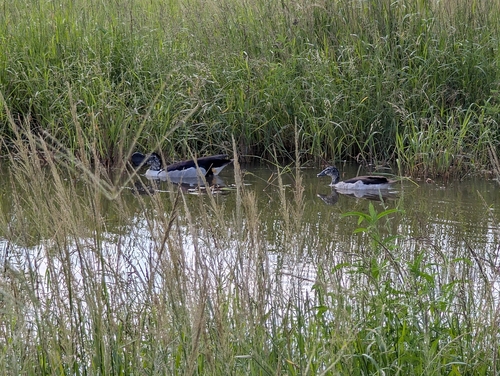
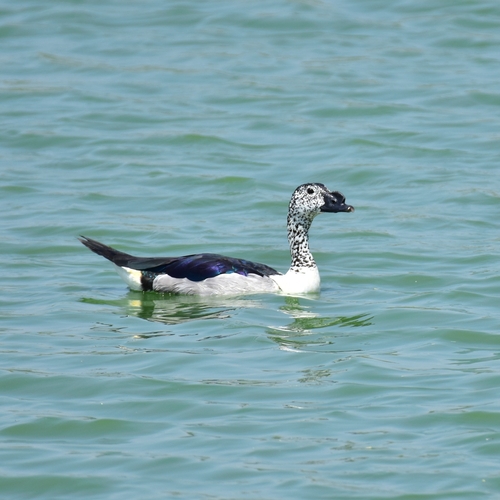
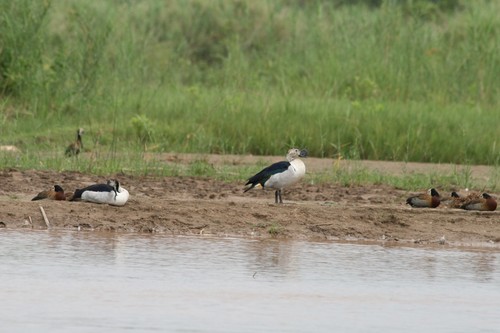
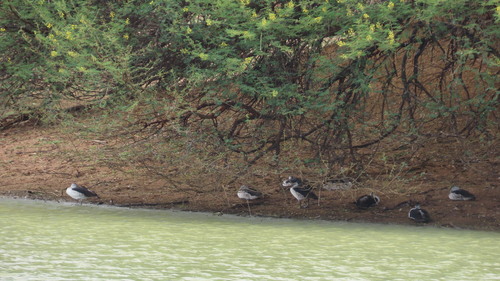
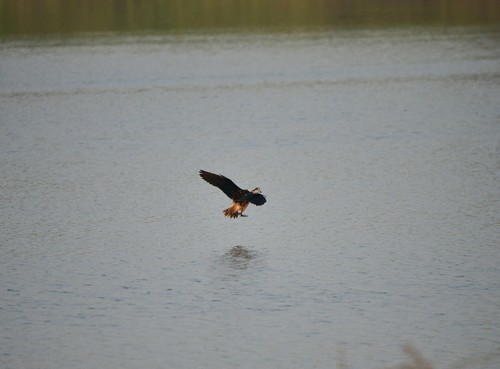
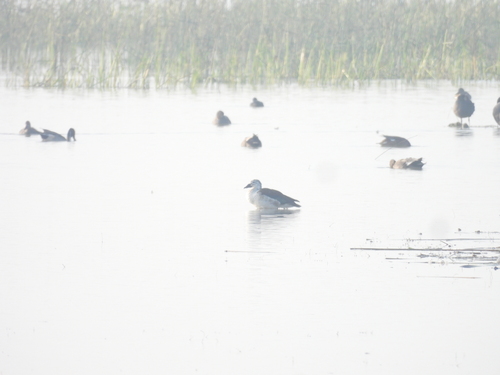
This common species is unmistakable. It is one of the largest species of duck. Length can range from 56 to 76 cm (22 to 30 in), wingspan ranges from 116 to 145 cm (46 to 57 in) and weight from 1.03 to 2.9 kg (2.3 to 6.4 lb). Adults have a white head freckled with dark spots, and a pure white neck and underparts. The upperparts are glossy blue-black upperparts, with bluish and greenish iridescence especially prominent on the secondaries (lower arm feathers). The male is much larger than the female, and has a large black knob on the bill.
Text from Wikipedia, licensed CC BY-SA 4.0.
When to see the Knob-billed Duck
One bar for each month, and every month is filled: this bird is recorded here in all twelve. The wide bar is December, the month with the most records.
Where to see the Knob-billed Duck
The map shades 45 countries with regular records, and 6 more in a lighter tone where the bird turns up only as a stray. Everything unshaded has no records. Countries are listed below the map.
Recorded as a rare visitor in Germany, Colombia, Belgium, Laos, Mayotte, Réunion.
About the Knob-billed Duck
The knob-billed duck or African comb duck is a type of duck found along the tropical/sub-tropical wetlands and waterways of Sub-Saharan Africa and the island of Madagascar, as well as most of South Asia and mainland Indochina.
Text adapted from Wikipedia, licensed CC BY-SA 4.0.
Easily confused with

Side by side: Crested Duck vs Knob-billed Duck · Comb Duck vs Knob-billed Duck
Learn the Knob-billed Duck in the BeakBrain App
Photo and call practice. Coming soon to iPhone and Android.
Play today's Daily BirdEvery photo and recording on this page is credited to its author under the licence shown. Spotted a problem with this page, or have a better photo? Contribute.