Learn what every symbol on the card means.Full credits and sources at beakbrain.com/symbols
 ForestCavity nestTiny · 10 g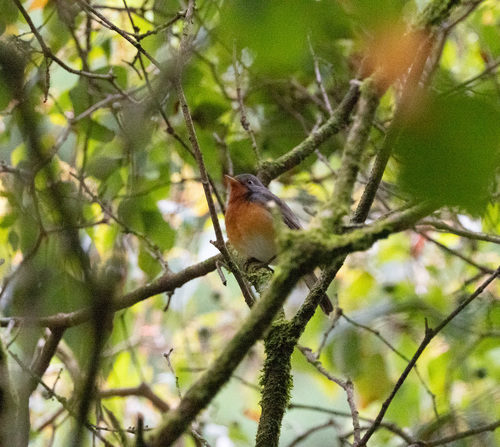
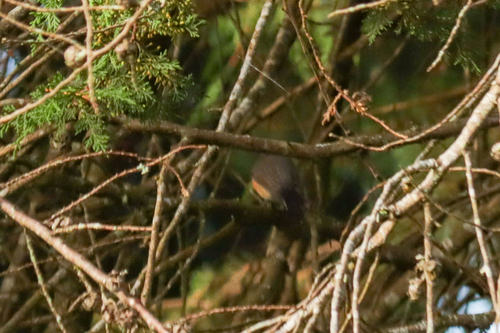


What the Kashmir Flycatcher sounds like

ID tip
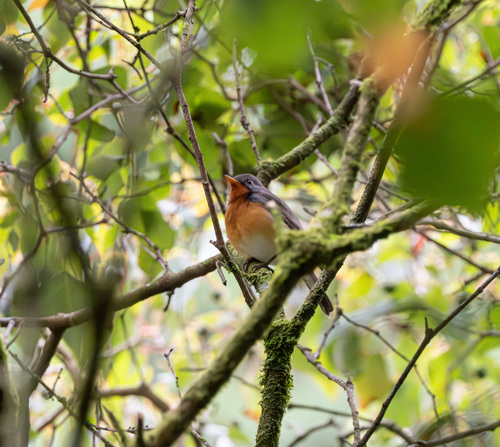
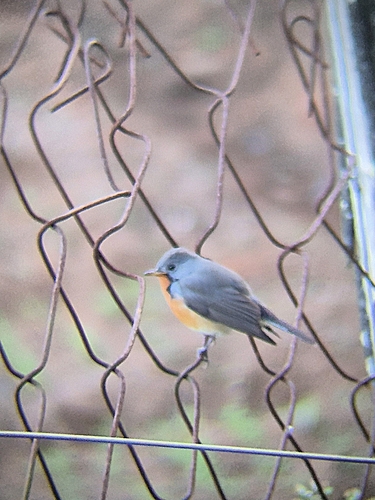
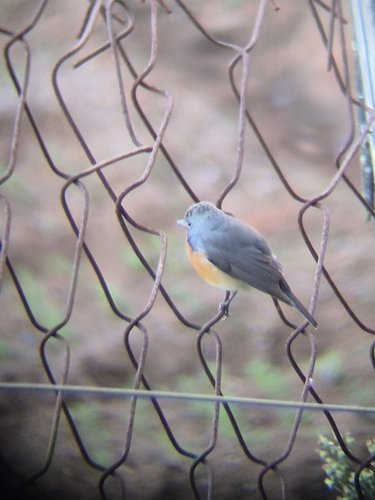
The Kashmir flycatcher is 13 cm long, an insectivorous species closely related to the red-breasted flycatcher and sharing the habits of flicking its tail up while perching. The male has a grey-brown back with an orange-red throat, breast and flanks, bordered with black on the throat and breast. Females and first-winter birds have slightly browner upperparts, and the red of the underparts may be reduced to just a pinkish wash. The females have the tail darker than the back with white on the lower basal half of the outer feathers.
Text from Wikipedia, licensed CC BY-SA 4.0.
When to see the Kashmir Flycatcher
One bar for each month. Filled bars are the 7 months with records; pale bars are months with none. The wide bar is December, the month with the most records.
Where to see the Kashmir Flycatcher
The map shades 2 countries with regular records, and 1 more in a lighter tone where the bird turns up only as a stray. Everything unshaded has no records. Countries are listed below the map.
Recorded as a rare visitor in Nepal.
About the Kashmir Flycatcher
The Kashmir flycatcher is a small passerine bird in the flycatcher family Muscicapidae. It breeds in the Northwest Himalayas and winters in southern India and Sri Lanka. It was formerly considered to be a subspecies of the red-breasted flycatcher, Ficedula parva, which is its closest living relative. Males are distinctive in having a blackish border to the reddish throat while the females can easily be confused with those of F. parva.
Text adapted from Wikipedia, licensed CC BY-SA 4.0.
Easily confused with
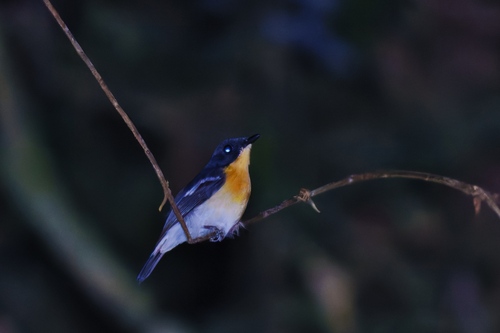 Rufous-chested FlycatcherFicedula dumetoriaThe rufous-chested flycatcher is a species of bird in the family Muscicapidae.
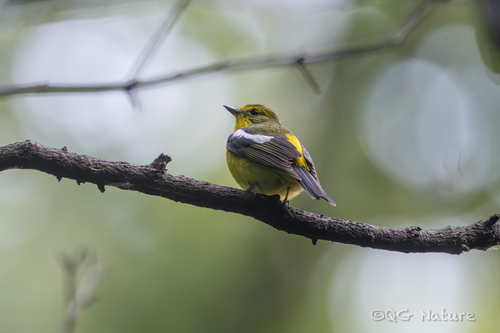 Green-backed FlycatcherFicedula elisaeThe green-backed flycatcher is a bird in the family Muscicapidae, which contains the Old World flycatchers.
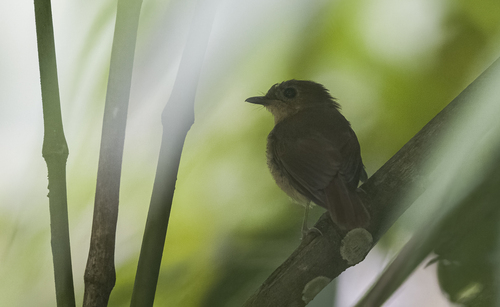 Cryptic FlycatcherFicedula cryptaIts drab colour, low foraging areas and its habit of being perched motionless most likely makes this bird overlooked and unnoticed.
Learn the Kashmir Flycatcher in the BeakBrain App
Photo and call practice. Coming soon to iPhone and Android.
Play today's Daily BirdEvery photo and recording on this page is credited to its author under the licence shown. Spotted a problem with this page, or have a better photo? Contribute.