Learn what every symbol on the card means.Full credits and sources at beakbrain.com/symbols
 Urban66 g

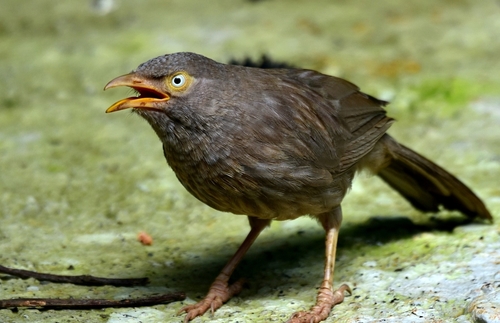
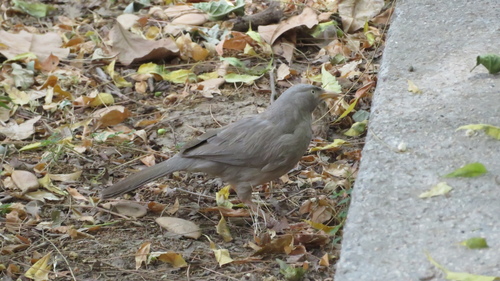
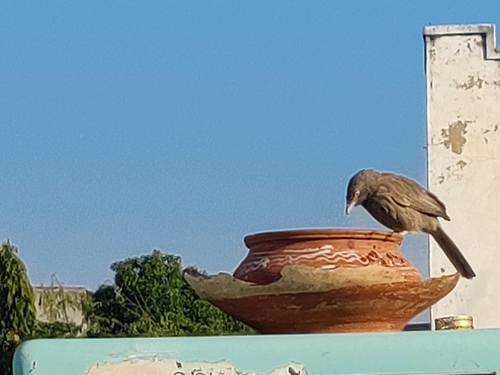
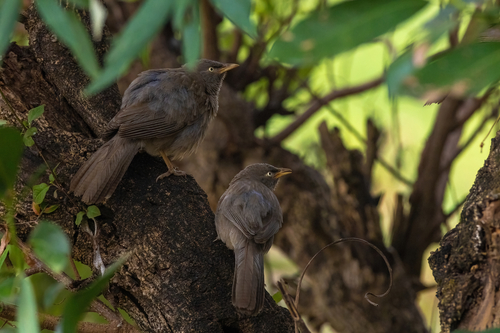
What the Jungle Babbler sounds like

ID tip
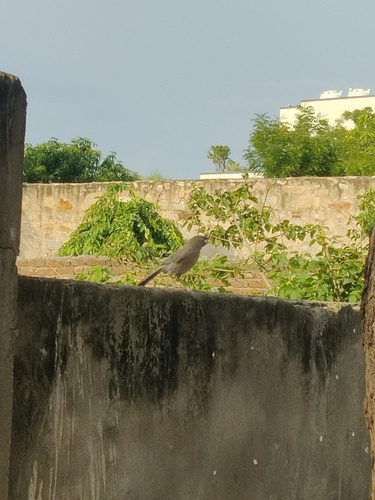
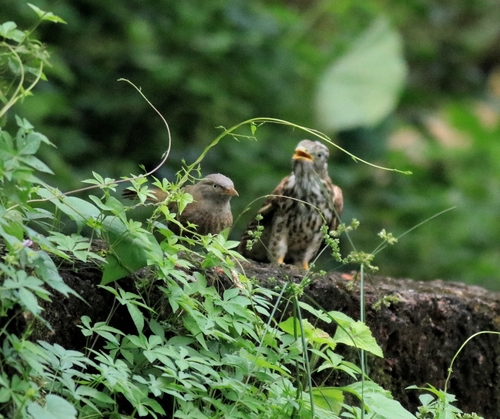
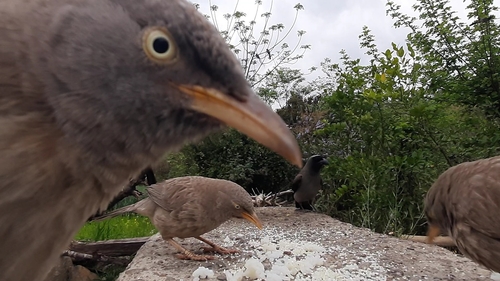
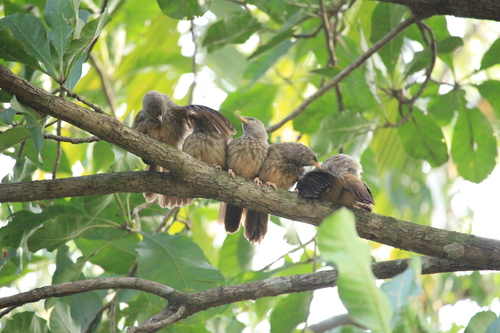
The jungle babbler's habitat is forest and cultivation. This species, like most babblers, is non-migratory, and has short rounded wings and a weak flight. The sexes are identical, drably coloured in brownish grey with a yellow-bill making them confusable only with the endemic yellow-billed babblers of peninsular India and Sri Lanka. The upper parts are usually slightly darker in shade and there is some mottling on the throat and breast. Subspecies somervillei of Maharashtra has a very rufous tail and dark primary flight feathers.
Text from Wikipedia, licensed CC BY-SA 4.0.
When to see the Jungle Babbler
One bar for each month, and every month is filled: this bird is recorded here in all twelve. The wide bar is February, the month with the most records.
Where to see the Jungle Babbler
The map shades 5 countries with regular records, and 1 more in a lighter tone where the bird turns up only as a stray. Everything unshaded has no records. Countries are listed below the map.
Recorded as a rare visitor in Sri Lanka.
About the Jungle Babbler
The jungle babbler is a member of the family Leiothrichidae found in the Indian subcontinent. Jungle babblers are gregarious birds that forage in small groups of six to ten birds, a habit that has given them the popular name of "seven sisters" in urban Northern India, and in Bengali, with cognates in other regional languages which also mean "seven brothers".
Text adapted from Wikipedia, licensed CC BY-SA 4.0.
Easily confused with
 Yellow-billed BabblerArgya affinisThese birds have grey brown upperparts, a grey throat and breast with some mottling, and a pale buff belly.
 Large Grey BabblerArgya malcolmiThis long-tailed and large babbler has a brown body with creamy white outer tail feathers which are easily visible as they fly with fluttery wing beats low over the ground.
 Common BabblerArgya caudataThis small, slim babbler with a long tail is buff to grey above with dark streaks.
Side by side: Jungle Babbler vs Yellow-billed Babbler · Jungle Babbler vs Large Grey Babbler · Common Babbler vs Jungle Babbler
Learn the Jungle Babbler in the BeakBrain App
Photo and call practice. Coming soon to iPhone and Android.
Play today's Daily BirdEvery photo and recording on this page is credited to its author under the licence shown. Spotted a problem with this page, or have a better photo? Contribute.