Learn what every symbol on the card means.Full credits and sources at beakbrain.com/symbols
 ForestCup nestMedium · 180 g
What the Jocotoco Antpitta sounds like


ID tip
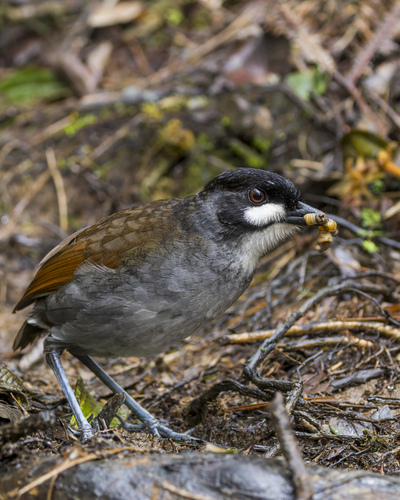
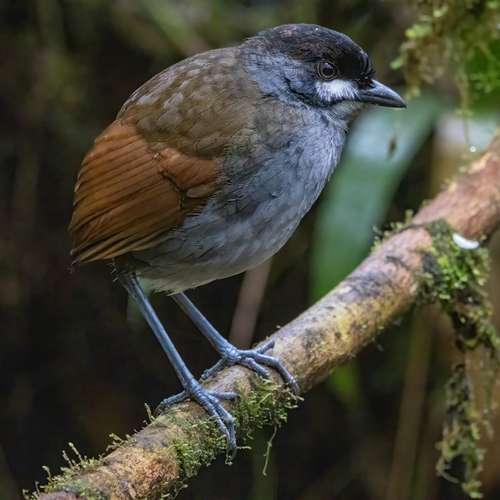
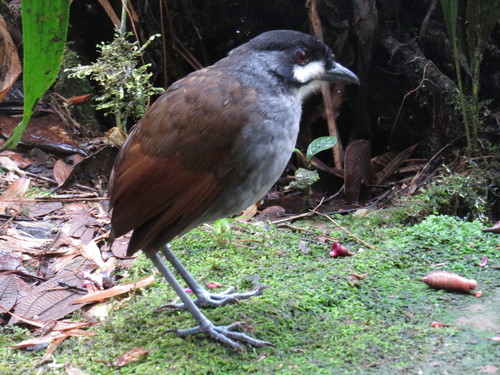
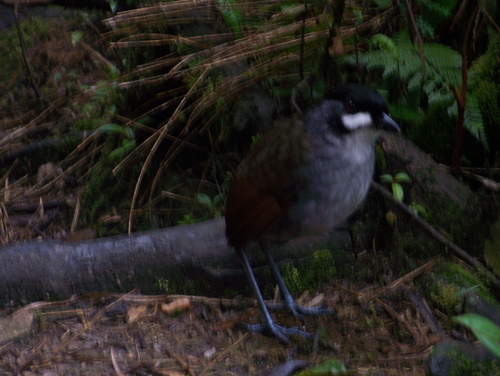
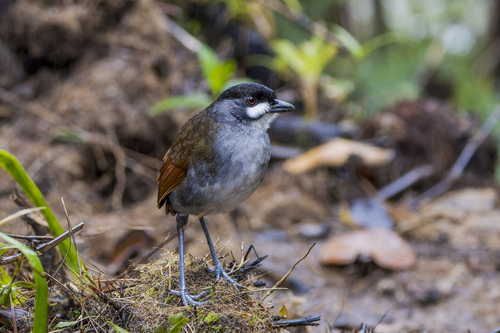
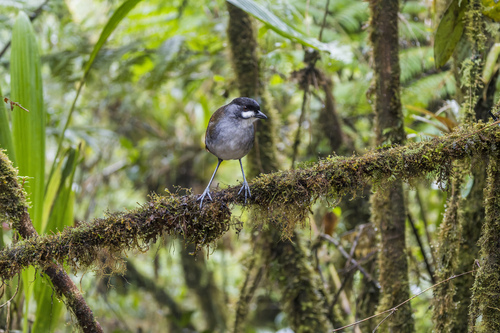
Grallaria antpittas are a "wonderful group of plump and round antbirds whose feathers are often fluffed up...they have stout bills very short tails". The jocotoco antpitta is the largest member of its family. It is 20 to 24 cm (7.9 to 9.4 in) long and weighs about 150 to 200 g (5.3 to 7.1 oz). The sexes have the same plumage. Adults have a black crown and brownish olive nape. They have a large, somewhat shaggy, fan-shaped white patch from the bill to below the eye. Their ear coverts are gray. Their upperparts are brownish olive with a black wash that lessens from the mantle to the rump. Voice: The jocotoco antpitta's song is "a slow series of 6-10 (or more) identical notes produced at 0.5-0.6 kHz, and delivered at 1-2 second intervals". The note has been described as "a low-pitched hooting 'hoo' " and the song can last for a minute or more. It has been likened to a dog bark and a cow's moo. One call is "a staccato hoó-có-kurr" which is the inspiration for the species' common name.
Text from Wikipedia, licensed CC BY-SA 4.0.
When to see the Jocotoco Antpitta
One bar for each month. Filled bars are the 10 months with records; pale bars are months with none. The wide bar is November, the month with the most records.
Where to see the Jocotoco Antpitta
The map shades 1 country with regular records. Everything unshaded has no records. Countries are listed below the map.
About the Jocotoco Antpitta
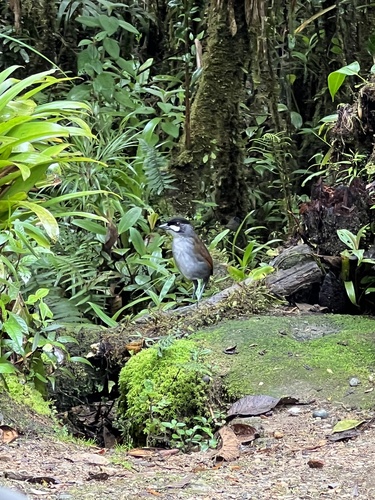
The jocotoco antpitta is an endangered species of bird in the family Grallariidae. It is found in Ecuador and Peru.
Text adapted from Wikipedia, licensed CC BY-SA 4.0.
Easily confused with
 Cundinamarca AntpittaGrallaria kaestneriThe Cundinamarca antpitta is 15 to 16 cm (5.9 to 6.3 in) long.
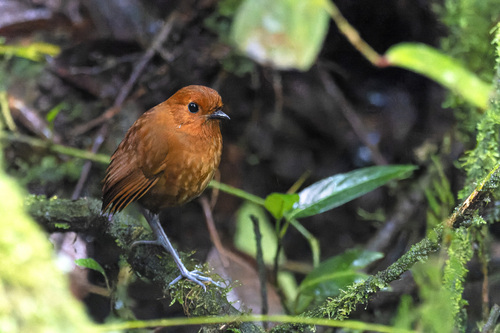 Chestnut AntpittaGrallaria blakeiThe chestnut antpitta is about 14.5 to 15 cm (5.7 to 5.9 in) long; six individuals weighed between 37 and 47 g (1.3 and 1.7 oz).
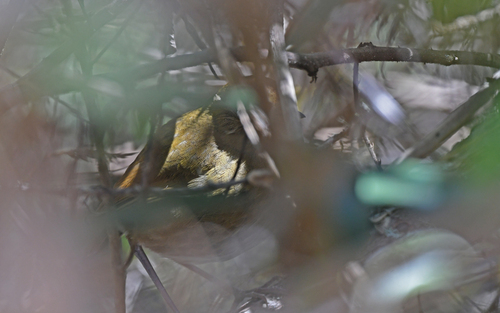 Perija AntpittaGrallaria saltuensisGrallaria antpittas are a "wonderful group of plump and round antbirds whose feathers are often fluffed up...they have stout bills very short tails".
Learn the Jocotoco Antpitta in the BeakBrain App
Photo and call practice. Coming soon to iPhone and Android.
Play today's Daily BirdEvery photo and recording on this page is credited to its author under the licence shown. Spotted a problem with this page, or have a better photo? Contribute.