Learn what every symbol on the card means.Full credits and sources at beakbrain.com/symbols
 RiverinePlatform nestLarge · 527 g


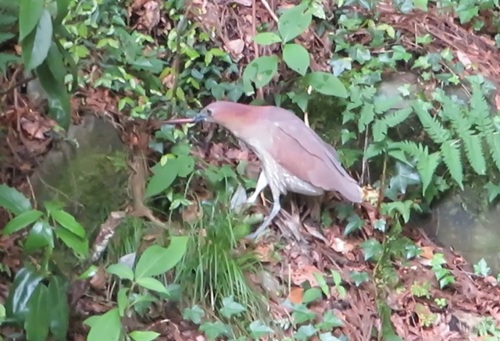
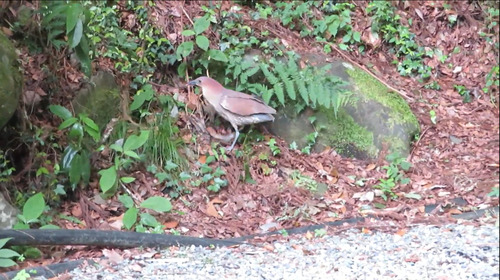
ID tip
The Japanese night heron's wingspan ranges between 43 and 47 centimeters, and the colors of the plumage vary between adult and juvenile herons. In adult herons, the head and neck feathers are russet in color and the wings' feathers are dark-brown in color. In juvenile herons, the feathers on the head are more black in color than russet, while the feathers on the wings are lighter in color than those of the adult. Both juvenile and adult herons share a wide beak and yellow skin on the outer layer of their eyes.
Text from Wikipedia, licensed CC BY-SA 4.0.
When to see the Japanese Night Heron
One bar for each month. Filled bars are the 5 months with records; pale bars are months with none. The wide bar is April, the month with the most records.
Where to see the Japanese Night Heron
The map shades 5 countries with regular records. Everything unshaded has no records. Countries are listed below the map.
About the Japanese Night Heron
The Japanese night heron is a species of night heron found in East Asia. It breeds in Japan, and winters in the Philippines and Indonesia. It is also seen in the spring and summer in Korea and the Russian Far East.
Text adapted from Wikipedia, licensed CC BY-SA 4.0.
Easily confused with

Learn the Japanese Night Heron in the BeakBrain App
Photo and call practice. Coming soon to iPhone and Android.
Play today's Daily BirdEvery photo and recording on this page is credited to its author under the licence shown. Spotted a problem with this page, or have a better photo? Contribute.