Learn what every symbol on the card means.Full credits and sources at beakbrain.com/symbols
 DesertDomed nestMedium · 87 g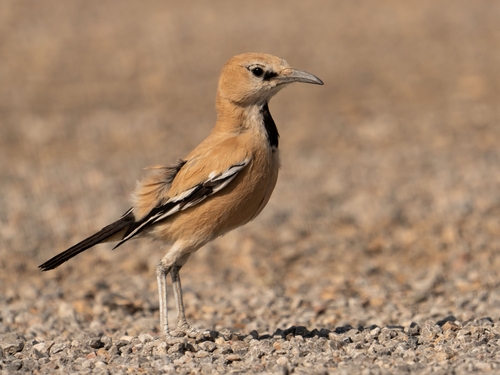


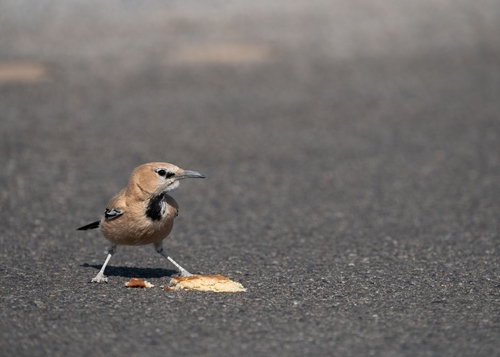
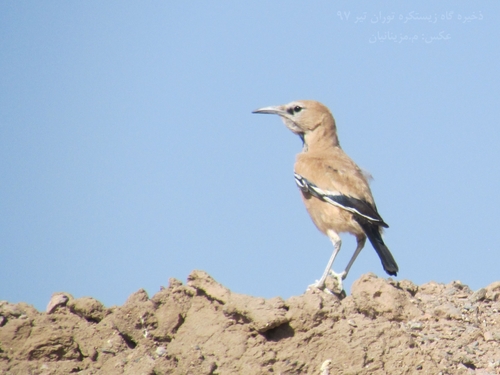
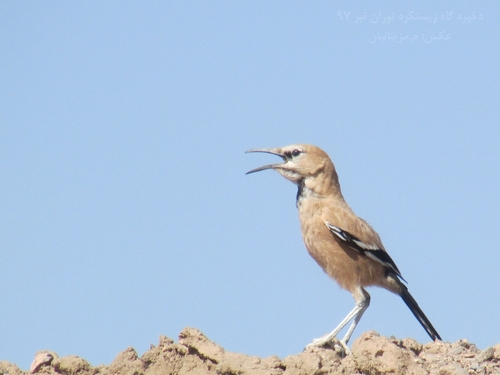
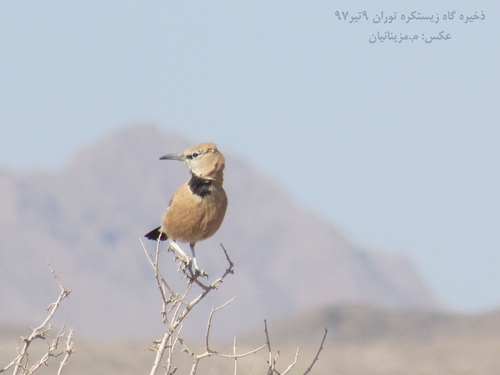
ID tip
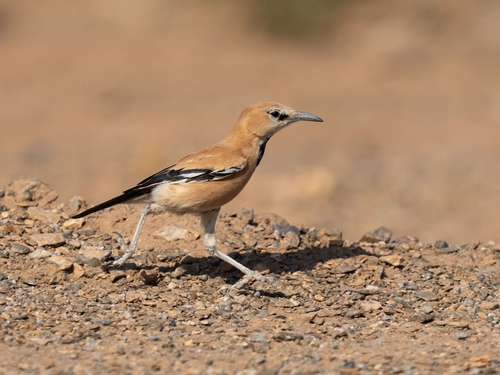
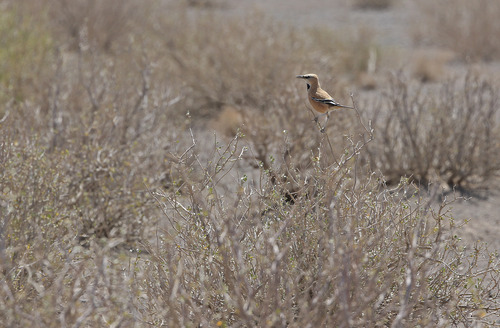
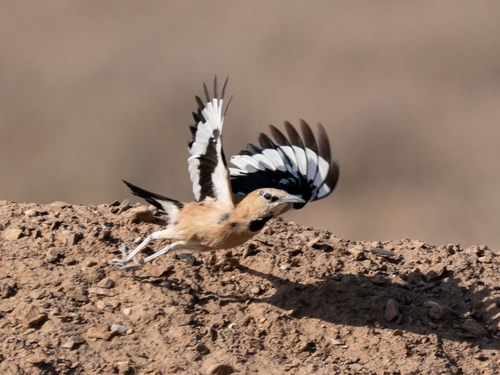
Around 24 cm (9.4 in) in length, with sandy beige feathers on the back, neck and upperparts, fading to off-white around the throat and breast. A black patch in the center of their throat, and black lores and tail feathers. In flight, primaries are white, with black tips, secondaries are also black with white on tips. Median coverts are striped black and white, while the remaining coverts are beige. They have a slim, decurved bill. Voice: Vocalizations are important in the species' communication and territorial displays. The Iranian ground jay produces a variety of calls, including a distinctive slow trill composed of long, high-pitched elements.
Text from Wikipedia, licensed CC BY-SA 4.0.
When to see the Iranian Ground Jay
One bar for each month. Filled bars are the 8 months with records; pale bars are months with none. The wide bar is April, the month with the most records.
Where to see the Iranian Ground Jay
The map shades 1 country with regular records. Everything unshaded has no records. Countries are listed below the map.
About the Iranian Ground Jay
The Iranian ground jay or Pleske's ground jay, is a species of bird in the family Corvidae. It is endemic to Iran where it is known as zaghbur in Persian. The species is named after Russian zoologist Theodor Pleske.
Text adapted from Wikipedia, licensed CC BY-SA 4.0.
Easily confused with
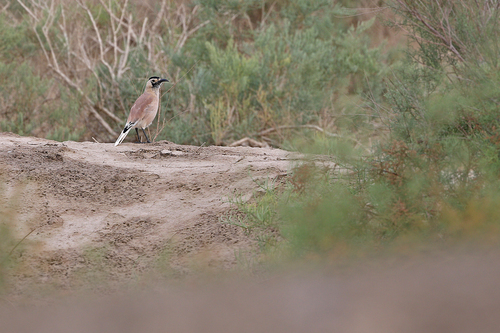 Xinjiang Ground JayPodoces biddulphiThe xinjiang ground jay is beige with partly black and white wings and a black cap.
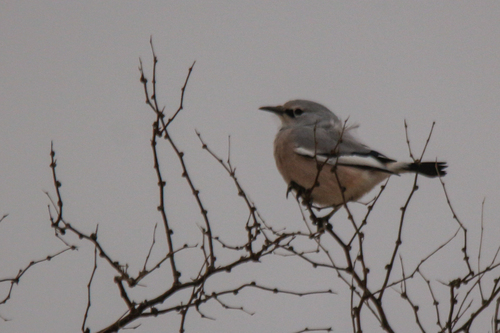 Turkestan Ground JayPodoces panderiThe Turkestan ground jay is visually similar to the Iranian ground jay, except for its duller, more grayscale coat. 25 cm (9.8 in) in length, it has beige-grey upperparts, head, and neck, with a black patch on the throat.
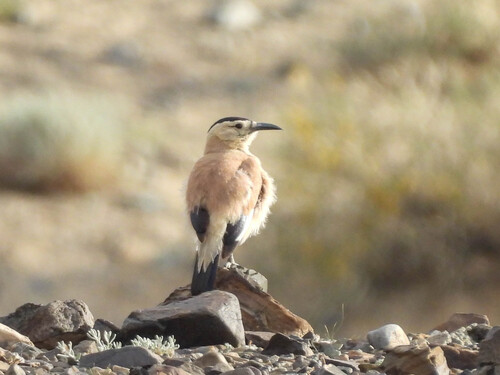 Mongolian Ground JayPodoces hendersoniThe bird is 28 cm (11 in) in length, with sandy-beige upperparts, off-white breast, and iridescent dark blue on the secondary feathers, and on the tips of the primary feathers.
Learn the Iranian Ground Jay in the BeakBrain App
Photo and call practice. Coming soon to iPhone and Android.
Play today's Daily BirdEvery photo and recording on this page is credited to its author under the licence shown. Spotted a problem with this page, or have a better photo? Contribute.