Learn what every symbol on the card means.Full credits and sources at beakbrain.com/symbols
 ForestCup nestMedium · 103 g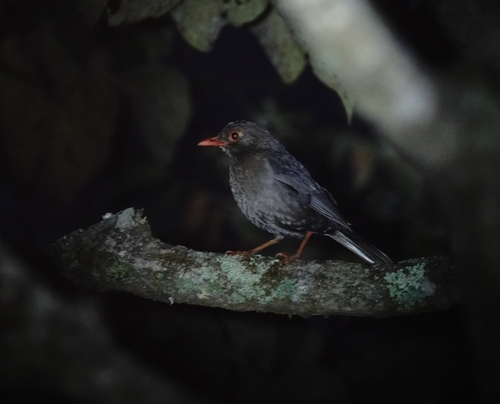


When to see the Indian Blackbird
One bar for each month. Filled bars are the 10 months with records; pale bars are months with none. The wide bar is February, the month with the most records.
Where to see the Indian Blackbird
The map shades 2 countries with regular records. Everything unshaded has no records. Countries are listed below the map.
About the Indian Blackbird
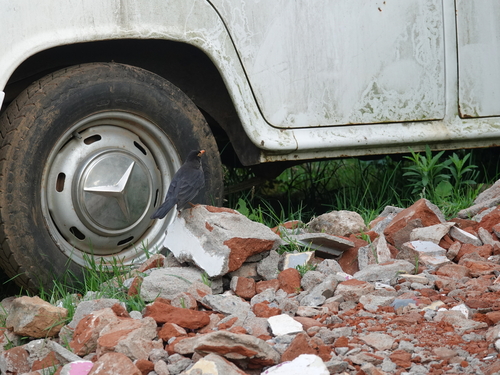
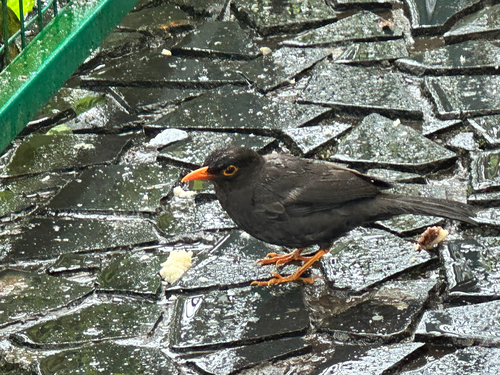
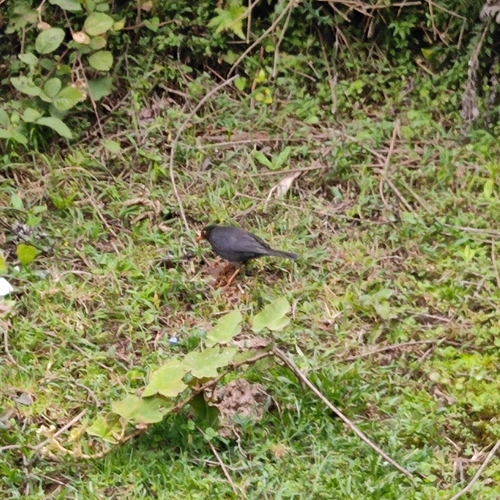
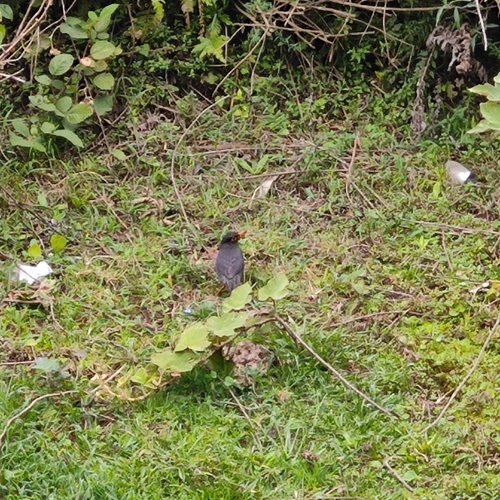
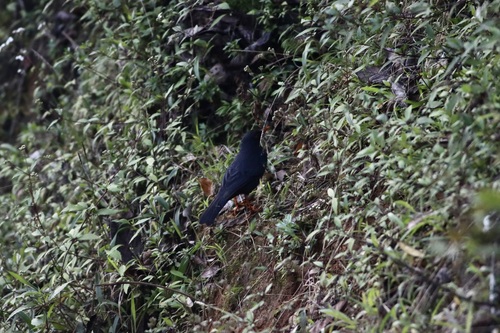
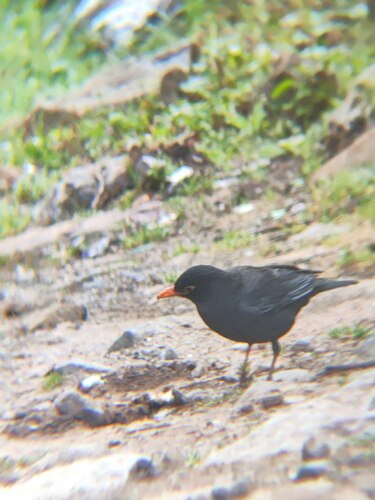
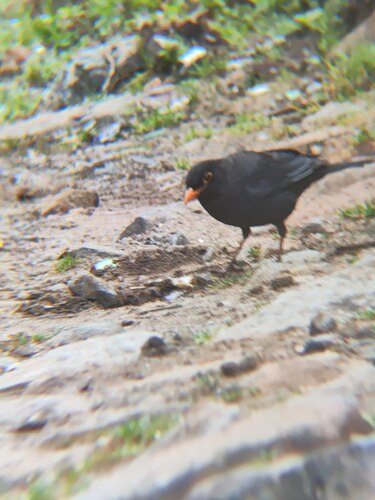
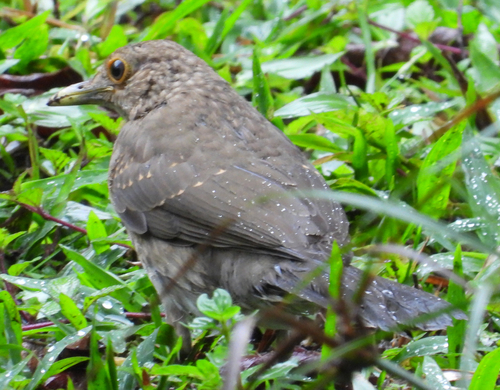
The Indian blackbird is a member of the thrush family Turdidae. It was formerly considered a subspecies of the common blackbird. It is found only in India and Sri Lanka. The subspecies from most of the Indian subcontinent, simillimus, nigropileus, bourdilloni and spencei, are small, only 19–20 centimetres long, and have broad eye-rings. They also differ in proportions, wing formula, egg colour and voice from the common blackbird.
Text adapted from Wikipedia, licensed CC BY-SA 4.0.
Easily confused with
 Glossy-black ThrushTurdus serranusThe glossy-black thrush is 23 to 25 cm (9.1 to 9.8 in) long and weighs 70 to 90 g (2.5 to 3.2 oz).
 Ecuadorian ThrushTurdus maculirostrisThe Ecuadorian thrush is 21.5 to 23 cm (8.5 to 9.1 in) long and weighs 62 to 76 g (2.2 to 2.7 oz).
 Rufous-collared ThrushTurdus rufitorquesThe rufous-collared thrush is 23 to 25.5 cm (9.1 to 10 in) long; three individuals weighed 70 to 74 g (2.5 to 2.6 oz).
Learn the Indian Blackbird in the BeakBrain App
Photo and call practice. Coming soon to iPhone and Android.
Play today's Daily BirdEvery photo and recording on this page is credited to its author under the licence shown. Spotted a problem with this page, or have a better photo? Contribute.