Learn what every symbol on the card means.Full credits and sources at beakbrain.com/symbols
 ForestPlatform nestMedium · 164 g
What the Imperial Snipe sounds like


ID tip
This 29–31 cm (11–12 in) long snipe has a stocky body and relatively short legs for a wader. Its adult plumage is dark rufous brown except for the lower belly and undertail, which are white with heavy brown barring. The grey bill is long, straight and fairly robust, and the legs and feet are grey. The sexes are similar. The juvenile plumage is unknown, but in most snipe species, young birds differ from adults only in showing pale fringes on the wing coverts.
Text from Wikipedia, licensed CC BY-SA 4.0.
When to see the Imperial Snipe
One bar for each month. Filled bars are the 9 months with records; pale bars are months with none. The wide bar is December, the month with the most records.
Where to see the Imperial Snipe
The map shades 2 countries with regular records. Everything unshaded has no records. Countries are listed below the map.
About the Imperial Snipe
The imperial snipe is a small stocky wader which breeds in the Andes. For a century it was known only from two specimens collected near Bogotá, Colombia, and was presumed extinct, but it was rediscovered in Peru in 1967 and Ecuador in 1988. It is not known if it is migratory.
Text adapted from Wikipedia, licensed CC BY-SA 4.0.
Easily confused with
 Wood SnipeGallinago nemoricolaThe wood snipe is a species of snipe which breeds in the Himalayas of northern India, Nepal, Bhutan and southern China.
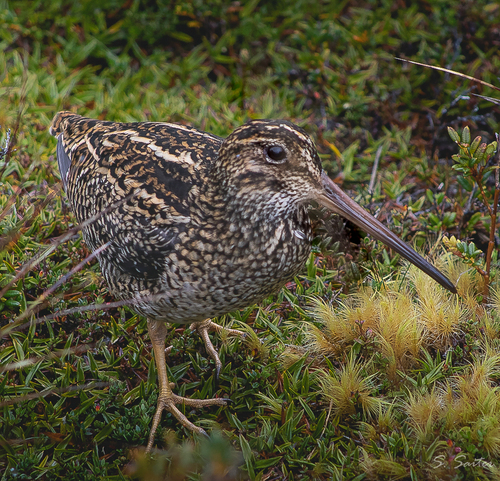 Fuegian SnipeGallinago stricklandiiThis 30–32 cm long snipe has a stocky body and relatively short legs for a wader.
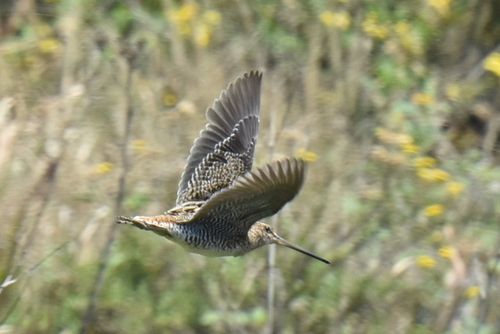 Madagascar SnipeGallinago macrodactylaThis is a large and heavy snipe, between 29–32 cm long with a stocky body and relatively short legs.
Learn the Imperial Snipe in the BeakBrain App
Photo and call practice. Coming soon to iPhone and Android.
Play today's Daily BirdEvery photo and recording on this page is credited to its author under the licence shown. Spotted a problem with this page, or have a better photo? Contribute.