Learn what every symbol on the card means.Full credits and sources at beakbrain.com/symbols
 RiverineScrapeMedium · 294 g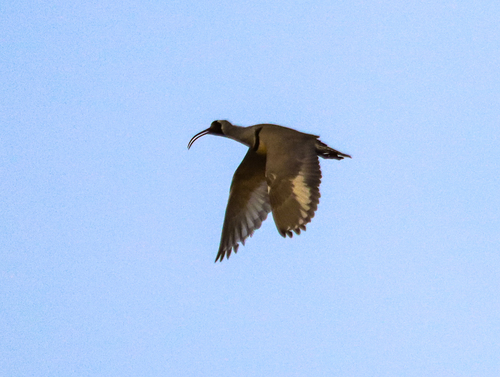



ID tip
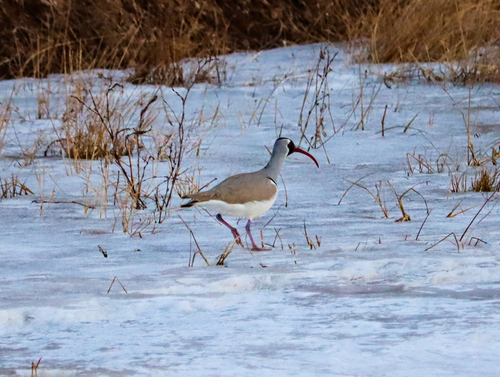
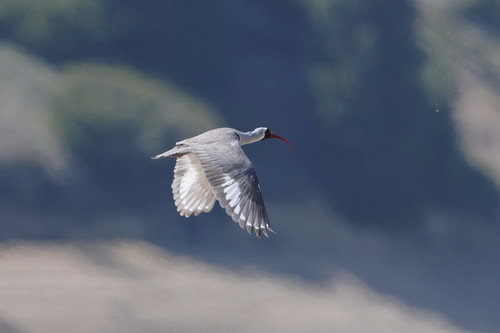
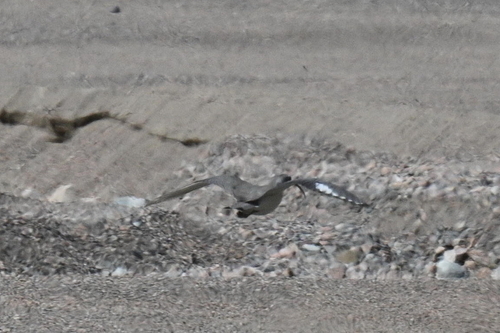
The ibisbill is 38–41 cm (15–16 in) long and is quite unmistakable in appearance. The adult is grey with a white belly, a crimson, long down-curved bill similar to that of the unrelated ibis, and a black face and black breast band. The sexes are similar, but young birds lack the black on the face and breast, and the bill is duller. The bill is 6.8–8.2 cm (2.7–3.2 in) long and is slightly longer in females. The legs are greyish purple in the breeding adults and dull sepia in juveniles or greenish in younger or non-breeding adults.
Text from Wikipedia, licensed CC BY-SA 4.0.
When to see the Ibisbill
One bar for each month. Filled bars are the 11 months with records; pale bars are months with none. The wide bar is February, the month with the most records.
Where to see the Ibisbill
The map shades 7 countries with regular records, and 1 more in a lighter tone where the bird turns up only as a stray. Everything unshaded has no records. Countries are listed below the map.
Recorded as a rare visitor in Tajikistan.
About the Ibisbill
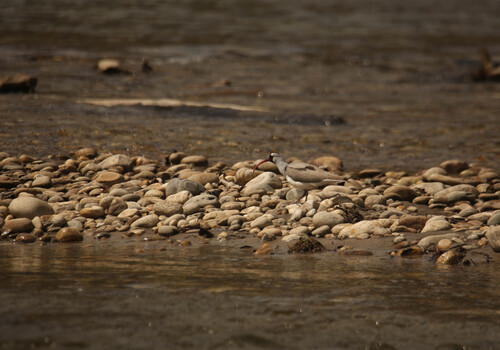
The ibisbill is a bird related to the waders, but sufficiently distinctive to merit its own family Ibidorhynchidae. It is grey with a white belly, red legs and long down-curved bill, and a black face and black breast band. It occurs on the shingle riverbanks of the high plateaux of central Asia and the Himalayas.
Text adapted from Wikipedia, licensed CC BY-SA 4.0.
Learn the Ibisbill in the BeakBrain App
Photo and call practice. Coming soon to iPhone and Android.
Play today's Daily BirdEvery photo and recording on this page is credited to its author under the licence shown. Spotted a problem with this page, or have a better photo? Contribute.