Learn what every symbol on the card means.Full credits and sources at beakbrain.com/symbols
 ForestCavity nestMedium · 97 g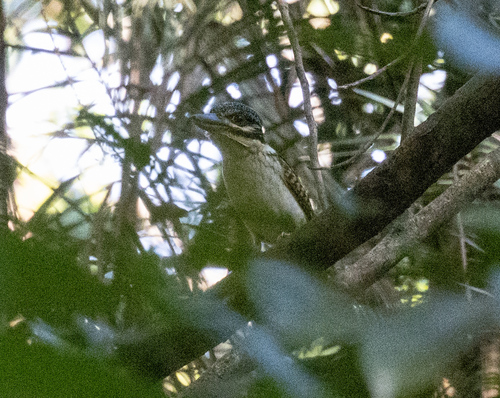


ID tip
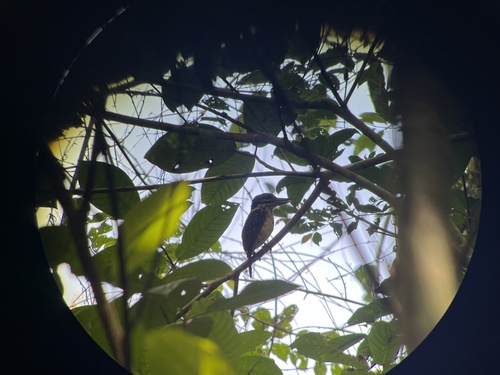
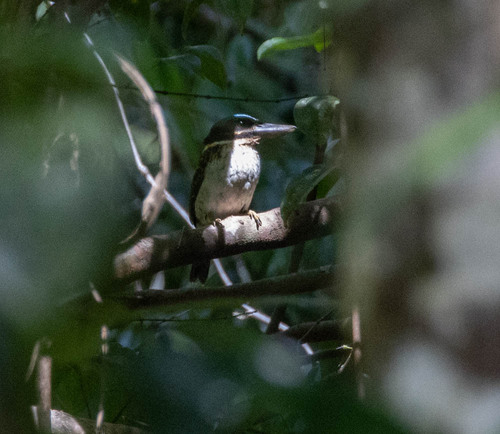
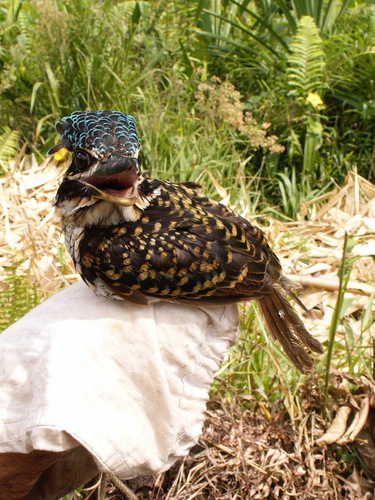
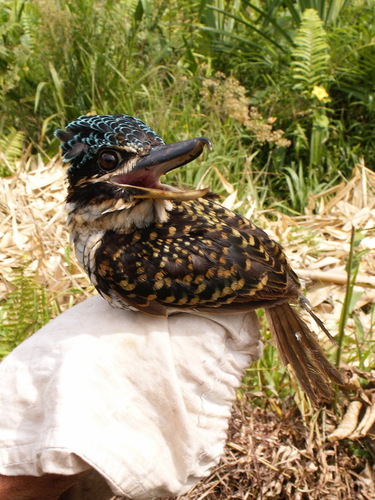
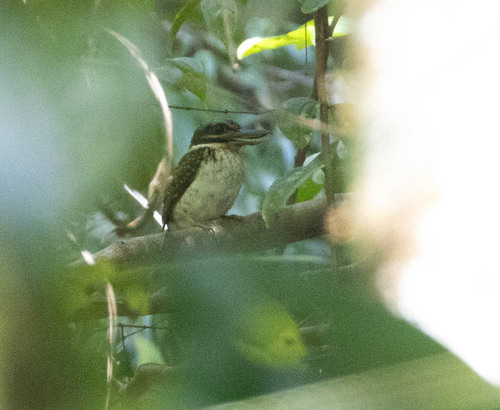
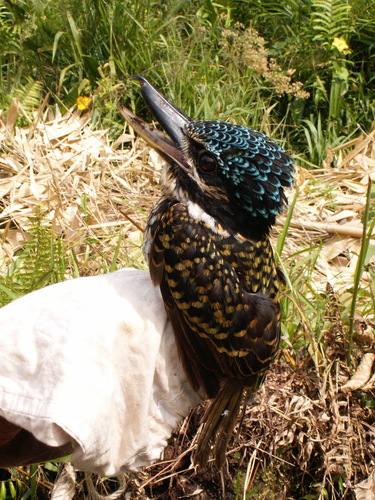
The hook-billed kingfisher is a large dumpy kingfisher with a length of 27 cm (11 in) and a weight of 85–110 g (3.0–3.9 oz). It has a long, white stripe below its eyes. Its underside is white. It has dull yellow feet. The call and song are mainly given at night. The most common call is a long whistle followed by a series of higher pitched short notes.
Text from Wikipedia, licensed CC BY-SA 4.0.
When to see the Hook-billed Kingfisher
One bar for each month. Filled bars are the 6 months with records; pale bars are months with none. The wide bar is August, the month with the most records.
Where to see the Hook-billed Kingfisher
The map shades 2 countries with regular records. Everything unshaded has no records. Countries are listed below the map.
About the Hook-billed Kingfisher
The hook-billed kingfisher is a species of kingfisher in the subfamily Halcyoninae that is resident in the lowland forested areas of New Guinea and some of the nearby islands. It is the only member of the genus Melidora.
Text adapted from Wikipedia, licensed CC BY-SA 4.0.
Easily confused with
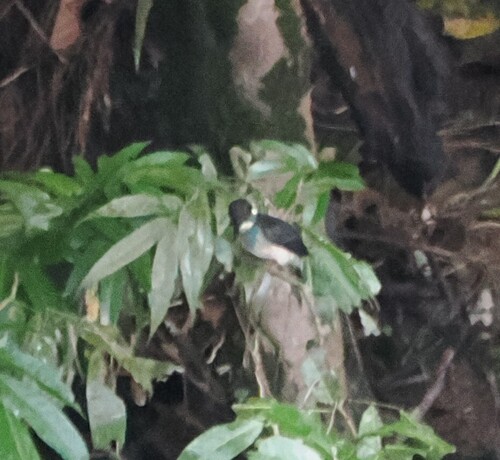 Javan Blue-banded KingfisherAlcedo euryzonaThe Javan blue-banded kingfisher, is a species of kingfisher in the subfamily Alcedininae.
 Madagascar Pygmy KingfisherCorythornis madagascariensisThe Madagascar pygmy kingfisher is a species of bird in the family Alcedinidae.
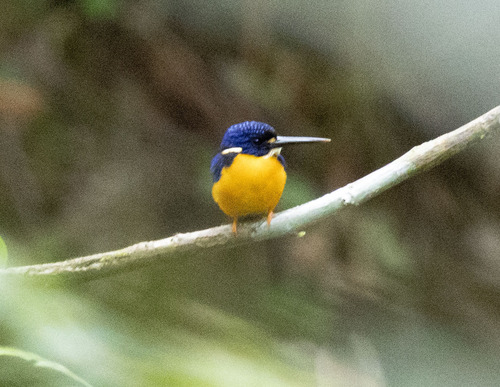 Papuan Dwarf KingfisherCeyx solitariusThe Papuan dwarf kingfisher, is a species of bird in the family Alcedinidae that is endemic to the western Papuan islands, New Guinea, Aru Islands and the D'Entrecasteaux Archipelago.
Learn the Hook-billed Kingfisher in the BeakBrain App
Photo and call practice. Coming soon to iPhone and Android.
Play today's Daily BirdEvery photo and recording on this page is credited to its author under the licence shown. Spotted a problem with this page, or have a better photo? Contribute.