Learn what every symbol on the card means.Full credits and sources at beakbrain.com/symbols
 ShrublandCup nestMedium · 98 g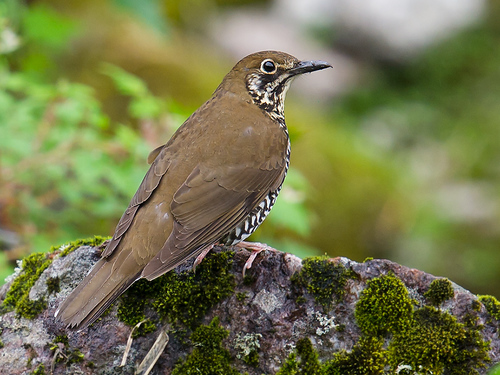

When to see the Himalayan Thrush
One bar for each month. Filled bars are the 8 months with records; pale bars are months with none. The wide bar is April, the month with the most records.
Where to see the Himalayan Thrush
The map shades 3 countries with regular records, and 1 more in a lighter tone where the bird turns up only as a stray. Everything unshaded has no records. Countries are listed below the map.
Recorded as a rare visitor in Thailand.
About the Himalayan Thrush
The Himalayan thrush or Himalayan forest thrush is a species of bird described in 2016 and separated out from the alpine thrush Zoothera mollissima with which they were formerly lumped. The species is separated on the basis of phylogenetic studies that suggest that the population diverged from the common ancestor at least 3 million years ago. The alpine thrush breeds above the tree line whereas the Himalayan thrush breeds in forested habitats. The species breeds from Sikkim and Darjeeling in India and extends east into Tibet and further east into northwest Yunnan in China. The species differs in its song from that of the alpine thrush.
Text adapted from Wikipedia, licensed CC BY-SA 4.0.
Easily confused with
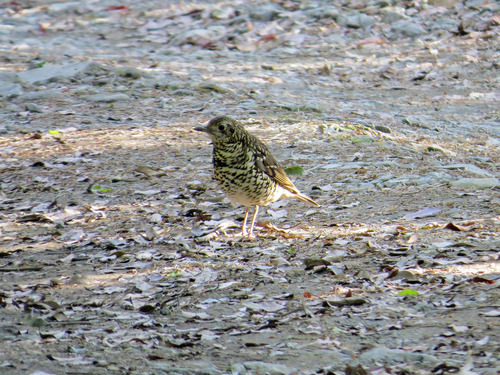 Amami ThrushZoothera majorThis large, heavily patterned thrush is similar in appearance to the scaly thrush, to which was considered a subspecies.
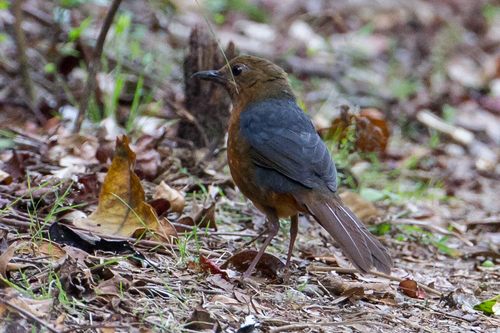 GeomaliaZoothera heinrichiThe geomalia or Sulawesi mountain thrush is a rare member of the thrush family endemic to Sulawesi in Indonesia.
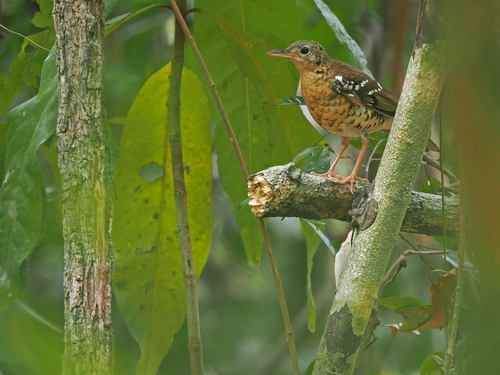 Fawn-breasted ThrushZoothera machikiThe fawn-breasted thrush is a species of bird in the family Turdidae.
Learn the Himalayan Thrush in the BeakBrain App
Photo and call practice. Coming soon to iPhone and Android.
Play today's Daily BirdEvery photo and recording on this page is credited to its author under the licence shown. Spotted a problem with this page, or have a better photo? Contribute.