Learn what every symbol on the card means.Full credits and sources at beakbrain.com/symbols
 ShrublandDomed nestTiny · 14 g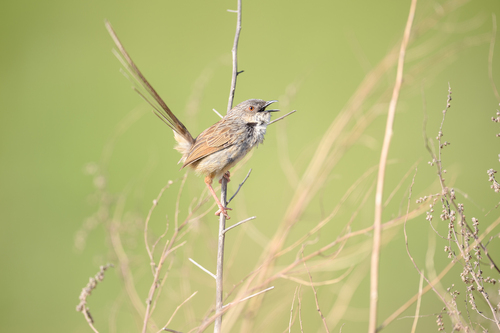
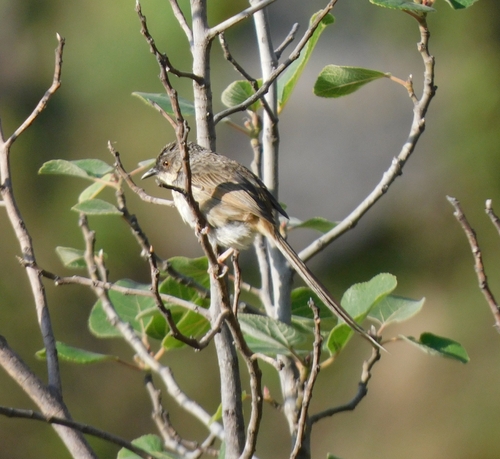
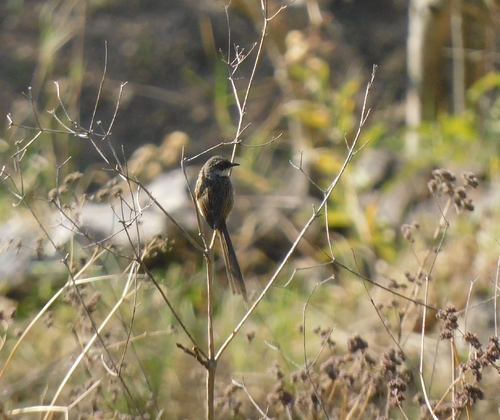


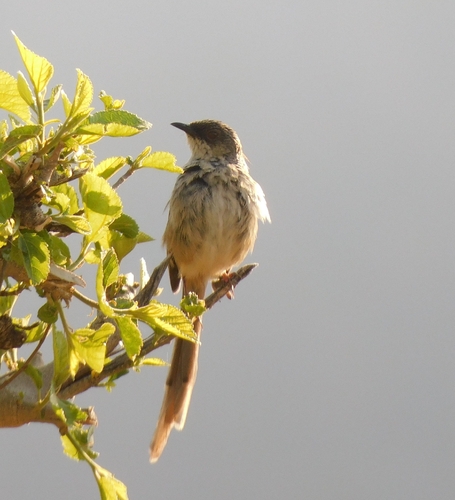
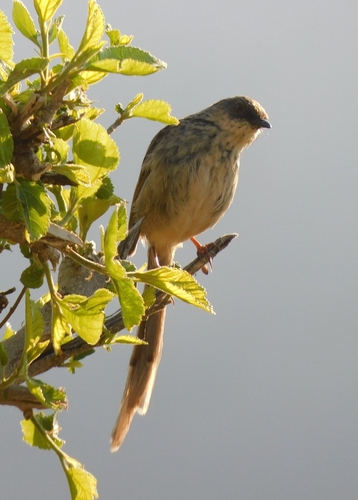
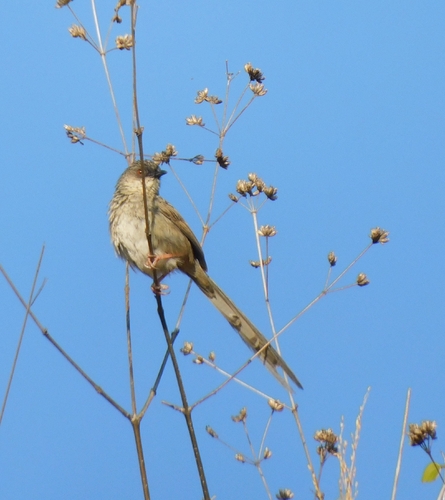
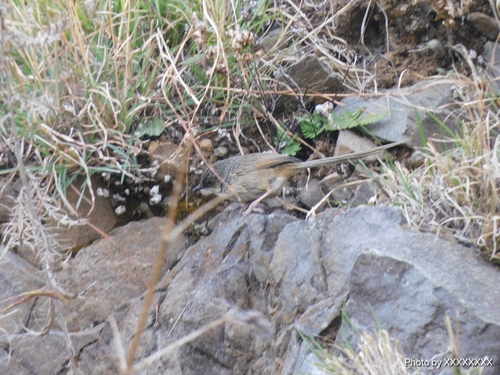
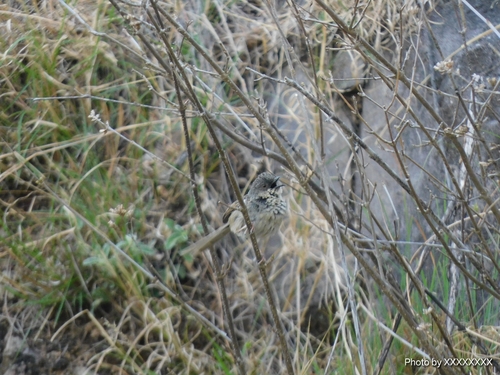
ID tip
Its tail is long and broad, with a cold-toned dark color. It exhibits significant sexual dimorphism in both size and color. Appearance varies by season. During the non-breeding season, both sexes have streaking on the upper parts and mottling on the sides of the face and breast. During the breeding season, males have a blackish crown, which is paler around the edges in many individuals. The face is blackish, and the sides of the breast are dark and mottled. The mantle is streaked, but not as distinctly as the crown. The bill is blackish.
Text from Wikipedia, licensed CC BY-SA 4.0.
When to see the Himalayan Prinia
One bar for each month, and every month is filled: this bird is recorded here in all twelve. The wide bar is April, the month with the most records.
Where to see the Himalayan Prinia
The map shades 7 countries with regular records. Everything unshaded has no records. Countries are listed below the map.
About the Himalayan Prinia
The Himalayan prinia is a species of bird in the family Cisticolidae. It was formerly lumped in with the striped prinia as the striated prinia.
Text adapted from Wikipedia, licensed CC BY-SA 4.0.
Easily confused with
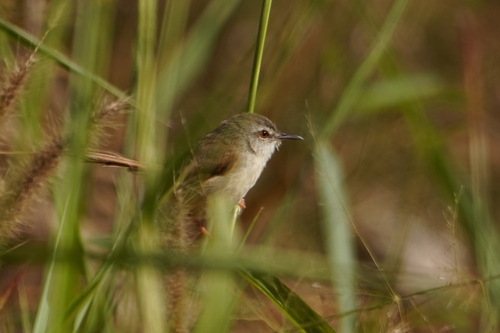 Rufescent PriniaPrinia rufescensThe rufescent prinia is a species of bird in the family Cisticolidae.
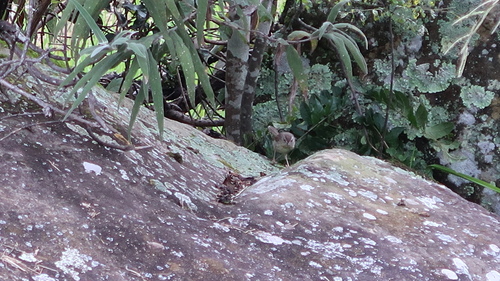 Drakensberg PriniaPrinia hypoxanthaThe Drakensberg prinia is 12–14 cm (4.7–5.5 in) long, with short rounded wings, a longish tail, strong legs and a short straight black bill.
 Rufous-fronted PriniaPrinia buchananiThe rufous-fronted prinia is a small stocky bird, generally 12 cm long and weighing between 5 and 6 grams.
Side by side: Drakensberg Prinia vs Himalayan Prinia · Grey-capped Warbler vs Himalayan Prinia · Himalayan Prinia vs Rufous-fronted Prinia
Learn the Himalayan Prinia in the BeakBrain App
Photo and call practice. Coming soon to iPhone and Android.
Play today's Daily BirdEvery photo and recording on this page is credited to its author under the licence shown. Spotted a problem with this page, or have a better photo? Contribute.