Learn what every symbol on the card means.Full credits and sources at beakbrain.com/symbols
 ForestCavity nestLarge · 472 g

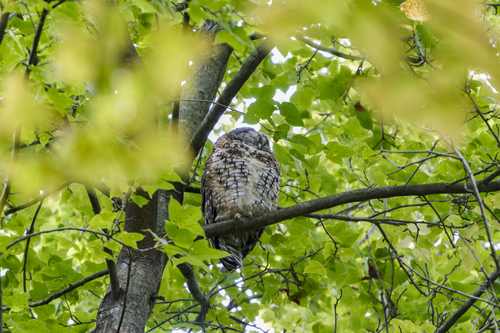
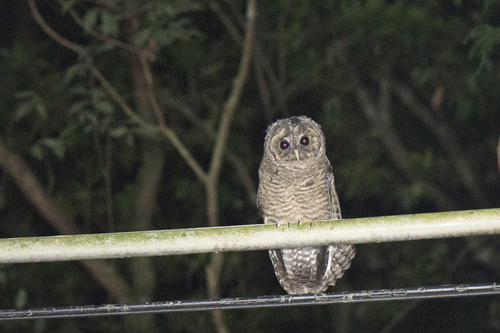
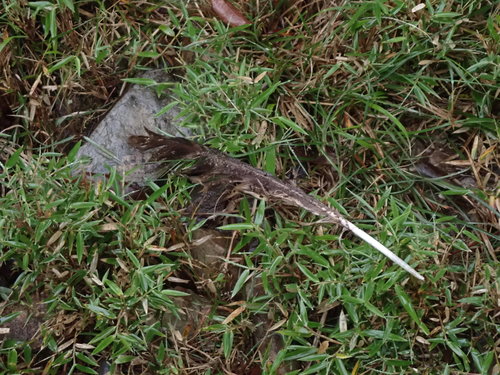
ID tip
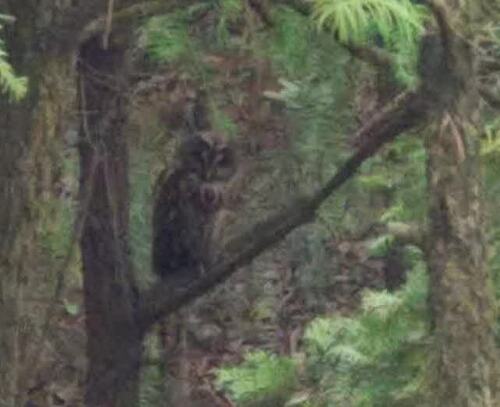
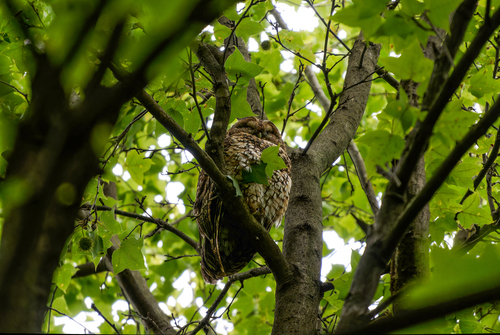
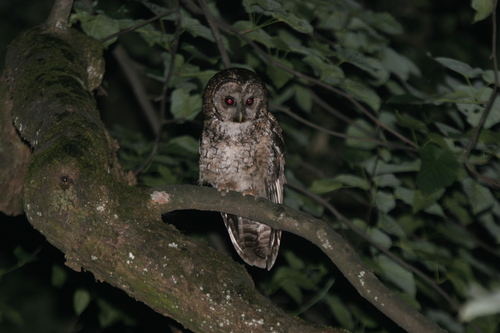
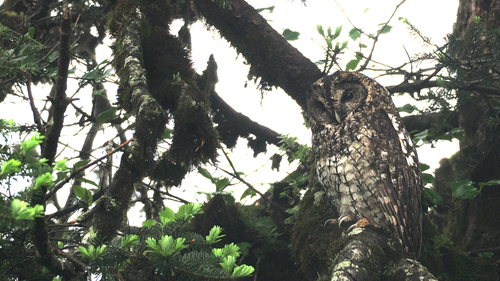
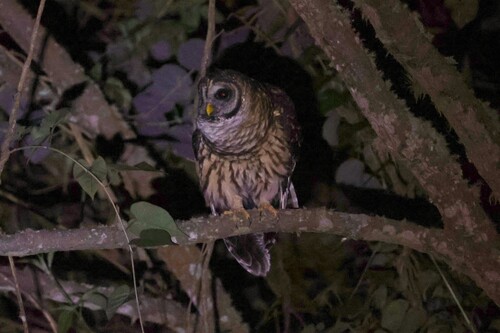
The Himalayan owl measures 35–40 cm and has a wingspan of approximately 270mm, classifying it as a medium-sized owl. The Himalayan Owl has warm-toned, tawny-coloured, plumage with light brown, dark brown and white colouring across its body. Its chest is light brown and white with vertical dark brown stripes, while its wings and tail feathers are darker with white horizontal bands and light patches towards the tips. Its head is round and without ear tufts and is a dark brown colour with lighter speckling, similar to its wings. Voice: The Himalayan owl has few distinct vocalizations, a song, a call and specialized calls for mating and communication amongst breeding pairs. Its song consist of two fast hoots: "coo-coo". The sound is described as dove-like, with the second "coo" sometimes lower pitched and slightly longer than the first "coo".
Text from Wikipedia, licensed CC BY-SA 4.0.
When to see the Himalayan Owl
One bar for each month. Filled bars are the 10 months with records; pale bars are months with none. The wide bar is May, the month with the most records.
Where to see the Himalayan Owl
The map shades 7 countries with regular records, and 1 more in a lighter tone where the bird turns up only as a stray. Everything unshaded has no records. Countries are listed below the map.
Recorded as a rare visitor in South Korea.
About the Himalayan Owl
The Himalayan owl or Himalayan wood owl is a medium-sized owl native to the forests and mountain ranges of the Himalayas, Taiwan and Korea. Although populations are declining, this owl is not considered endangered and is currently listed as a species of Least Concern on the IUCN Red List due to its large range and slow decline. The Himalayan owl is nocturnal and is rarely seen in most areas of its range. Few studies have been done on its lifestyle and current population trends.
Text adapted from Wikipedia, licensed CC BY-SA 4.0.
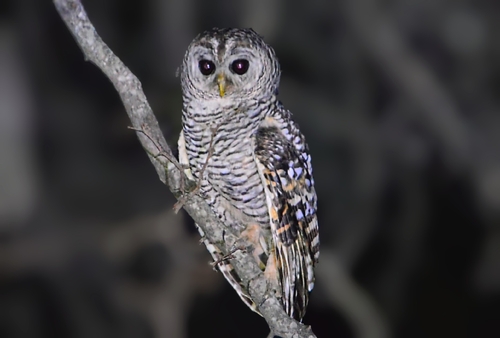
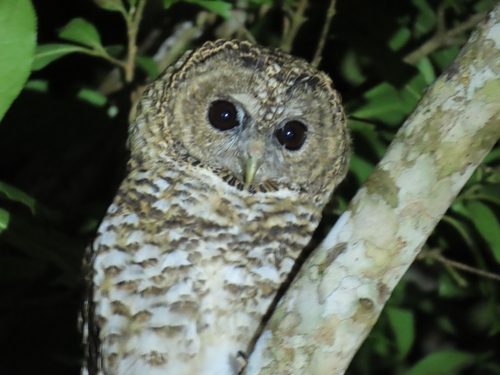
Easily confused with
Learn the Himalayan Owl in the BeakBrain App
Photo and call practice. Coming soon to iPhone and Android.
Play today's Daily BirdEvery photo and recording on this page is credited to its author under the licence shown. Spotted a problem with this page, or have a better photo? Contribute.