Learn what every symbol on the card means.Full credits and sources at beakbrain.com/symbols
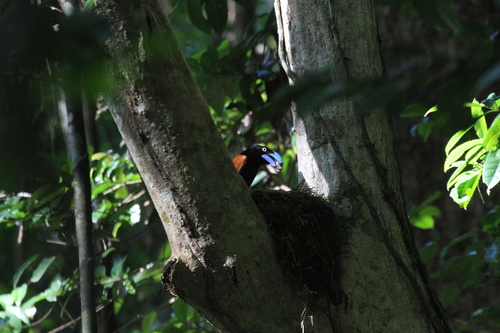
 ForestCup nestMedium · 97 g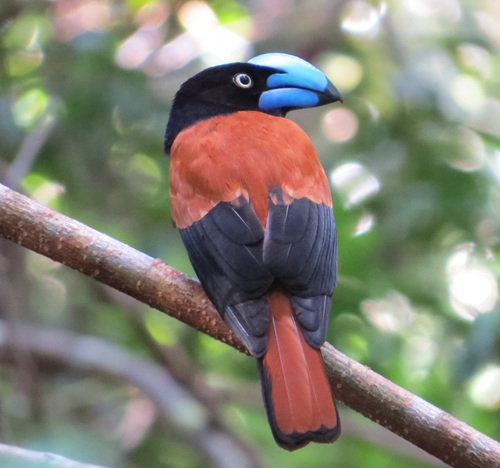
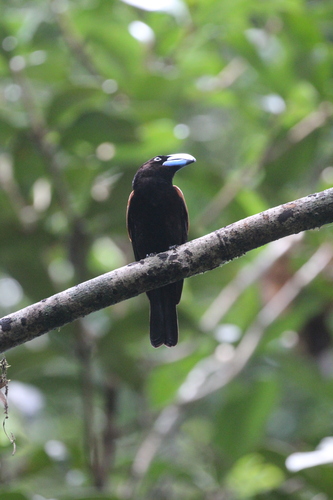


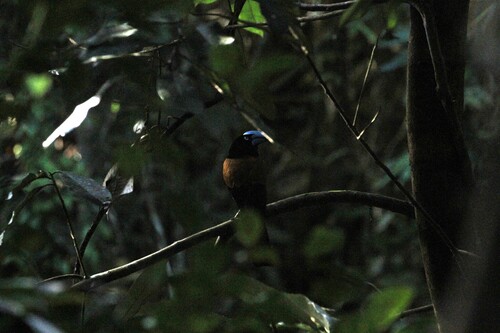
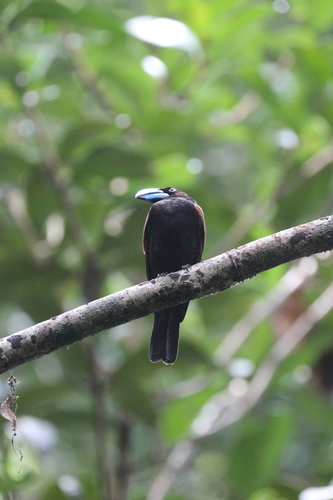
ID tip
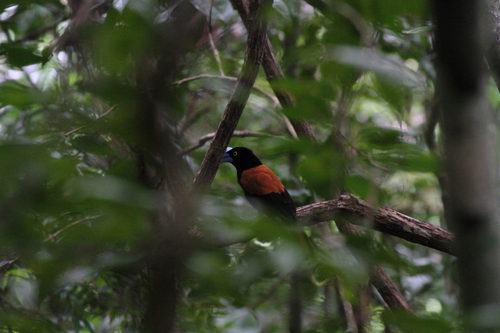
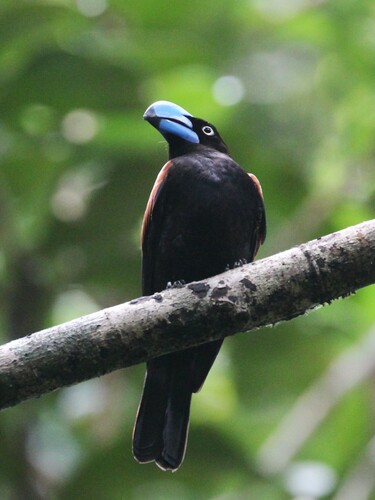
The helmet vanga is a large vanga, the second-largest species of vanga after the sickle-billed vanga. In length it measures 28 to 31 cm (11–12 in), and it weighs 84 to 114 g (3.0–4.0 oz). The most distinctive feature is the massive hooked bill, which is 51 mm (2.0 in) long and 30 mm (1.2 in) deep. The plumage of the head, neck, throat, breast and belly is a solid blue-black, as are the primary coverts and remiges of the wing. The mantle, the back, and the rest of the wings are rufous. The tail, which is long and broad, is black below and rufous above. The bill is bright blue with a black tip.
Text from Wikipedia, licensed CC BY-SA 4.0.
When to see the Helmet Vanga
One bar for each month. Filled bars are the 5 months with records; pale bars are months with none. The wide bar is October, the month with the most records.
Where to see the Helmet Vanga
The map shades 1 country with regular records. Everything unshaded has no records. Countries are listed below the map.
About the Helmet Vanga
The helmet vanga is a distinctive-looking bird of the vanga family, Vangidae, and is classified in its own genus, Euryceros. It is mainly blue-black, with rufous wings and a huge arched blue bill. It is restricted to lowland and lower montane rainforests of northeastern Madagascar. Its diet is composed of invertebrates, predominantly insects. The species is threatened by habitat loss.
Text adapted from Wikipedia, licensed CC BY-SA 4.0.
Easily confused with
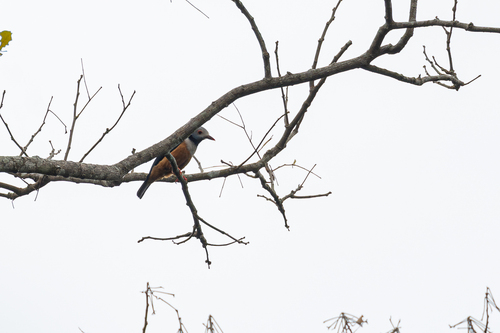 Rufous-bellied HelmetshrikePrionops rufiventrisIt is 20–22 cm long.
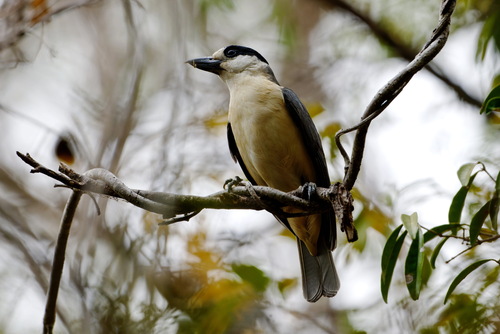 Van Dam's VangaXenopirostris damiiVan Dam's vanga is a species of bird in the family Vangidae.
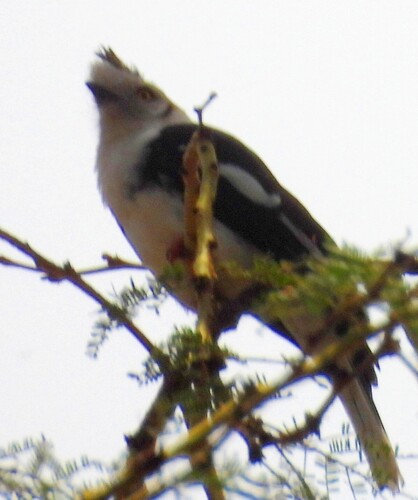 Grey-crested HelmetshrikePrionops poliolophusThe gray-crested helmetshrike is a species of bird in the Vanga family Vangidae, formerly usually included in the Malaconotidae.
Learn the Helmet Vanga in the BeakBrain App
Photo and call practice. Coming soon to iPhone and Android.
Play today's Daily BirdEvery photo and recording on this page is credited to its author under the licence shown. Spotted a problem with this page, or have a better photo? Contribute.