Learn what every symbol on the card means.Full credits and sources at beakbrain.com/symbols
 RiverinePlatform nestLarge · 843 g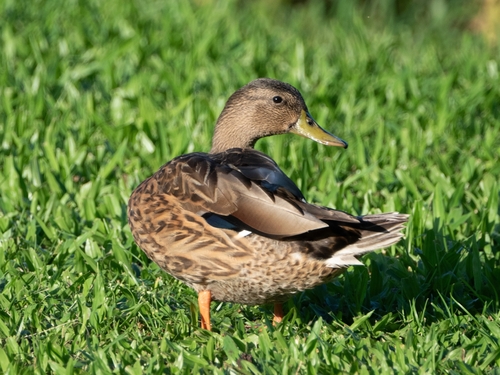


ID tip
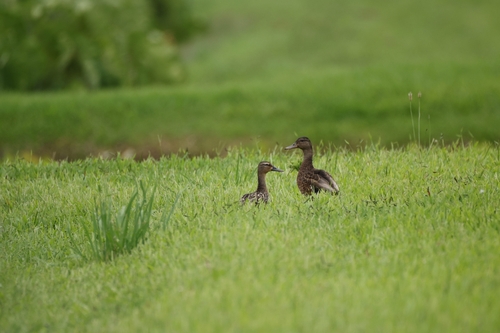
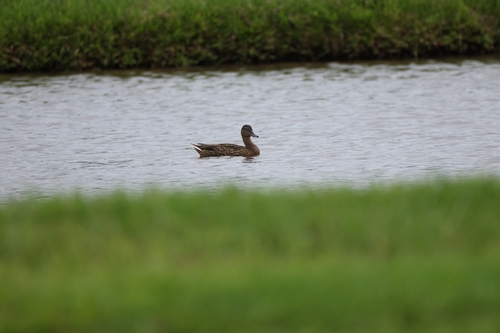
Both male and female are mottled brown in color and resemble a female mallard. The males are usually bigger than the females. The speculum feathers of both sexes are green to blue, bordered on both sides by white. The tail is dark overall, unlike the black-and-white tail of a mallard. The feet and legs are orange to yellow-orange. The bill is olive green in the male and dull orange with dark markings in the female. The adult male has a darker head and neck. The female is generally lighter-colored than the male and has plain back feathers. Voice: The Hawaiian duck quacks like a mallard, but its call is softer and it quacks less frequently.
Text from Wikipedia, licensed CC BY-SA 4.0.
When to see the Hawaiian Duck
One bar for each month, and every month is filled: this bird is recorded here in all twelve. The wide bar is February, the month with the most records.
Where to see the Hawaiian Duck
The map shades 1 country with regular records. Everything unshaded has no records. Countries are listed below the map.
About the Hawaiian Duck
The Hawaiian duck or koloa is a species of bird in the family Anatidae that is endemic to the large islands of Hawaiʻi. Taxonomically, the koloa is closely allied with the mallard. It differs in that it is monomorphic and non-migratory. As with many duck species in the genus Anas, Hawaiian duck and mallards can interbreed and produce viable offspring, and the koloa has previously been considered an island subspecies of the mallard. However, all major authorities now consider this form to be a distinct species within the mallard complex. Recent analyses indicate that this is a distinct species that arose through ancient hybridization between mallard and the Laysan duck.
Text adapted from Wikipedia, licensed CC BY-SA 4.0.
Easily confused with
 Brown TealAnas chlorotisThere are no distinctive differences between a male, female and a juvenile brown teal during non-mating season.
 Sunda TealAnas gibberifronsThe Sunda teal, also known as the Bebek cokelat or Itik benjut, is a dabbling duck found in open wetlands in Indonesia and Timor-Leste.
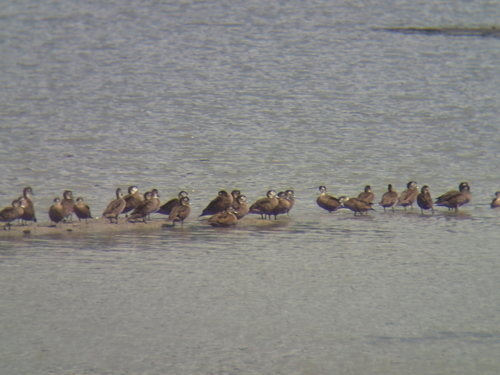 Andaman TealAnas albogularisThe species is dark brown with buffy markings.
Side by side: Brown Teal vs Hawaiian Duck
Learn the Hawaiian Duck in the BeakBrain App
Photo and call practice. Coming soon to iPhone and Android.
Play today's Daily BirdEvery photo and recording on this page is credited to its author under the licence shown. Spotted a problem with this page, or have a better photo? Contribute.