Learn what every symbol on the card means.Full credits and sources at beakbrain.com/symbols
 WetlandCavity nestLarge · 790 g


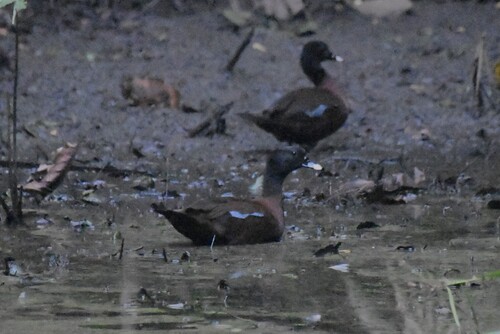
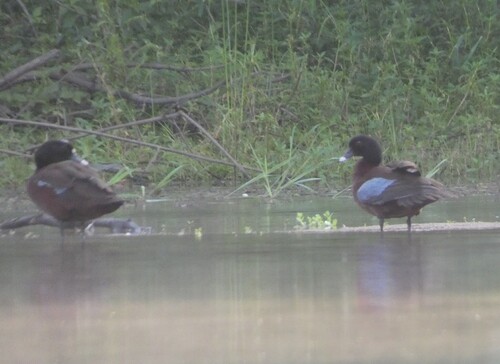
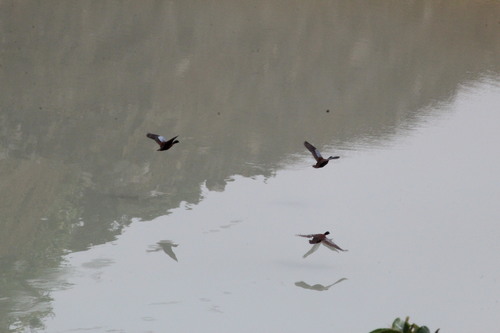

ID tip
On average, Hartlaub's ducks range from 56–58 centimetres (22–23 in) long. It is monotypic, with no subspecies accepted. Juveniles have feathers with pale tips on their breast and abdomen. The adult plumage is red-brown overall with a black head with or without white marks on the crown; adult plumage is fully developed after six months. The amount of white on each duck's head varies. Adult males weigh between 925–1,140 grams (32.6–40.2 oz), and have reddish-brown eyes; they are more likely to have extensive white on the crown. The females weigh between 770 and 805 grams (27.2 and 28.
Text from Wikipedia, licensed CC BY-SA 4.0.
When to see the Hartlaub's Duck
One bar for each month. Filled bars are the 10 months with records; pale bars are months with none. The wide bar is March, the month with the most records.
Where to see the Hartlaub's Duck
The map shades 12 countries with regular records, and 2 more in a lighter tone where the bird turns up only as a stray. Everything unshaded has no records. Countries are listed below the map.
Recorded as a rare visitor in Angola, South Sudan.
About the Hartlaub's Duck
Hartlaub's duck is a dark chestnut-coloured duck of African forests. Formerly included in the paraphyletic "perching duck" assemblage, it was later moved to the dabbling duck assemblage. However, it is distinct from the "typical" dabbling ducks, and is placed in the monotypic genus Pteronetta. It is named after the German naturalist Gustav Hartlaub.
Text adapted from Wikipedia, licensed CC BY-SA 4.0.
Easily confused with
 White-winged DuckAsarcornis scutulataThis is one of the largest living species of duck next only to the steamer ducks which are heavier.
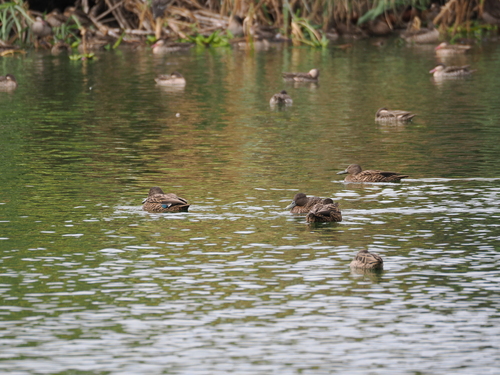 Meller's DuckAnas melleriThe Meller's duck resembles a large female mallard.
 Chubut Steamer DuckTachyeres leucocephalusAdult male Chubut steamer ducks have white heads with a bright yellow/orange bill with a black nail.
Learn the Hartlaub's Duck in the BeakBrain App
Photo and call practice. Coming soon to iPhone and Android.
Play today's Daily BirdEvery photo and recording on this page is credited to its author under the licence shown. Spotted a problem with this page, or have a better photo? Contribute.