Learn what every symbol on the card means.Full credits and sources at beakbrain.com/symbols
 ForestSmall · 17 g


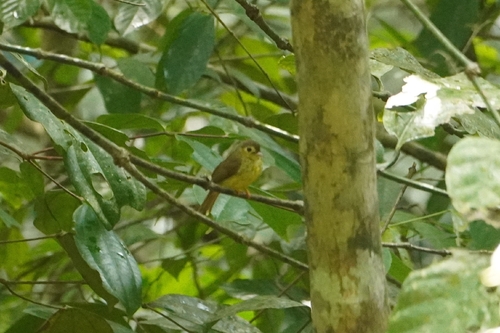
ID tip
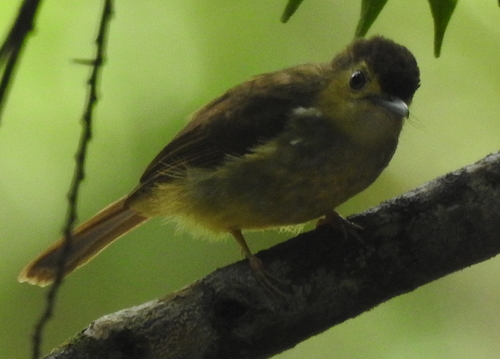
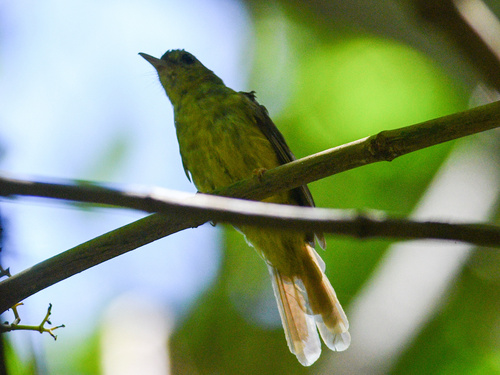
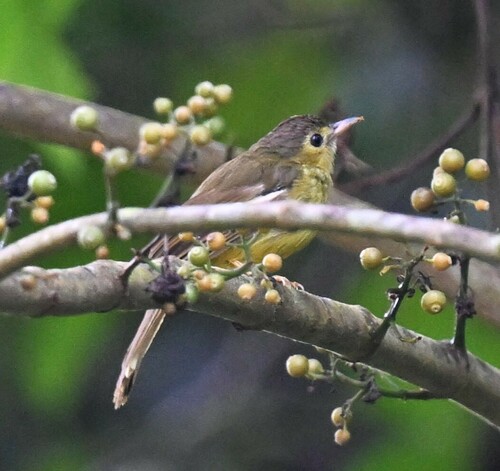
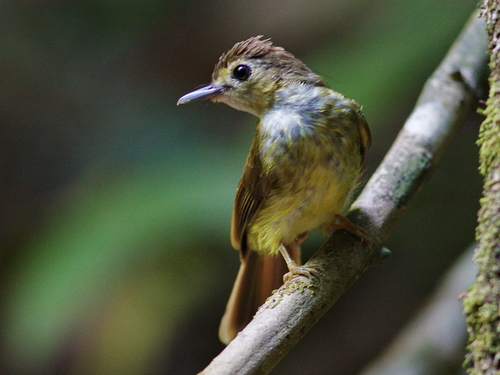
The hairy-backed bulbul is a small (16–17 cm long, weigh 12–21 g), relatively quiet bulbul with a slightly rounded tail and strong rictal bristles. It is olive above and yellowish below, with key features including pale yellowish lores and a broad eye ring, a dark rufescent olive-brown cap and neck, olive-rufous uppertail-coverts and upperwings, a bright rufous-brown tail with creamy white tips, a creamy white chin and throat merging into a yellow breast, and hair-like filoplumes on the back (often concealed).
Text from Wikipedia, licensed CC BY-SA 4.0.
When to see the Hairy-backed Bulbul
One bar for each month. Filled bars are the 10 months with records; pale bars are months with none. The wide bar is July, the month with the most records.
Where to see the Hairy-backed Bulbul
The map shades 5 countries with regular records. Everything unshaded has no records. Countries are listed below the map.
About the Hairy-backed Bulbul
The hairy-backed bulbul is a songbird species in the bulbul family, Pycnonotidae. It is the sole species contained within the monotypic genus Tricholestes. It is found on the Malay Peninsula, Sumatra, and Borneo. Its natural habitat is subtropical or tropical moist lowland forests.
Text adapted from Wikipedia, licensed CC BY-SA 4.0.
Easily confused with
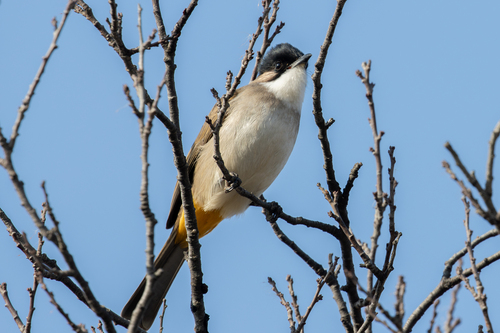 Brown-breasted BulbulPycnonotus xanthorrhousThe brown-breasted bulbul is a songbird in the family Pycnonotidae.
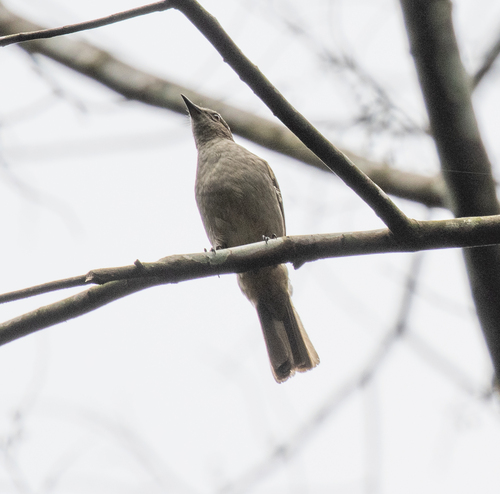 Slender-billed GreenbulStelgidillas gracilirostrisThe slender-billed greenbul is a species in the monotypic genus Stelgidillas of the bulbul family of passerine birds.
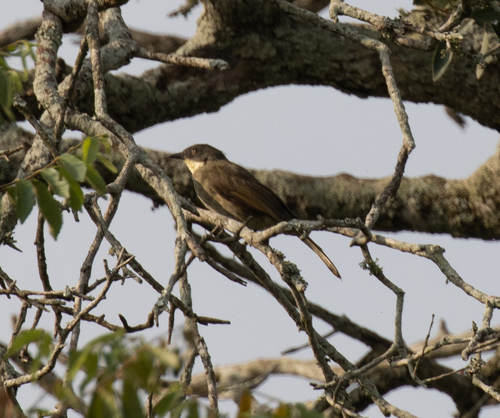 Yellow-gorgeted GreenbulAtimastillas flavicollisThe yellow-gorgeted greenbul, formerly known as the yellow-throated leaflove, is a species of passerine bird in the bulbul family Pycnonotidae.
Learn the Hairy-backed Bulbul in the BeakBrain App
Photo and call practice. Coming soon to iPhone and Android.
Play today's Daily BirdEvery photo and recording on this page is credited to its author under the licence shown. Spotted a problem with this page, or have a better photo? Contribute.