Learn what every symbol on the card means.Full credits and sources at beakbrain.com/symbols
 ForestCup nestTiny · 13 g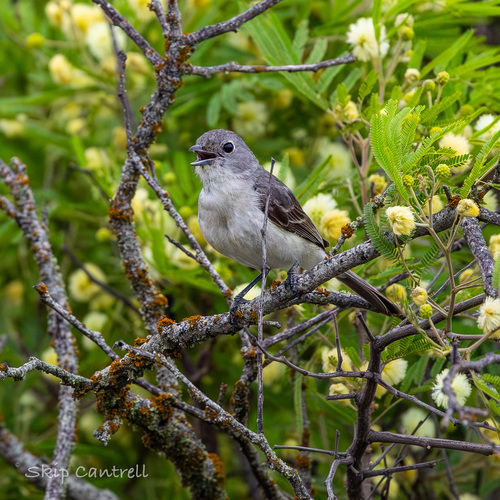
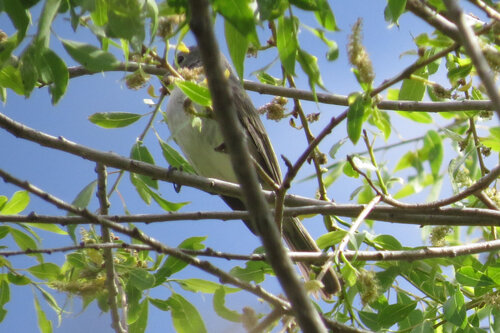
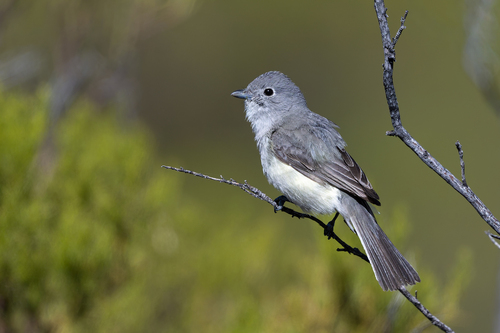
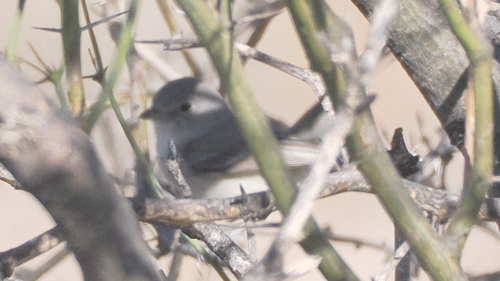


What the Grey Vireo sounds like


ID tip
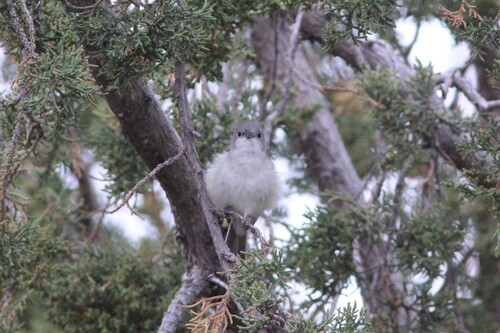
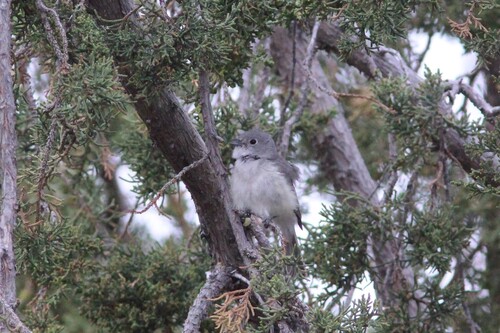
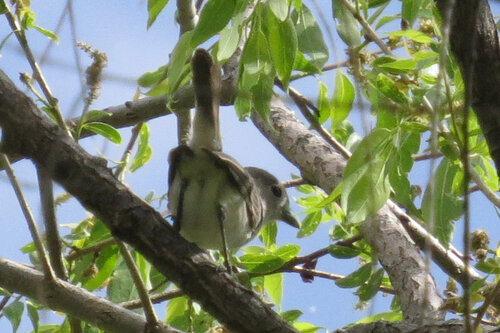
The gray vireo is about 13 to 15 cm (5.1 to 5.9 in) long and weighs 11.5 to 13.5 g (0.41 to 0.48 oz). The sexes have the same plumage. Adults have a mostly gray crown and face with white lores and a thin white eye-ring. Their upperparts are gray that gains a greenish cast late in the year. Their wings are mostly dark gray to blackish with white tips on the greater coverts that form a wing bar. Their tail is gray with white edges on the outer webs of the outer feathers. Their chin, throat, and upper breast are a paler gray than their upperparts; their belly and undertail coverts are white. Voice: Male gray vireos sing a "che wi, chee wi, choo or che weet, chee, che chra weet", with much variation by and among individuals. They also sing a longer song of up to nine syllables. Both sexes make a slightly descending trill, a "buzzy eh-eh-eh-eh-eh scolding call, a "chickadee-like zu-zu-zu-zu" and other calls. Birds sing year-round but at a higher rate during the breeding season.
Text from Wikipedia, licensed CC BY-SA 4.0.
When to see the Grey Vireo
One bar for each month. Filled bars are the 5 months with records; pale bars are months with none. The wide bar is May, the month with the most records.
Where to see the Grey Vireo
The map shades 2 countries with regular records. Everything unshaded has no records. Countries are listed below the map.
About the Grey Vireo
The gray vireo is a small North American passerine bird in the family Vireonidae, the vireos, greenlets, and shrike-babblers. It is found in the southwestern United States and northern Mexico.
Text adapted from Wikipedia, licensed CC BY-SA 4.0.
Easily confused with
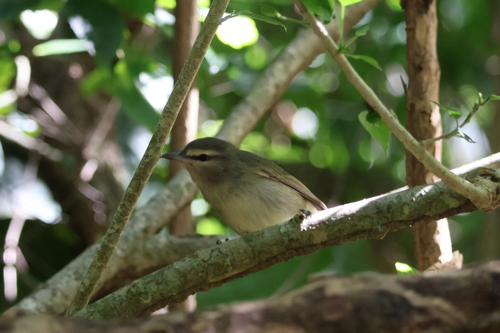 Yucatan VireoVireo magisterThe Yucatan vireo is about 15 cm (5.9 in) long and weighs about 13.5 to 25 g (0.48 to 0.88 oz).
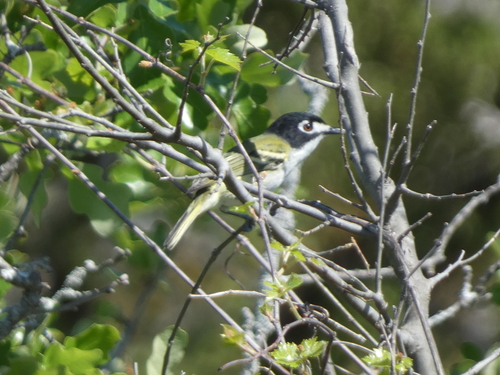 Black-capped VireoVireo atricapillaThe black-capped vireo is a songbird about 12 cm (4.5 inches ) in length.
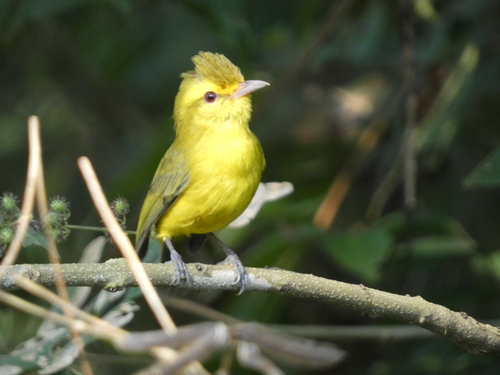 Golden VireoVireo hypochryseusThe golden vireo is about 12 to 13 cm (4.7 to 5.1 in) long and weighs an average of 12.2 g (0.43 oz).
Side by side: Grey Vireo vs Mangrove Vireo · Black-capped Vireo vs Grey Vireo · Grey Vireo vs Yucatan Vireo · Golden Vireo vs Grey Vireo
Learn the Grey Vireo in the BeakBrain App
Photo and call practice. Coming soon to iPhone and Android.
Play today's Daily BirdEvery photo and recording on this page is credited to its author under the licence shown. Spotted a problem with this page, or have a better photo? Contribute.