Learn what every symbol on the card means.Full credits and sources at beakbrain.com/symbols
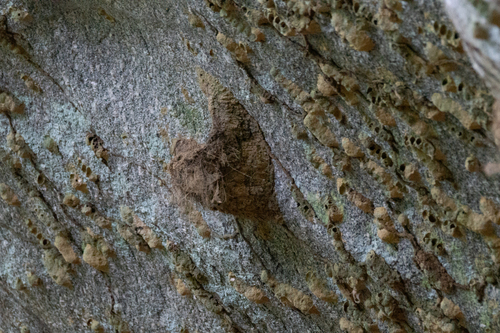
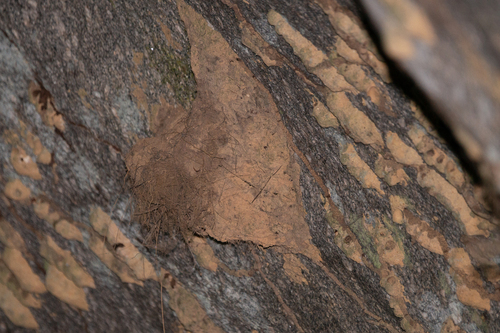
 ForestCup nestMedium · 220 g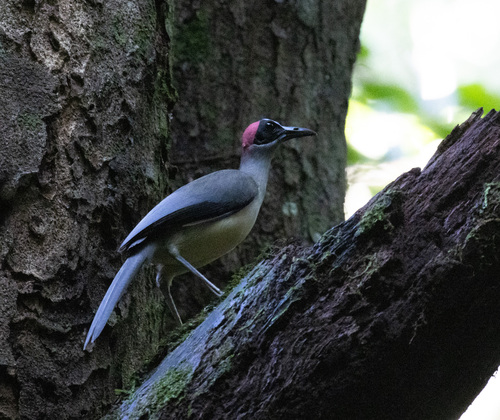

ID tip
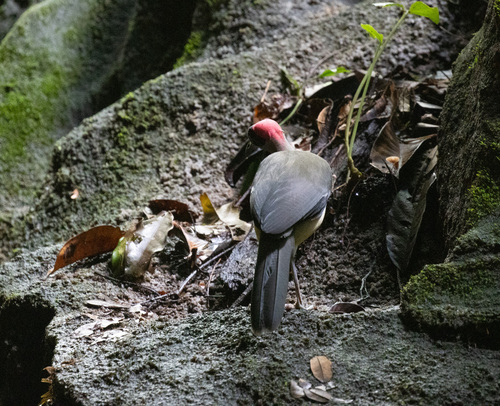
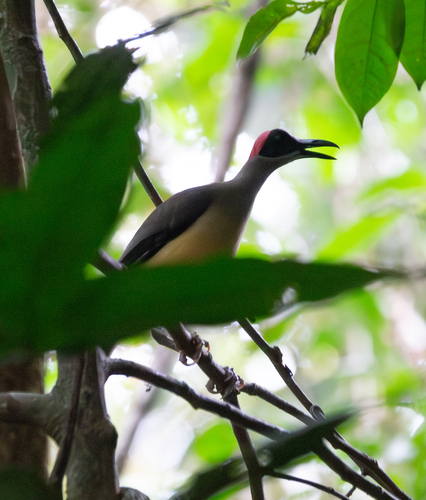
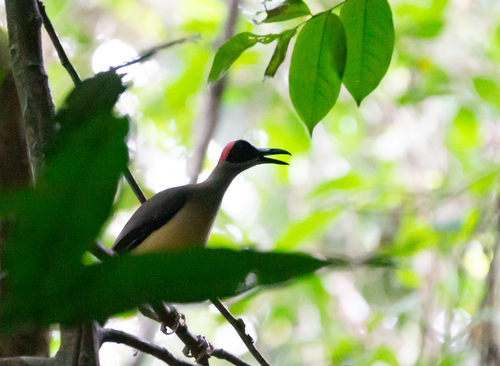
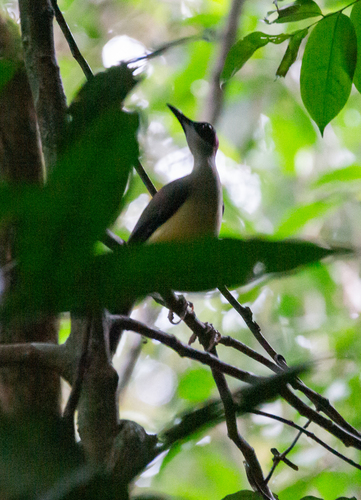
This rockfowl measures approximately 33 to 38 centimetres (13 to 15 in) in length, with its notably long tail contributing about 14 centimetres (5.5 in). This species does not show sexual dimorphism. The adult's head is largely featherless, and the skin on the forehead and forecrown as well as the upper mandible of the beak behind the bird's nostril is a powder blue. The lower mandible and rest of the upper mandible are black. This beak is unusually large and crow-like at 30 millimetres (1.2 in) in length and is also decurved.
Text from Wikipedia, licensed CC BY-SA 4.0.
When to see the Grey-necked Rockfowl
One bar for each month. Filled bars are the 7 months with records; pale bars are months with none. The wide bar is March, the month with the most records.
Where to see the Grey-necked Rockfowl
The map shades 4 countries with regular records, and 1 more in a lighter tone where the bird turns up only as a stray. Everything unshaded has no records. Countries are listed below the map.
Recorded as a rare visitor in Central African Republic.
About the Grey-necked Rockfowl
The grey-necked rockfowl is a medium-sized bird in the family Picathartidae with a long neck and tail. Also known as the grey-necked picathartes, this passerine is mainly found in rocky areas of close-canopied rainforest from south-west Nigeria through Cameroon, Equatorial Guinea, and south-west Gabon. It additionally lives on the island of Bioko. Its distribution is patchy, with populations often isolated from each other. The rockfowl typically chooses to live near streams and inselbergs in its forested habitat. It has no recognized subspecies, though some believe that it forms a superspecies with the white-necked rockfowl.
Text adapted from Wikipedia, licensed CC BY-SA 4.0.
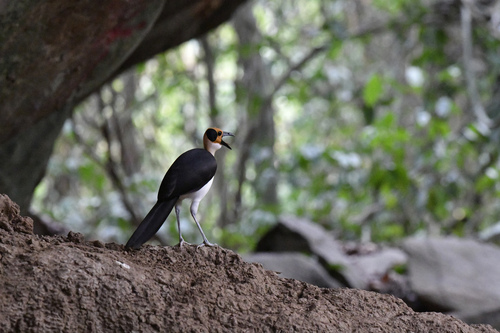
Easily confused with
Learn the Grey-necked Rockfowl in the BeakBrain App
Photo and call practice. Coming soon to iPhone and Android.
Play today's Daily BirdEvery photo and recording on this page is credited to its author under the licence shown. Spotted a problem with this page, or have a better photo? Contribute.