Learn what every symbol on the card means.Full credits and sources at beakbrain.com/symbols
 RockyCup nestSmall · 21 g


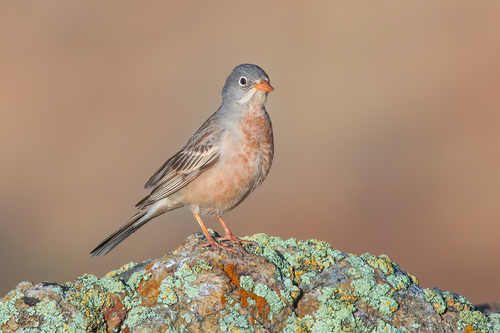
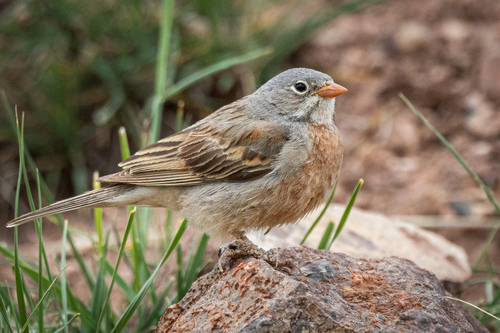
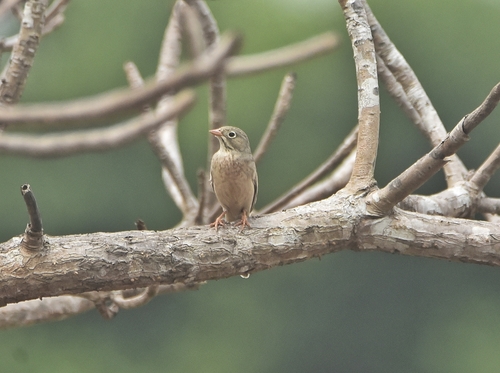
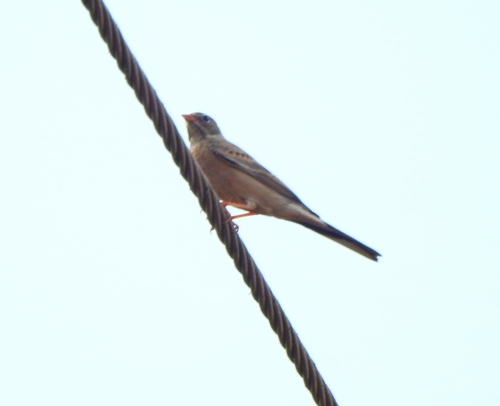
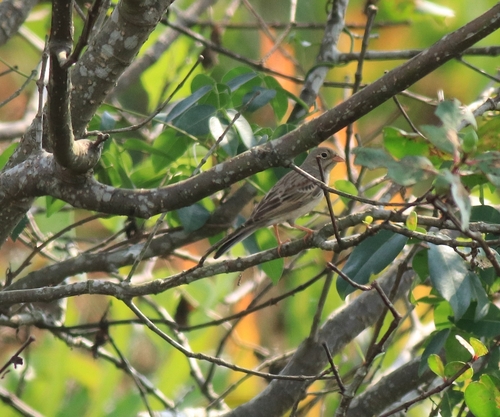
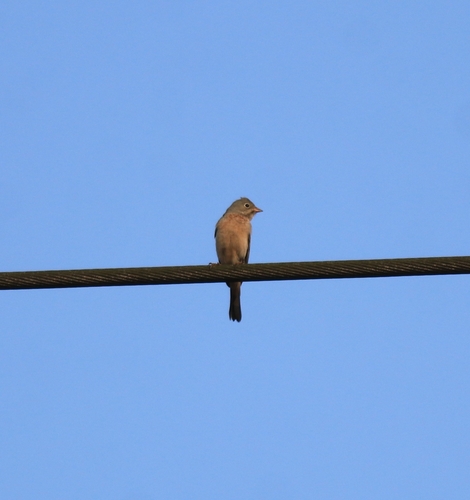
ID tip
This bunting has a long pink bill and is greyish above. The male has a distinctive white eye-ring that stands out in contrast to the grey hood. The chin and throat are whitish pink and are bordered by grey malar stripes. The underparts are pinkish brown. The female is duller but the moustachial stripe can appear more noticeable. The outer tail feathers are whitish. The species was described by Edward Blyth based on a drawing by Francis Buchanan-Hamilton after whom the species is named.
Text from Wikipedia, licensed CC BY-SA 4.0.
When to see the Grey-necked Bunting
One bar for each month. Filled bars are the 9 months with records; pale bars are months with none. The wide bar is December, the month with the most records.
Where to see the Grey-necked Bunting
The map shades 20 countries with regular records, and 5 more in a lighter tone where the bird turns up only as a stray. Everything unshaded has no records. Countries are listed below the map.
Recorded as a rare visitor in Norway, Taiwan, Germany, Oman, Thailand.
About the Grey-necked Bunting
The grey-necked bunting, sometimes referred to as grey-hooded bunting is a species of bird in the family Emberizidae. It breeds along a wide distribution range from the Caspian Sea to the Altai Mountains in Central Asia and winters in parts of Southern Asia. Like other buntings it is found in small flocks.
Text adapted from Wikipedia, licensed CC BY-SA 4.0.
Easily confused with
 Yellow-browed BuntingEmberiza chrysophrysThe yellow-browed bunting is a passerine bird in the bunting family Emberizidae, a group now separated by most modern taxonomists from the finches (Fringillidae).
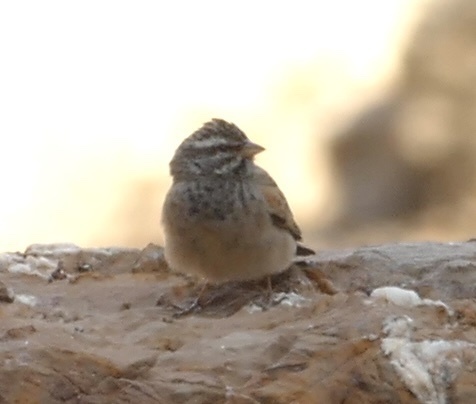 Striolated BuntingEmberiza striolataIt is 14 cm long, similar in size to the house bunting and smaller than the similarly plumaged rock bunting.
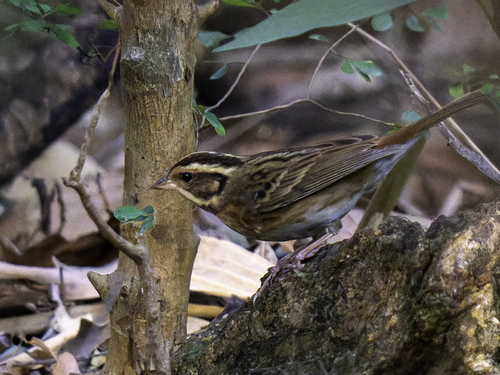 Tristram's BuntingEmberiza tristramiTristram's bunting is a bird in the family Emberizidae.
Side by side: Grey-necked Bunting vs Striolated Bunting
Learn the Grey-necked Bunting in the BeakBrain App
Photo and call practice. Coming soon to iPhone and Android.
Play today's Daily BirdEvery photo and recording on this page is credited to its author under the licence shown. Spotted a problem with this page, or have a better photo? Contribute.