Learn what every symbol on the card means.Full credits and sources at beakbrain.com/symbols
 WoodlandCup nestTiny · 8 g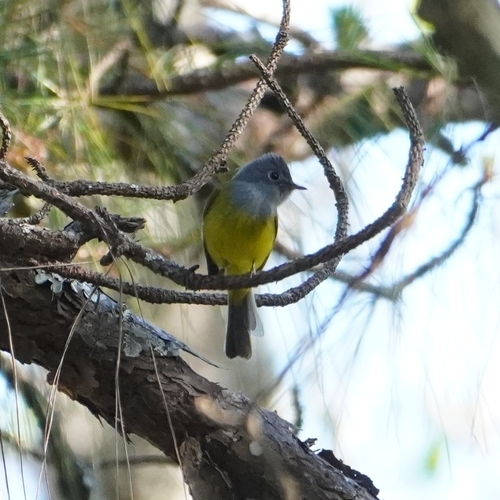


What the Grey-headed Canary-flycatcher sounds like


ID tip
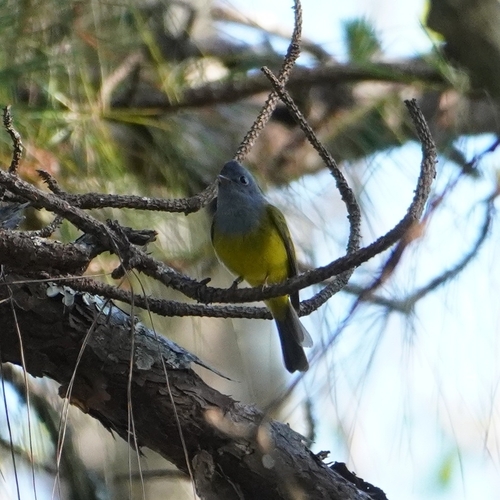
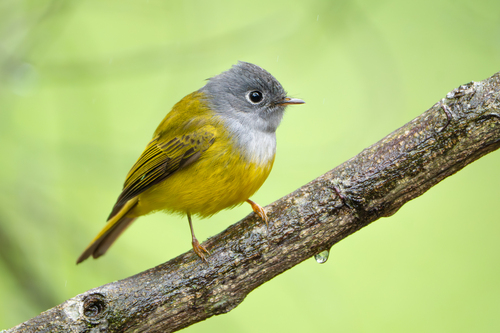
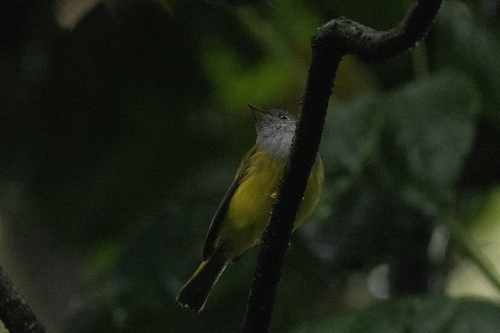
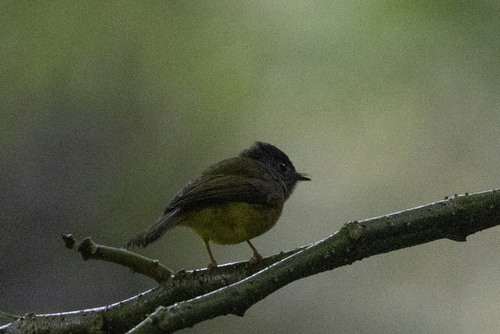
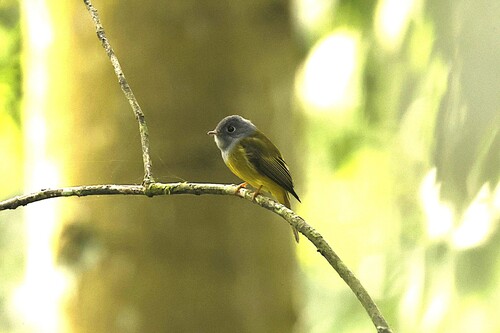
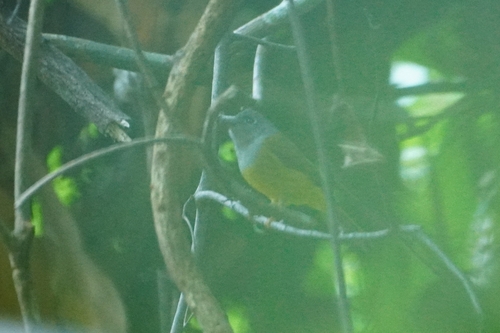
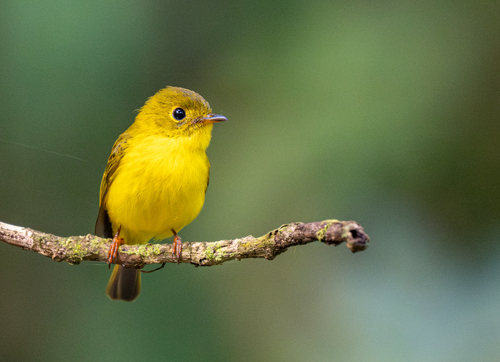
The grey-headed canary-flycatcher is about 12–13 cm (4.7–5.1 in) long with a squarish grey head, a canary yellow belly and yellowish-green upperparts. They forage actively like flycatchers and perches in a very upright posture. The sexes are indistinguishable in plumage. They have a very flat bill (which gave it the earlier genus name of Platyrhynchus) which when seen from above look like an equilateral triangle and is fringed with long rictal bristles.
Text from Wikipedia, licensed CC BY-SA 4.0.
When to see the Grey-headed Canary-flycatcher
One bar for each month. Filled bars are the 8 months with records; pale bars are months with none. The wide bar is February, the month with the most records.
Where to see the Grey-headed Canary-flycatcher
The map shades 17 countries with regular records, and 1 more in a lighter tone where the bird turns up only as a stray. Everything unshaded has no records. Countries are listed below the map.
Recorded as a rare visitor in Brunei.
About the Grey-headed Canary-flycatcher
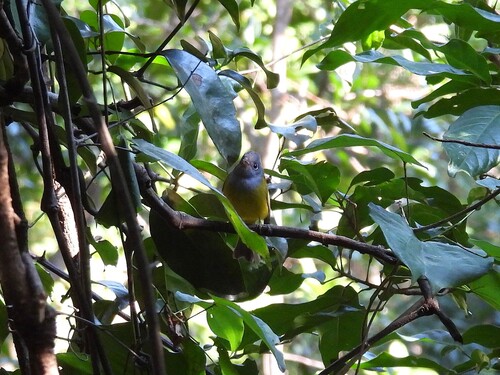
The grey-headed canary-flycatcher, sometimes known as the grey-headed flycatcher, is a species of small flycatcher-like bird found in tropical Asia. It has a square crest, a grey hood and yellow underparts. They are found mainly in forested habitats where they often join other birds in mixed-species foraging flocks. Pairs are often seen as they forage for insects by making flycatcher-like sallies and calling aloud. Several subspecies are recognized within their wide distribution range.
Text adapted from Wikipedia, licensed CC BY-SA 4.0.
Easily confused with
Learn the Grey-headed Canary-flycatcher in the BeakBrain App
Photo and call practice. Coming soon to iPhone and Android.
Play today's Daily BirdEvery photo and recording on this page is credited to its author under the licence shown. Spotted a problem with this page, or have a better photo? Contribute.