Learn what every symbol on the card means.Full credits and sources at beakbrain.com/symbols
 WoodlandCup nestMedium · 79 g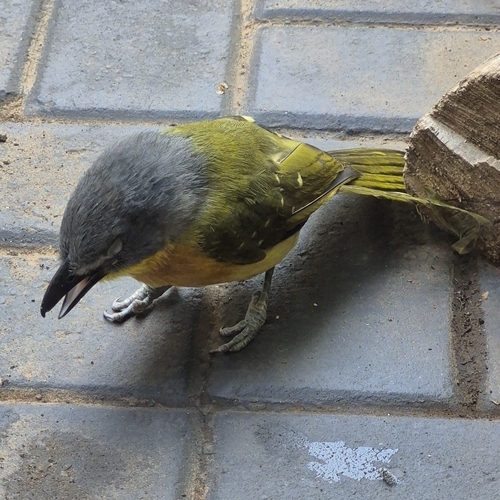


ID tip
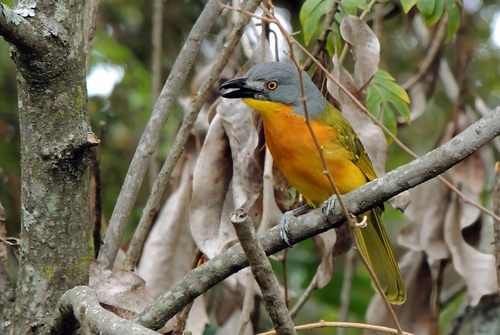
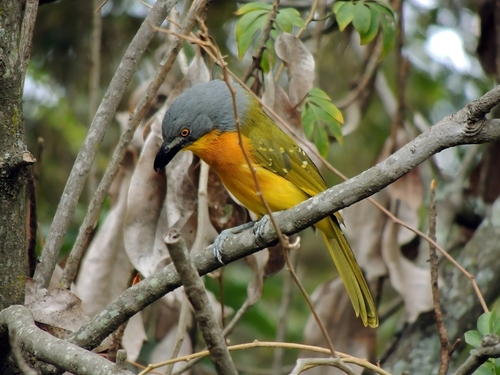
The sexes are alike, and measure 22.6 to 25.2 cm (bill to tail). The combination of formidable, black bill and rich yellow iris lends it a distinctive visage. Related bushshrike species have the white lore plumage extending beyond a whitish eye. Immatures are paler generally, while juveniles have pale yellow chest plumage, and brown barring or mottling over the crown. Juveniles are also distinguished by their brown eyes and brownish horn bills. The species occurs in sympatry with the orange-breasted bushshrike, which is similarly plumaged but smaller, with more gracile features. Voice: The best-known call is the male's uncanny, mechanical-sounding series of hooting notes, which particularly during the pre-breeding period, is frequently repeated. The prolonged sessions of measured, mournful notes may continue for an hour or more. These are delivered from a high perch, and are sometimes preceded by a cluck or tic sounds.
Text from Wikipedia, licensed CC BY-SA 4.0.
When to see the Grey-headed Bushshrike
One bar for each month, and every month is filled: this bird is recorded here in all twelve. The wide bar is October, the month with the most records.
Where to see the Grey-headed Bushshrike
The map shades 32 countries with regular records, and 1 more in a lighter tone where the bird turns up only as a stray. Everything unshaded has no records. Countries are listed below the map.
Recorded as a rare visitor in Central African Republic.
About the Grey-headed Bushshrike
The grey-headed bushshrike, colloquially known as the ghostbird, is a species of passerine bird in the family Malaconotidae. It is widespread throughout sub-Saharan Africa, although relatively absent in Central Africa and the interior of southern Africa. It is the most widespread species of its genus, which consists of large bushshrikes with massive bills and mournful hooting calls. It occurs sparsely in a range of wooded habitats, though typically in denser vegetation within dry or moist savannah. The monogamous pairs occupy woodland with sufficient cover. They are sedentary, but will undertake limited post-breeding movements.
Text adapted from Wikipedia, licensed CC BY-SA 4.0.
Easily confused with
 Lagden's BushshrikeMalaconotus lagdeniLagden's bushshrike is a stocky bird some 23 cm long with a heavy black bill.
 Fiery-breasted BushshrikeMalaconotus cruentusThe fiery-breasted bushshrike is a species of bird in the family Malaconotidae.
Green-breasted BushshrikeMalaconotus gladiatorThe green-breasted bushshrike or gladiator bushshrike is a species of bird in the family Malaconotidae.
Fiery-breasted BushshrikeMalaconotus cruentusThe fiery-breasted bushshrike is a species of bird in the family Malaconotidae.
Green-breasted BushshrikeMalaconotus gladiatorThe green-breasted bushshrike or gladiator bushshrike is a species of bird in the family Malaconotidae.
Side by side: Brubru vs Grey-headed Bushshrike
Learn the Grey-headed Bushshrike in the BeakBrain App
Photo and call practice. Coming soon to iPhone and Android.
Play today's Daily BirdEvery photo and recording on this page is credited to its author under the licence shown. Spotted a problem with this page, or have a better photo? Contribute.