Learn what every symbol on the card means.Full credits and sources at beakbrain.com/symbols
 ForestCup nestTiny · 13 g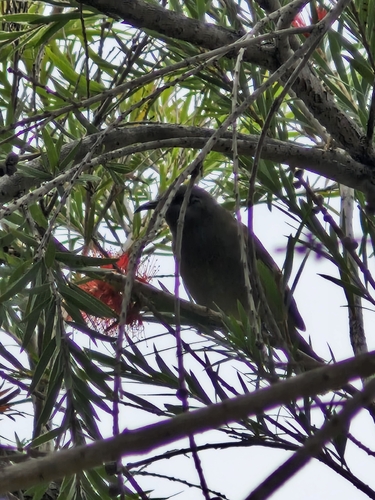
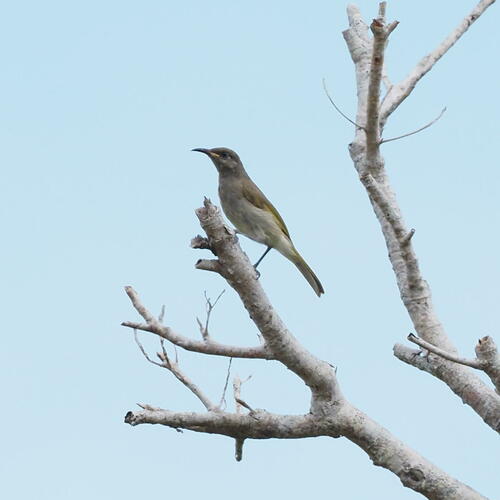
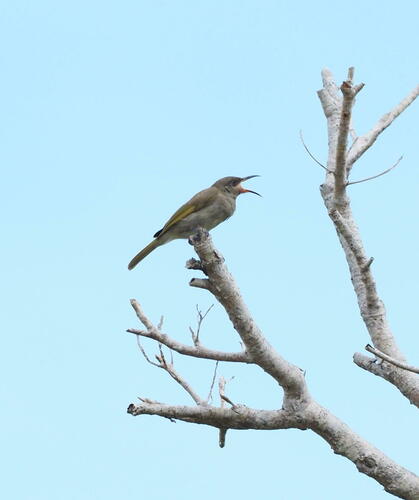


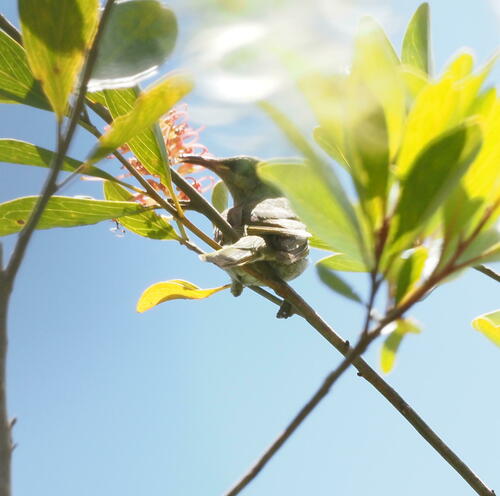
ID tip
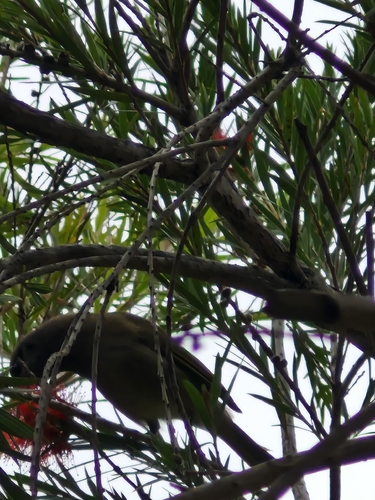
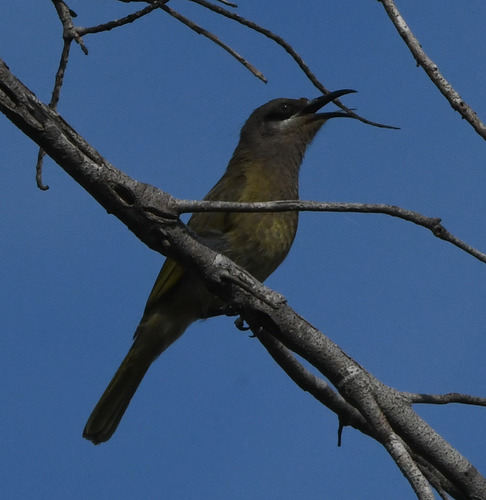
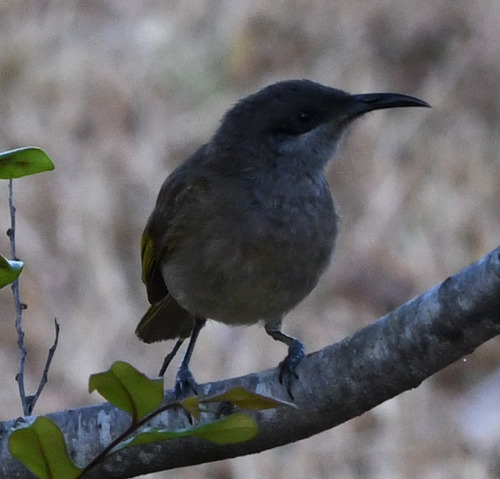
The grey-eared honeyeater is 13 to 17 cm long with the males being larger than the females. The plumage is mainly dull green-brown above and grey with an olive tint below. The cheeks are silvery-grey, and the crown is dark grey. The black bill is long and slightly downcurved; the legs and feet are blue-grey. Juveniles are paler than the adults without the silvery cheeks. They are noisy birds which begin calling before dawn. They have a harsh tchoo-tchoo-tchoo call and a warbling song.
Text from Wikipedia, licensed CC BY-SA 4.0.
When to see the Grey-eared Honeyeater
One bar for each month. Filled bars are the 11 months with records; pale bars are months with none. The wide bar is November, the month with the most records.
Where to see the Grey-eared Honeyeater
The map shades 2 countries with regular records. Everything unshaded has no records. Countries are listed below the map.
About the Grey-eared Honeyeater
The grey-eared honeyeater, also known as the dark-brown honeyeater, is a passerine bird of the honeyeater family which is found in Vanuatu and New Caledonia in the south-west Pacific. It is sometimes known as the silver-eared honeyeater, but this name is also used for the silver-eared honeyeater of New Guinea.
Text adapted from Wikipedia, licensed CC BY-SA 4.0.
Easily confused with
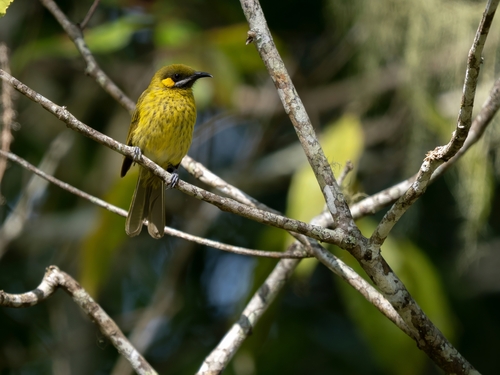 Flame-eared HoneyeaterLichmera flavicansThe flame-eared honeyeater, also known as the yellow-eared honeyeater, is a species of bird in the family Meliphagidae.
 Scaly-breasted HoneyeaterLichmera squamataThe scaly-breasted honeyeater, also known as the white-tufted honeyeater, is a species of bird in the family Meliphagidae.
 Scaly-crowned HoneyeaterLichmera lombokiaThe scaly-crowned honeyeater is a species of bird in the family Meliphagidae.
Learn the Grey-eared Honeyeater in the BeakBrain App
Photo and call practice. Coming soon to iPhone and Android.
Play today's Daily BirdEvery photo and recording on this page is credited to its author under the licence shown. Spotted a problem with this page, or have a better photo? Contribute.