Learn what every symbol on the card means.Full credits and sources at beakbrain.com/symbols
 ForestCavity nestMedium · 108 g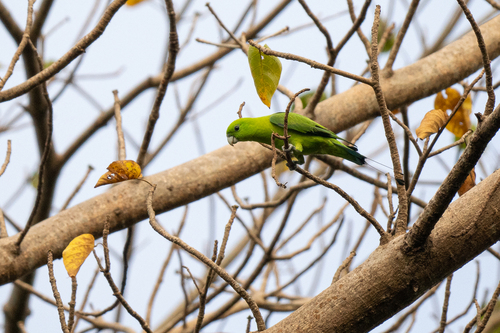
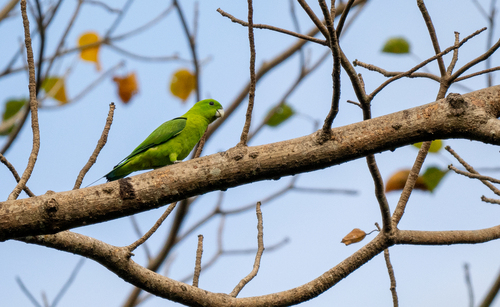
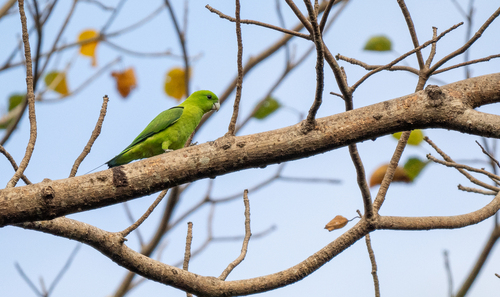
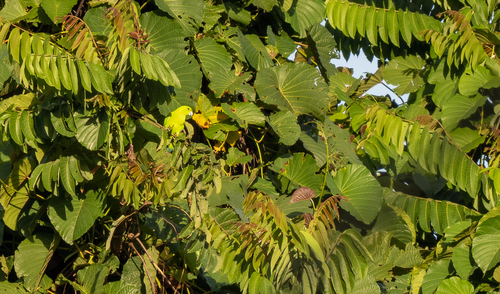
ID tip
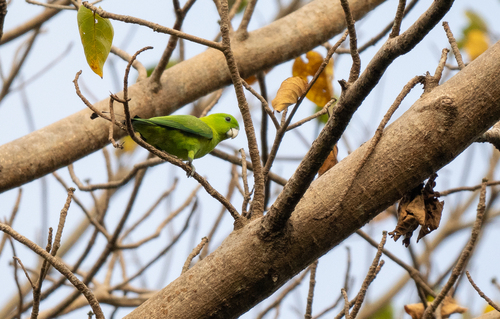
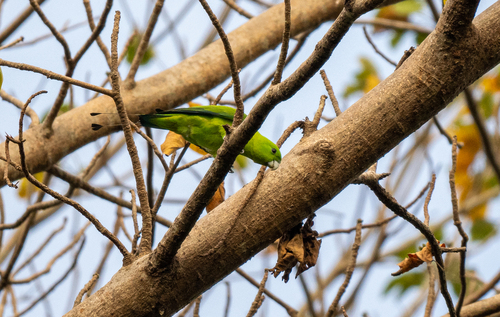
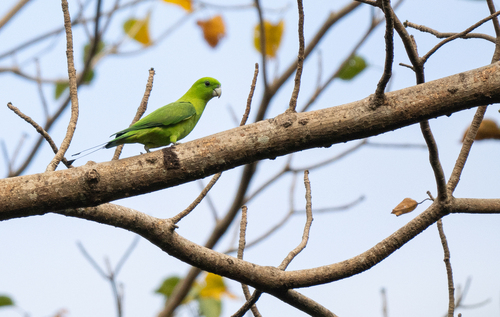
They are sexually dimorphic. Males are entirely yellow-green, with paler underparts and head. The two central tail feathers are elongated with bare shafts and terminated with black rackets. Females are generally darker and less yellowish, while the bare tail shafts are shorter. Juveniles do not have rackets at the tail. It is the smallest of all the racquet-tails with a total length of about 29 centimetres (11 in). This species is monotypic.
Text from Wikipedia, licensed CC BY-SA 4.0.
When to see the Green Racket-tail
One bar for each month. Filled bars are the 1 month with records; pale bars are months with none. The wide bar is January, the month with the most records.
About the Green Racket-tail
The green racket-tail is an endemic parrot of the Philippines where it is found on Luzon and Marinduque. This species was once common, but is rapidly declining and is currently classified as endangered due to lowland deforestation and capture for cage-bird trade. The population is now estimated to be just 300 - 800 mature individuals and is continuing to decline with many local extinctions in its former range.
Text adapted from Wikipedia, licensed CC BY-SA 4.0.
Easily confused with
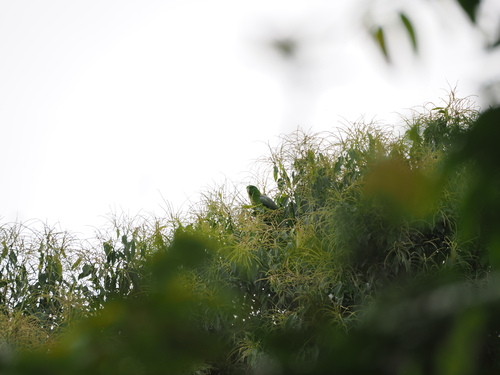 Golden-mantled Racket-tailPrioniturus platurusAdult golden-mantled racket-tails are about 28 cm (11 in) long and weigh about 220 g (8 oz).
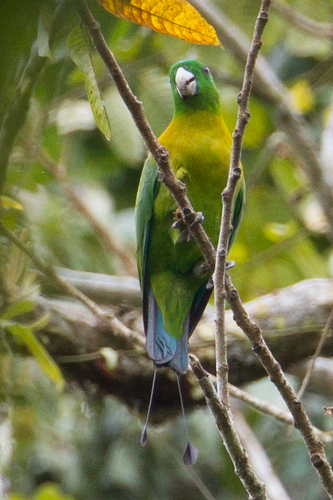 Yellow-breasted Racket-tailPrioniturus flavicansThe yellow-breasted racket-tail has an olive-green back, neck and chest.
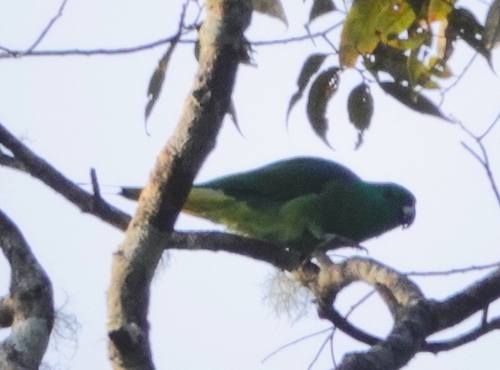 Buru Racket-tailPrioniturus madaThe Buru racket-tail is a mainly green parrot about 32 cm (13 in) long.
Learn the Green Racket-tail in the BeakBrain App
Photo and call practice. Coming soon to iPhone and Android.
Play today's Daily BirdEvery photo and recording on this page is credited to its author under the licence shown. Spotted a problem with this page, or have a better photo? Contribute.