Learn what every symbol on the card means.Full credits and sources at beakbrain.com/symbols
 ForestDomed nestTiny · 13 g


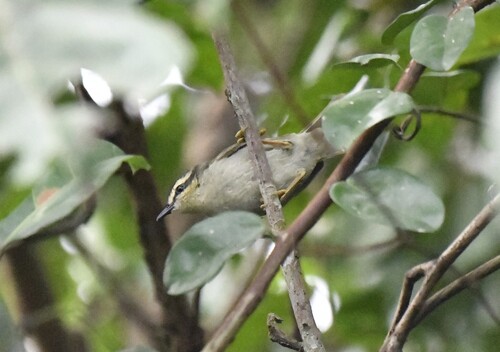
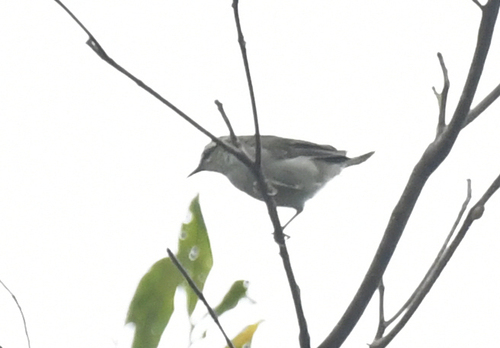
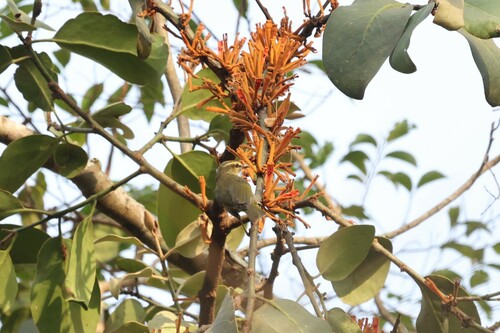
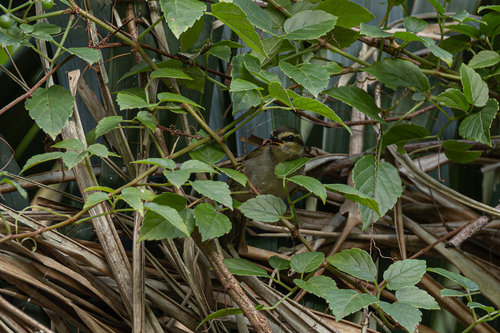
ID tip
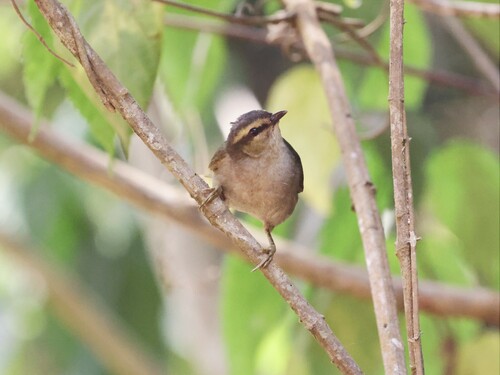
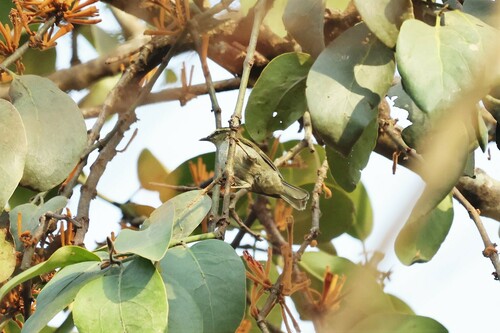
The green hylia has dark brown irises, a black bill and olive green feet. This species is small, weighing approximately 14 g. There is no noticeable difference in colour between the sexes, however males are generally larger. There are two subspecies, H. p. prasina and H. p. poensis, which differ in the colouring under the throat. H. p. prasina has an olive green chin and throat and olive-grey underbelly while H. p. poensis has a white-grey throat and underbelly. Voice: The green hylia uses several different calls, the most common being clear whistles (kee kee) or dry scolding rattles (trrit trrrit). It is known for its recognisable, pure, two-note song. Alarm calls used to warn of nearby predators are short as this makes it difficult for predators to locate exactly where the call is coming from.
Text from Wikipedia, licensed CC BY-SA 4.0.
When to see the Green Hylia
One bar for each month, and every month is filled: this bird is recorded here in all twelve. The wide bar is February, the month with the most records.
Where to see the Green Hylia
The map shades 21 countries with regular records. Everything unshaded has no records. Countries are listed below the map.
About the Green Hylia
The green hylia is a monotypic genus widespread in tropical Africa, where it mostly inhabits the understory and mid-stratum of moist forest. It is a canopy insectivore which had been tentatively placed within the family of Cettiidae warblers, but in 2019 its assignment to a new family, the Hyliidae, was strongly supported.
Text adapted from Wikipedia, licensed CC BY-SA 4.0.
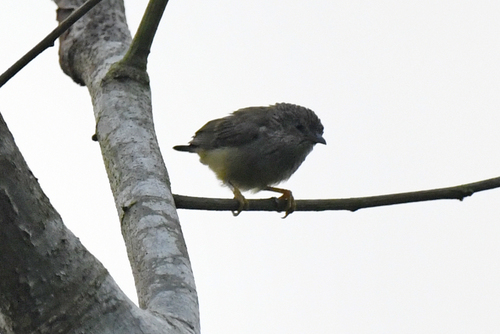
Easily confused with
Learn the Green Hylia in the BeakBrain App
Photo and call practice. Coming soon to iPhone and Android.
Play today's Daily BirdEvery photo and recording on this page is credited to its author under the licence shown. Spotted a problem with this page, or have a better photo? Contribute.