Learn what every symbol on the card means.Full credits and sources at beakbrain.com/symbols
 ForestCup nestTiny · 10 g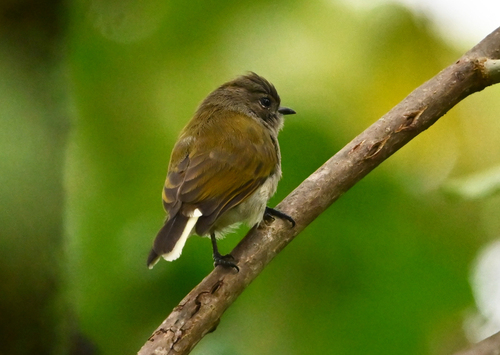
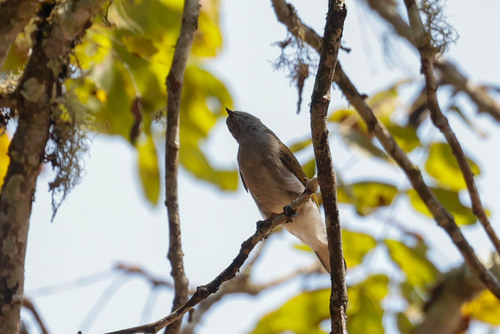
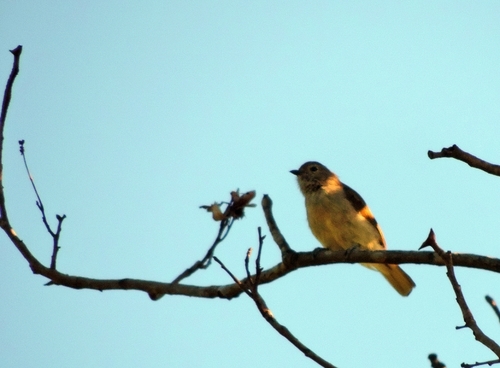
ID tip
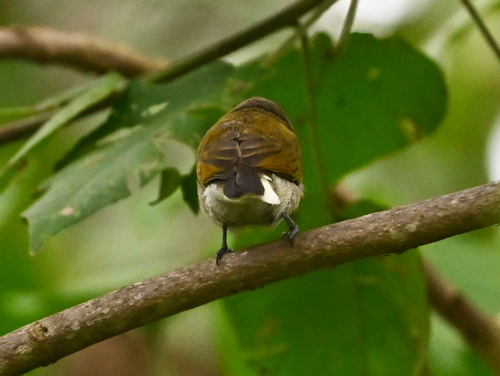
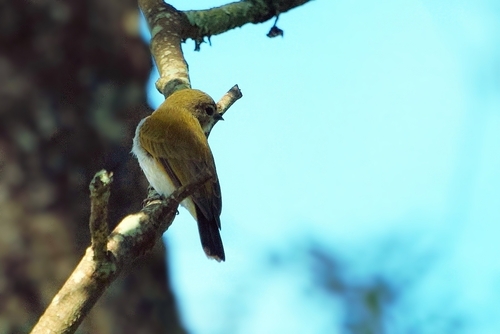
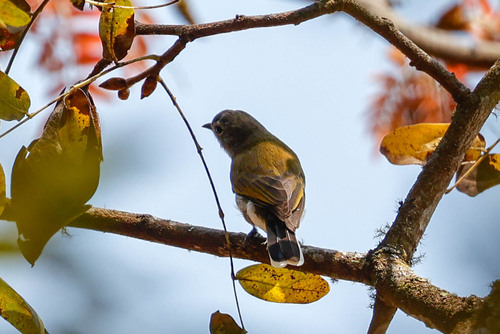
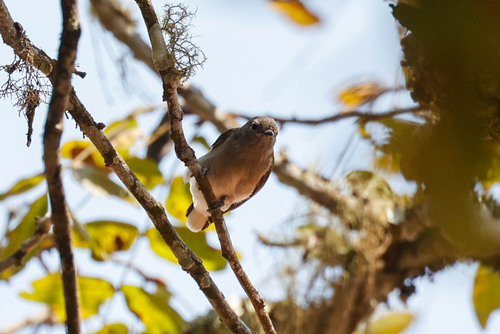
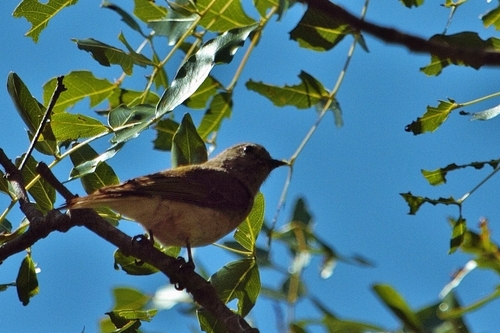
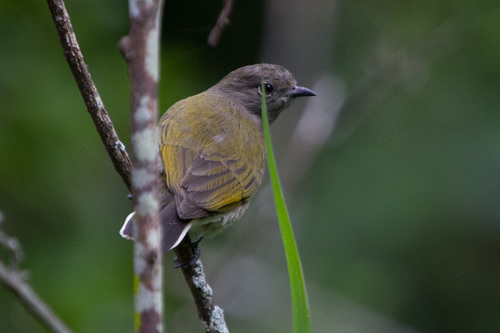
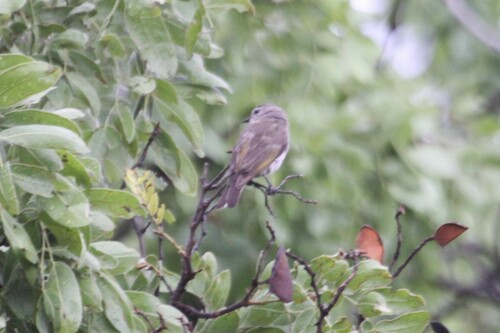
The adult green-backed honeybird of both sexes has ashy-gray, sometimes white, underparts, which is considered an adaptation to its environment. Its upperparts are gray-green, and its outer tail feathers, including the tips, are white. Between the back and the side, it has a white patch that can be raised upright. Its beak and legs are black. In Angola, this species is greener, less golden, and overall darker than in other areas. In Central Ethiopia, it is also darker. The juvenile is duller than the adult. It is greyer, paler, yellower above and yellowish-brown below. Voice: This honeybird species likely has a song that goes “Pee-wee-it” with three main notes. The “pee” is low and weak, followed by a higher, longer “wee,” which is the only part that can be heard at a distance. The last part of the song, the “it”, is sharper and faster.
Text from Wikipedia, licensed CC BY-SA 4.0.
When to see the Green-backed Honeybird
One bar for each month, and every month is filled: this bird is recorded here in all twelve. The wide bar is November, the month with the most records.
Where to see the Green-backed Honeybird
The map shades 11 countries with regular records. Everything unshaded has no records. Countries are listed below the map.
About the Green-backed Honeybird
The green-backed honeybird, also known as the eastern green-backed honeyguide, green-backed honeyguide and slender-billed honeyguide, is a species of bird in the family Indicatoridae. It is a nest parasite of three white-eye species. It is an insectivore that sometimes eats the waxy shed of scaly insects.
Text adapted from Wikipedia, licensed CC BY-SA 4.0.
Easily confused with
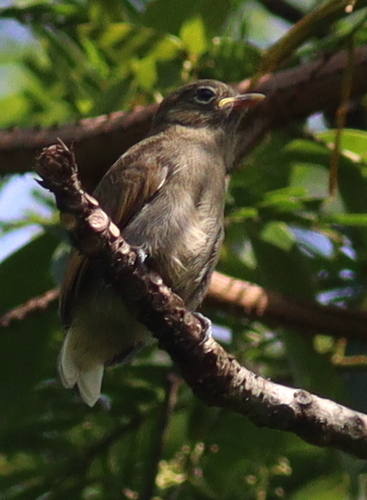 Cassin's HoneybirdProdotiscus insignisCassin's honeybird, also known as Cassin's honeyguide, is a species of bird in the family Indicatoridae.
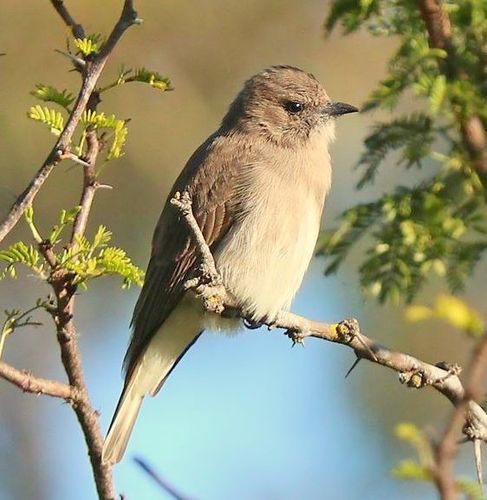 Brown-backed HoneybirdProdotiscus regulusThe brown-backed honeybird, also known as Wahlberg's honeybird, Wahlberg's honeyguide and sharp-billed honeyguide, is a species of bird in the family Indicatoridae.
Learn the Green-backed Honeybird in the BeakBrain App
Photo and call practice. Coming soon to iPhone and Android.
Play today's Daily BirdEvery photo and recording on this page is credited to its author under the licence shown. Spotted a problem with this page, or have a better photo? Contribute.