Learn what every symbol on the card means.Full credits and sources at beakbrain.com/symbols
 GrasslandDomed nestTiny · 8 g


ID tip
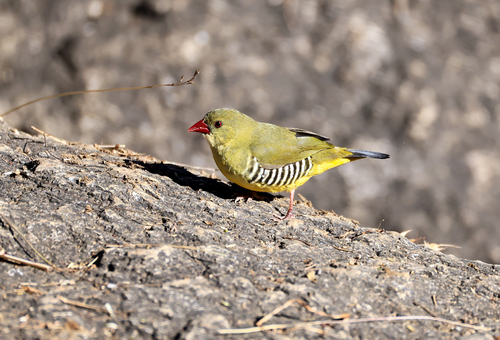
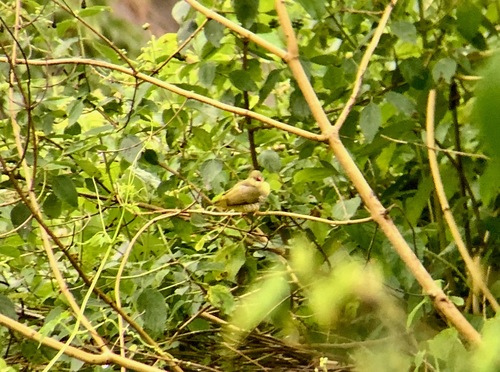
The green avadavat is approximately 10 cm long with green above, yellow below, black and white bars on the flank and reddish bill. Both sexes have pale tips to wing-coverts and tertials. The upper plumage is olive green. The upper tail coverts are more yellow and the tail is black and rounded with broad feathers. The chin is pale yellow and the lower breast, belly and vent are brighter yellow. The flanks are barred with brown and white. The bill is waxy red and the legs are pale fleshy or brown. The female is slightly paler than the male.
Text from Wikipedia, licensed CC BY-SA 4.0.
When to see the Green Avadavat
One bar for each month. Filled bars are the 8 months with records; pale bars are months with none. The wide bar is March, the month with the most records.
About the Green Avadavat
The green avadavat or green munia is a species of Estrildid finch with green and yellow on the body, a bright red bill and black "zebra stripes" on the flanks. They are endemic to the Indian subcontinent and were formerly popular as cagebirds. The name "avadavat" is a corruption of the name the city of Ahmedabad in Gujarat, India, which was a centre of bird trade. They have a restricted distribution and populations are threatened by the bird trade.
Text adapted from Wikipedia, licensed CC BY-SA 4.0.
Easily confused with
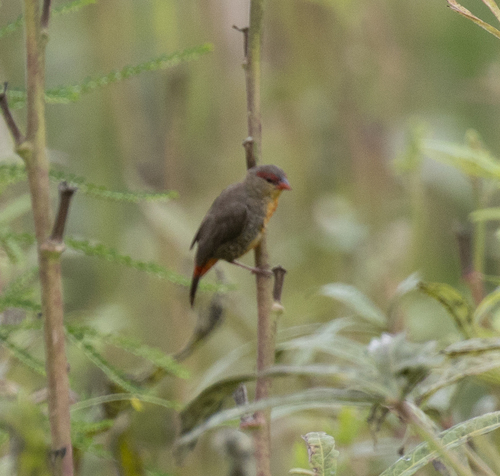 Orange-breasted WaxbillAmandava subflavaThe orange-breasted waxbill, also known as the zebra waxbill, is a small sparrow-like bird with a reddish iris, orange breast, red bill and dark olive-green plumage.
 Red AvadavatAmandava amandavaThis small finch is easily identified by the rounded black tail and the bill that is seasonally red.
Learn the Green Avadavat in the BeakBrain App
Photo and call practice. Coming soon to iPhone and Android.
Play today's Daily BirdEvery photo and recording on this page is credited to its author under the licence shown. Spotted a problem with this page, or have a better photo? Contribute.