Learn what every symbol on the card means.Full credits and sources at beakbrain.com/symbols
 ForestCup nestTiny · 9 g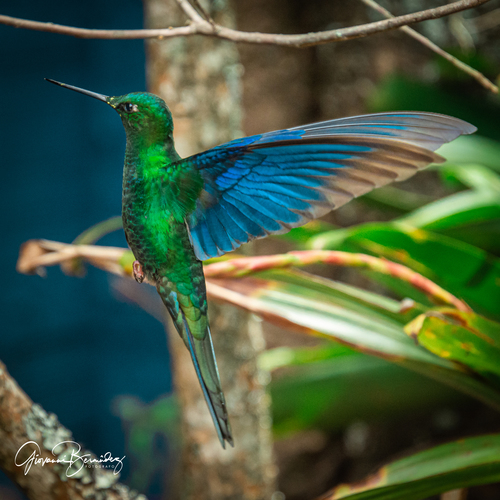
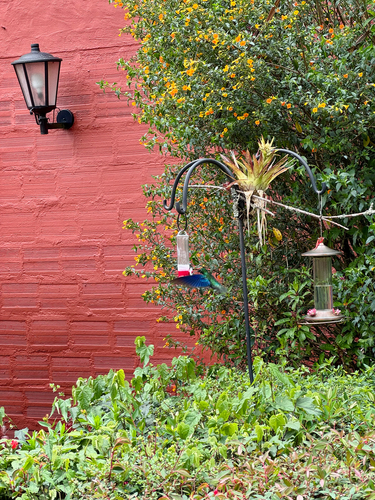
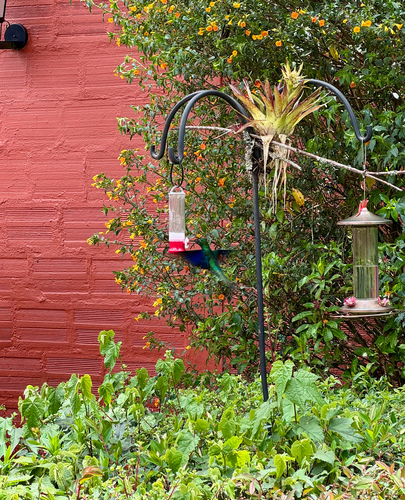
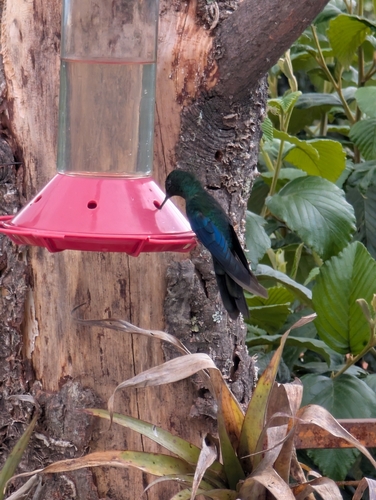
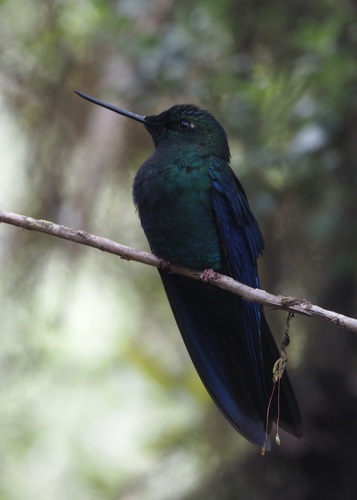

What the Great Sapphirewing sounds like

ID tip
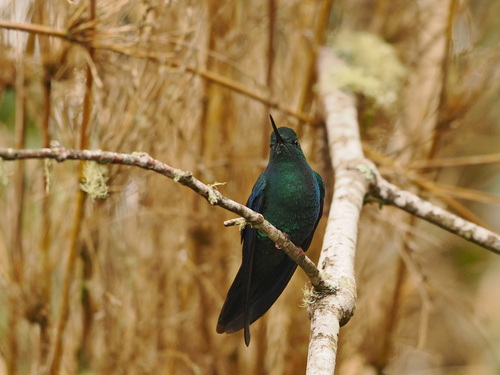
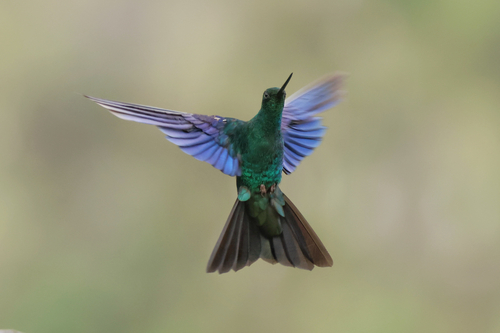
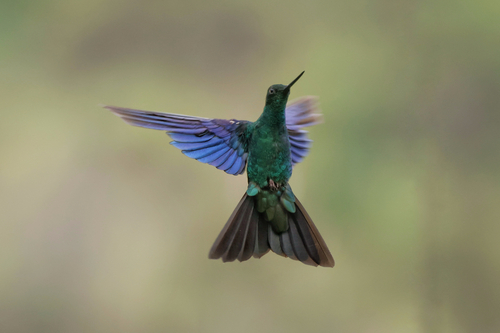
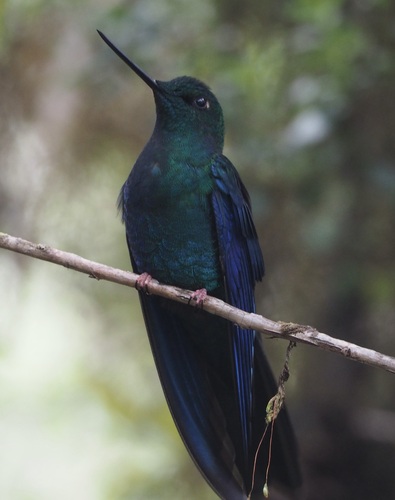
The great sapphirewing is one of the largest hummingbirds; only the two of genus Topaza and the giant hummingbird (Patagona gigas) are larger. It is 15.5 to 19 cm (6.1 to 7.5 in) long including the 3.6 cm (1.4 in) bill. Males weigh between 9.6 and 11.2 g (0.34 and 0.40 oz) and females 8.4 to 11 g (0.30 to 0.39 oz). Both sexes have a small white spot behind the eye. Males of the nominate subspecies have dark shining blue-green upperparts. The wing is mostly shining blue and the tail greenish black. The underparts are also blue-green but somewhat bluer than the upperparts. Voice: The great sapphirewing's vocalizations include "a high, thin, liquid chatter", a "drawn-out piercing high-pitched zeee", and " agitated titititirrr".
Text from Wikipedia, licensed CC BY-SA 4.0.
When to see the Great Sapphirewing
One bar for each month, and every month is filled: this bird is recorded here in all twelve. The wide bar is November, the month with the most records.
Where to see the Great Sapphirewing
The map shades 4 countries with regular records. Everything unshaded has no records. Countries are listed below the map.
About the Great Sapphirewing
The great sapphirewing is a species of hummingbird in the "brilliants", tribe Heliantheini in subfamily Lesbiinae. It is found in Bolivia, Colombia, Ecuador, and Peru.
Text adapted from Wikipedia, licensed CC BY-SA 4.0.
Easily confused with
 Buff-winged StarfrontletCoeligena lutetiaeThe buff-winged starfrontlet is about 14 cm (5.5 in) long.
 Mexican VioletearColibri thalassinusThe Mexican violetear is roughly medium-sized by hummingbird standards.
 Violet-fronted BrilliantHeliodoxa leadbeateriThe violet-fronted brilliant is 11 to 13 cm (4.3 to 5.1 in) long.
Side by side: Great Sapphirewing vs Mexican Violetear · Great Sapphirewing vs Violet-fronted Brilliant · Buff-winged Starfrontlet vs Great Sapphirewing
Learn the Great Sapphirewing in the BeakBrain App
Photo and call practice. Coming soon to iPhone and Android.
Play today's Daily BirdEvery photo and recording on this page is credited to its author under the licence shown. Spotted a problem with this page, or have a better photo? Contribute.