Learn what every symbol on the card means.Full credits and sources at beakbrain.com/symbols
 RockyCup nestSmall · 46 g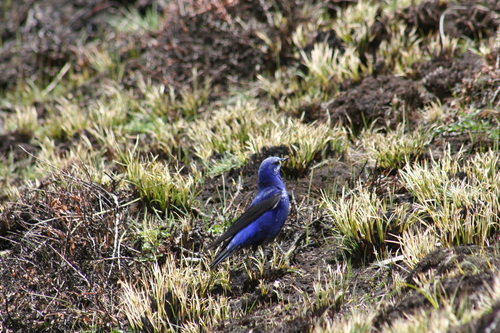

ID tip
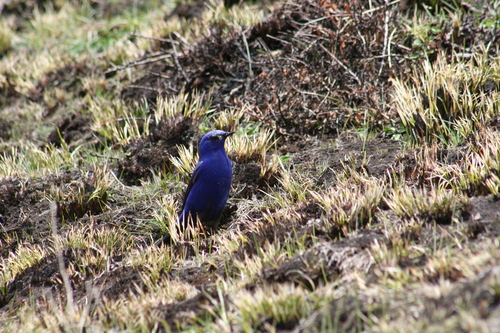
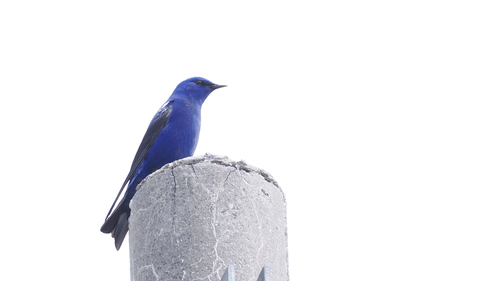
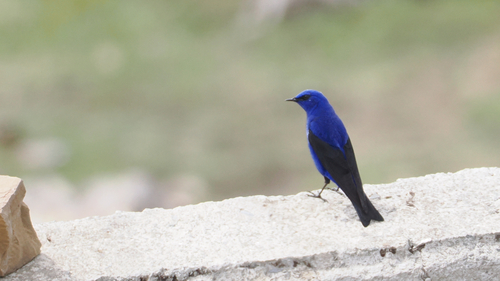
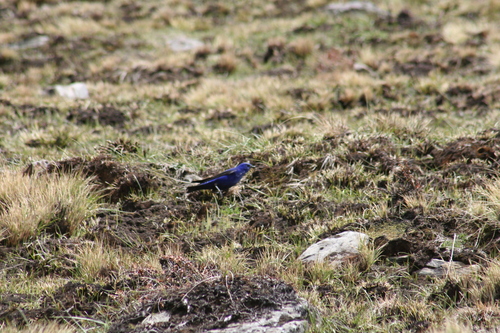
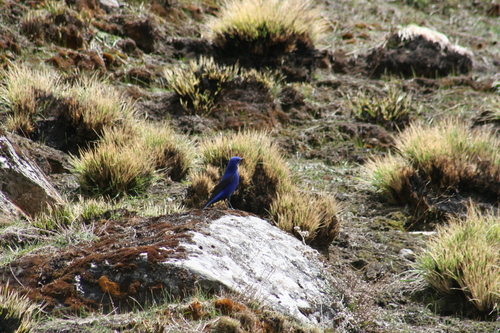
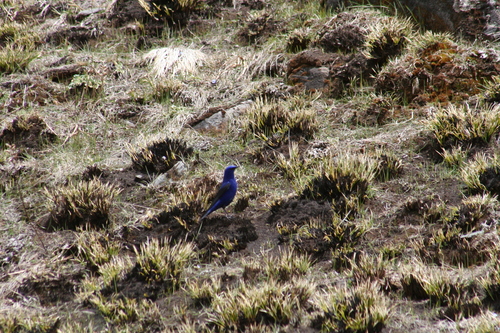
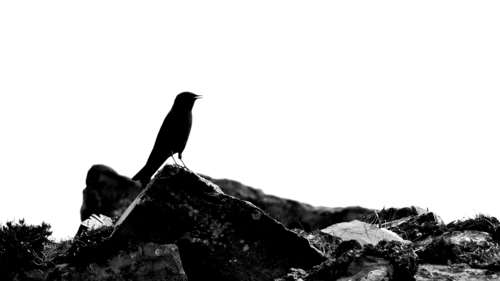
The body length of the grandala is 19-23 cm, and it weighs from 38–52 g. The plumage of the male is intense dark blue, with the tail and wings blacker. The plumage of the female is greyish-brownish with fine white streaks on the underparts; rump greyish-blue; the tip and underside of the wing feathers are white. Birds usually make the sounds "dew-ee" and "dewee". In young birds, the plumage is similar to females, but does not have a bluish tint on the rump and upper tail integuments.
Text from Wikipedia, licensed CC BY-SA 4.0.
When to see the Grandala
One bar for each month. Filled bars are the 7 months with records; pale bars are months with none. The wide bar is May, the month with the most records.
Where to see the Grandala
The map shades 4 countries with regular records, and 1 more in a lighter tone where the bird turns up only as a stray. Everything unshaded has no records. Countries are listed below the map.
Recorded as a rare visitor in Myanmar (Burma).
About the Grandala
The grandala is a species of bird in the thrush family Turdidae. It is the only species in the genus Grandala. It is an insectivore and frugivore. It ranges across the northwestern and northeastern Indian subcontinent and northeast to western China, existing primarily at high to very high altitudes in the Himalayas and the Tibetan Plateau. It is found in Bhutan, India, Myanmar, and Nepal, as well as Tibet and other areas of China north to southeast Gansu.
Text adapted from Wikipedia, licensed CC BY-SA 4.0.
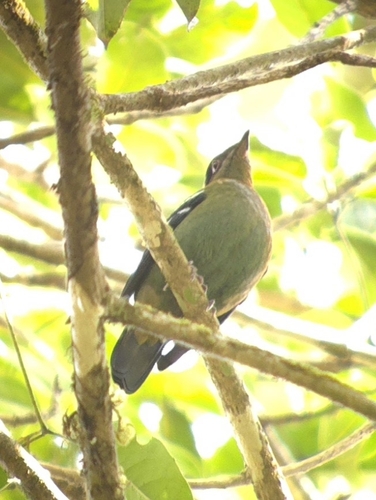
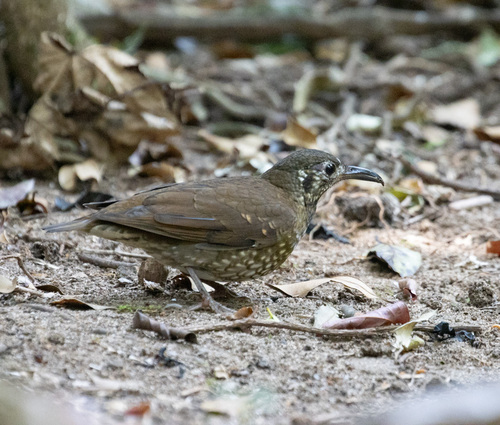
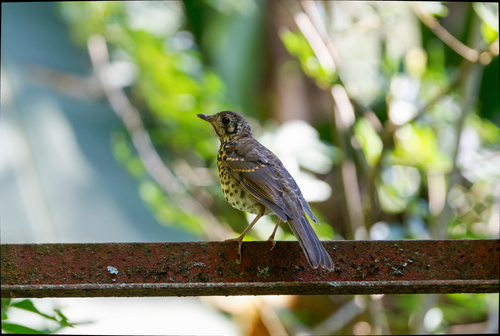
Easily confused with
Learn the Grandala in the BeakBrain App
Photo and call practice. Coming soon to iPhone and Android.
Play today's Daily BirdEvery photo and recording on this page is credited to its author under the licence shown. Spotted a problem with this page, or have a better photo? Contribute.