Learn what every symbol on the card means.Full credits and sources at beakbrain.com/symbols
 WoodlandCavity nestTiny · 14 g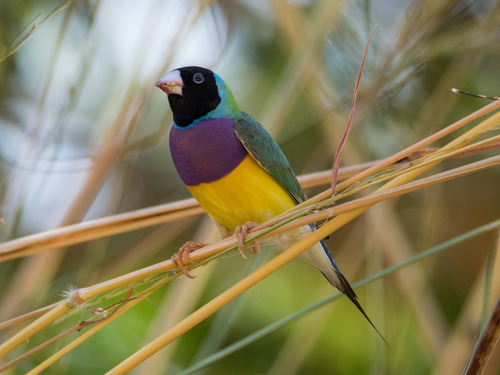
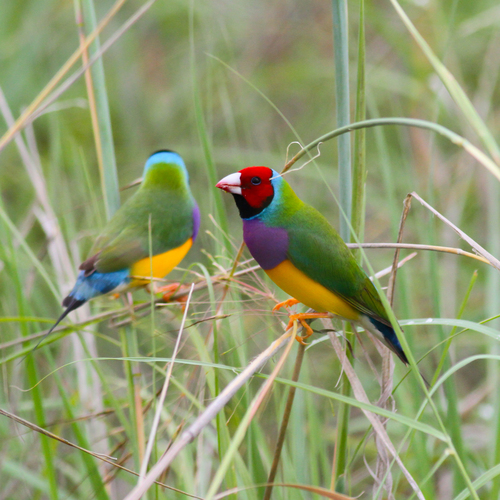
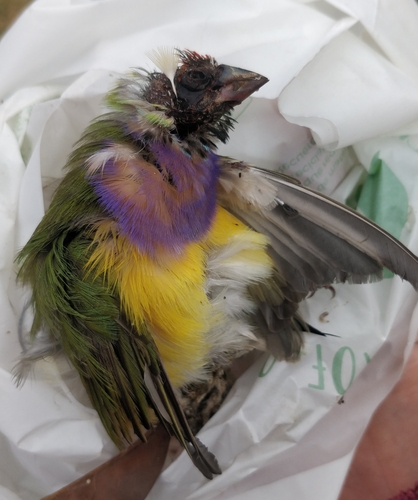
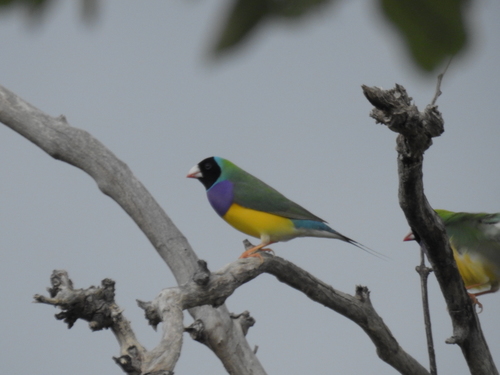
ID tip
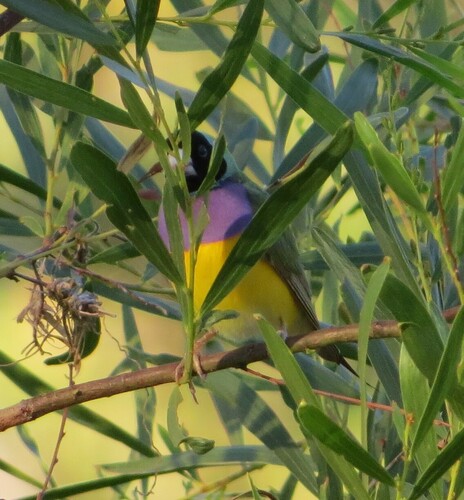
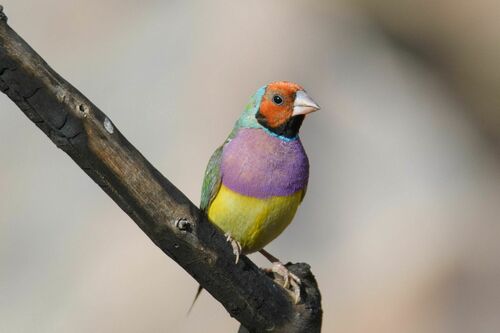
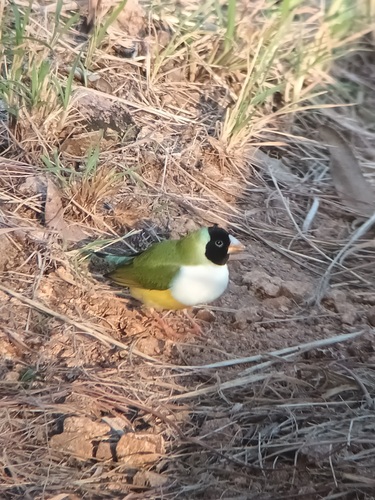
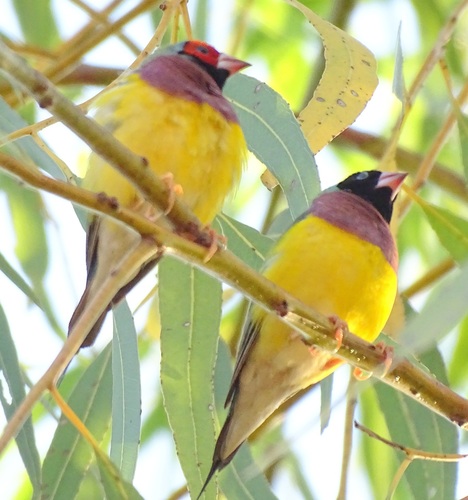
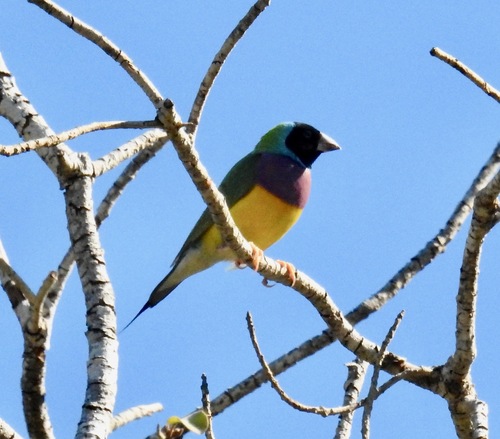
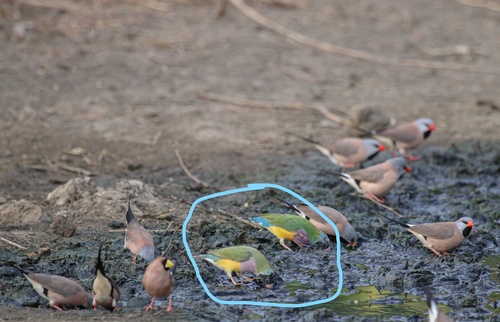
Both sexes are brightly coloured with black, green, yellow, and red markings. The females tend to be less brightly coloured. One major difference between the sexes is that the male's chest is purple, while the female's is a lighter mauve. Gouldian finches are about 125–140 mm (4.9–5.5 in) long. Their heads may be red, black, or yellow. Formerly considered three different kinds of finches, it is now known that these are colour variants of one species that exist in the wild.
Text from Wikipedia, licensed CC BY-SA 4.0.
When to see the Gouldian Finch
One bar for each month. Filled bars are the 8 months with records; pale bars are months with none. The wide bar is September, the month with the most records.
Where to see the Gouldian Finch
The map shades 1 country with regular records, and 3 more in a lighter tone where the bird turns up only as a stray. Everything unshaded has no records. Countries are listed below the map.
Recorded as a rare visitor in United States, Germany, Spain.
About the Gouldian Finch
The Gouldian finch, also known as the Gould's finch or the rainbow finch, is a colourful passerine bird that is native to Australia.
Text adapted from Wikipedia, licensed CC BY-SA 4.0.
Easily confused with
 Yellow-bellied WaxbillCoccopygia quartiniaThe yellow-bellied waxbill is a species of estrildid finch native to East Africa.
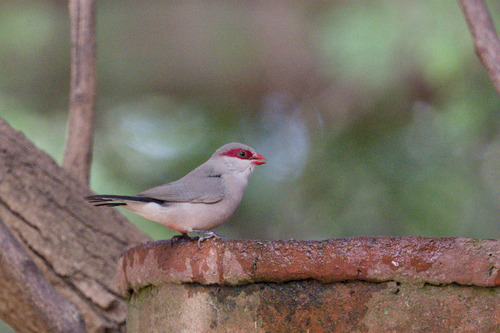 Black-rumped WaxbillEstrilda troglodytesThe black-rumped waxbill is a common species of estrildid finch found in Southern Africa.
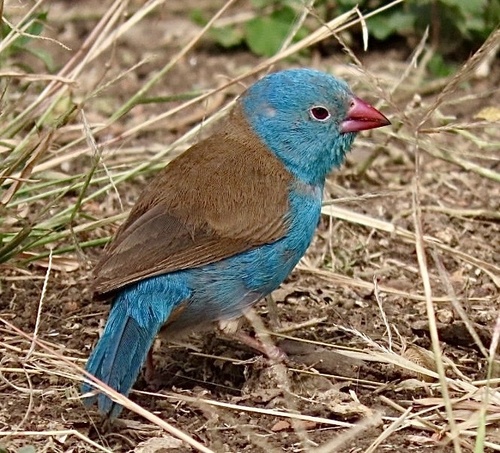 Blue-capped Cordon-bleuUraeginthus cyanocephalusThe blue-capped cordon-bleu or blue-capped cordonbleu is native to Ethiopia, Kenya, Somalia, South Sudan, and Tanzania in East Africa.
Learn the Gouldian Finch in the BeakBrain App
Photo and call practice. Coming soon to iPhone and Android.
Play today's Daily BirdEvery photo and recording on this page is credited to its author under the licence shown. Spotted a problem with this page, or have a better photo? Contribute.