Master this bird in the BeakBrain app to add it to your collection.
Learn what every symbol on the card means.Full credits and sources at beakbrain.com/symbols
Learn what every symbol on the card means.Full credits and sources at beakbrain.com/symbols
LCLeast ConcernInvertebrates ForestCup nestSmall · 16 g
ForestCup nestSmall · 16 g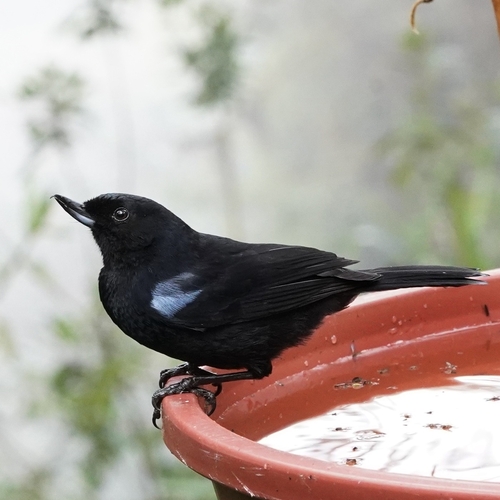
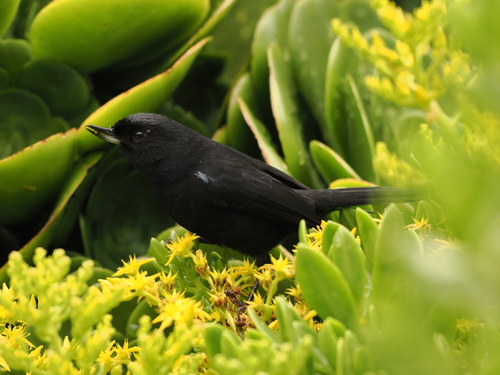
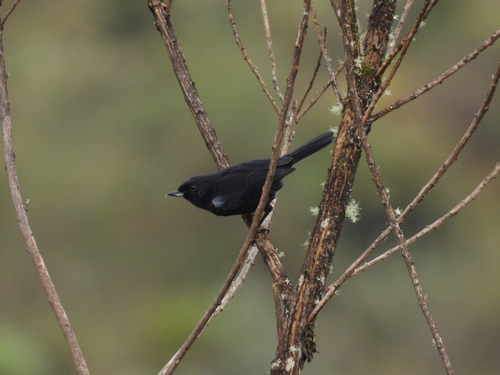
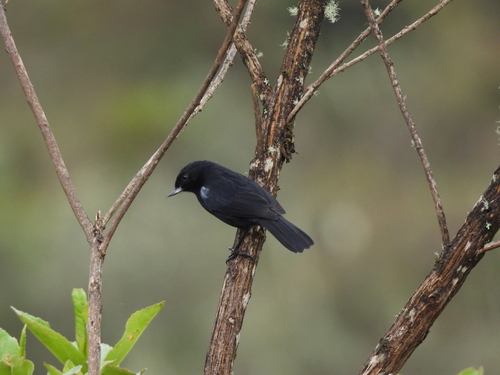
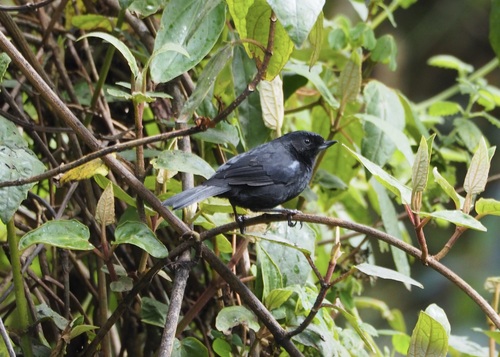
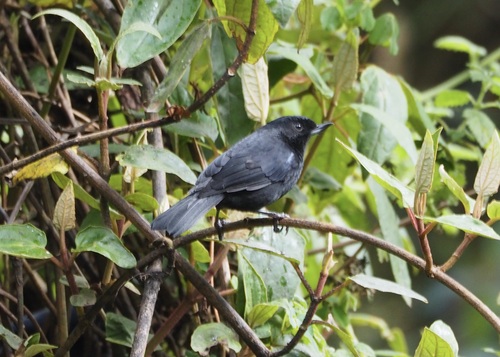


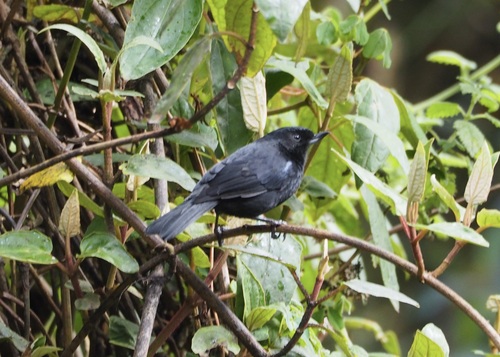
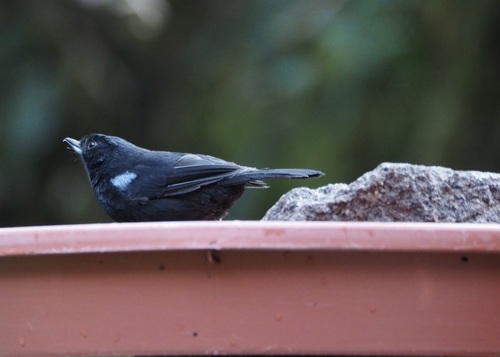
What the Glossy Flowerpiercer sounds like

Recorded by Niels Krabbe · Dawn song · Zamora-Chinchipe: camp on Ventanilla-Christopher Parson trail, Reserva Tapichalaca, Ecuador · CC BY-SA 4.0 · via xeno-canto

Recorded by Niels Krabbe · Call · Zamora-Chinchipe: páramo of Cordillera Las Lagunillas, Ecuador · CC BY-SA 4.0 · via xeno-canto

Recorded by Niels Krabbe · Song · Zamora-Chinchipe: near headquarters, Reserva Tapichalaca, Ecuador · CC BY-SA 4.0 · via xeno-canto
When to see the Glossy Flowerpiercer
One bar for each month, and every month is filled: this bird is recorded here in all twelve. The wide bar is November, the month with the most records.
Where to see the Glossy Flowerpiercer
Regular range
The map shades 4 countries with regular records. Everything unshaded has no records. Countries are listed below the map.
About the Glossy Flowerpiercer
The glossy flowerpiercer is a species of bird in the family Thraupidae. It is found in Colombia, Ecuador, Peru, and Venezuela.
Text adapted from Wikipedia, licensed CC BY-SA 4.0.
Easily confused with
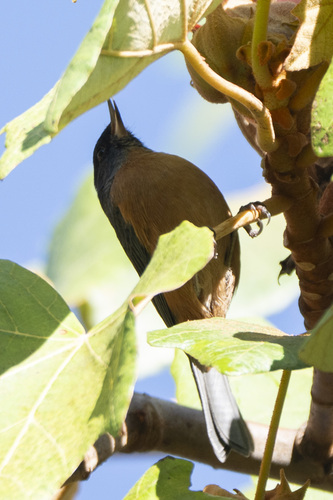 Cinnamon-bellied FlowerpiercerDiglossa baritulaThe cinnamon-bellied flowerpiercer is a species of bird in the family Thraupidae.
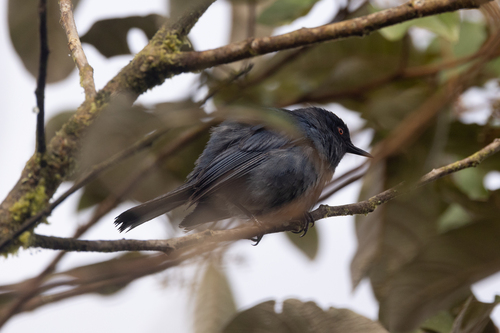 Bluish FlowerpiercerDiglossa caerulescensThe bluish flowerpiercer is a species of bird in the family Thraupidae.
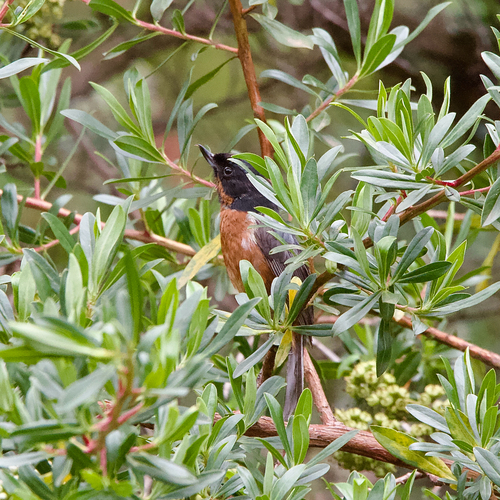 Black-throated FlowerpiercerDiglossa brunneiventrisThe black-throated flowerpiercer is a species of bird in the family Thraupidae.
Learn the Glossy Flowerpiercer in the BeakBrain App
Photo and call practice. Coming soon to iPhone and Android.
Play today's Daily BirdEvery photo and recording on this page is credited to its author under the licence shown. Spotted a problem with this page, or have a better photo? Contribute.